Tag Archives: writing craft

Children’s Book Authors: Why It’s a Good Idea to Write Lesson Plans for Your Books

Standard

I’ve been thinking of writing about this subject for awhile, because I learned a lot during the lockdowns for the pandemic. As a retired teacher and children’s author, I have a unique perspective on this subject, and I thought it would be a good idea to finally share it with you.

Lesson plans are a great way to turn your book into an educational tool. I found as a teacher, most books have themes that can be used instructionally. It’s a matter of matching up what your teaching with the message/ theme of a book. Believe me, teachers are looking for them. So, make it easy for them. Set-up a way for teachers to find the educational points of your book by creating a lesson plan for it or a helpful study guide for teachers. It’s something that book clubs can use as well.

But how do you get the lesson plans? Study Guide? The quickest way is to write it yourself. And I’ve supplied a template for you. You just plug in your themes, messages, ideas, subjects covered from your book into the template study guide below. Any good teacher can use the study guide to make up their own lesson plan and include your book in a lesson or unit they may be teaching.

So, ready to get started? Just click the button to download below to get to the free template in PDF format. Print it out and fill it in or use the digital copy to start your own study guide. Adapt as you need to your book.

Another thing you can do is hire a teacher/retired teacher to write lesson plans or a study guide for your book. They are a little more complicated than just a simple study guide. All you’ll need to do is give them the grade levels that you think your book will be educational for. If you want to see what most teachers use, they are called a “5 Step Lesson Plan”. You could try to write it yourself if you’ve had teaching experience. You’d be surprised by how much a picture book can be used for or how a middle grade book can be read-aloud to younger children or read by older children as a reading assignment.

The last thing that can be done is to create a teachable unit to go along with your book. When I was teaching, I actually developed a unit for my first book in my Crystal Keeper Series, “The Lost Secret of Fairies”. I had used the writing of the manuscript and the other books to help teach writing during writing workshop. Then, when I finished my book, I used the book during reading time as an assigned novel study. Any book can have a novel study unit assigned to it. I do have the whole unit now available for free and my ebook edition priced really low to make it easy to get copies. I have had many home-school students/parents take advantage of this opportunity, especially when I first posted it during the Spring Lockdown of 2020. I really felt a pull to support the many students and struggling parents at home. Now, it is a testimony of how a unit for your book can help get it into readers’ hands.

So, I hope this helps in bringing more sales of your book into your life, and gets it into the hands of more children. It always feels satisfying to me to hear stories about children enjoying my books. A study guide, lesson plan, or novel study unit will make your book more appealing to educators and parents. Please let me know in the comments if you’ve found this has helped and/or any experiences you might have had with lesson plans or study guides for your book.

-Tiffany Turner

Children’s Fantasy Author

Editor/Head Writer of

Indie Children’s Authors Connection Blog

Guest Post: 5 Tips to Help You Write Awesome Children’s Characters

Standard
Savannah Cordorva is a writer with the website, Reedsy.com.

Good characters are the key to any novel’s connection with its readers, and this is no different in children’s books; if anything, it’s truer. Think of iconic children’s books like Harry Potter, Matilda, or The Hunger Games —what do they have in common? Their characters are relatable, driven, and memorable.

Indeed, even the most fantastical books rely on human themes to resonate with readers. After all, it’s usually the way that characters interact with elements in the book that makes it interesting, rather than the elements themselves!

This is why, no matter what sort of children’s book you’re writing, it’s crucial to develop strong characters that will stay in your young readers’ hearts for generations. Master these tips and you’ll be well on your way.

1. Establish your character’s age and relevancy

Many popular children’s books are remembered for their cherished protagonists. However, there are a couple of elements that set the best apart from the rest: age and relevancy.

Specifically, the ideal formula for long-lasting characters is that they should be both a few years older than the target readers and experiencing similar real-life issues. Children love reading stories that they can relate and aspire to!

For example, Percy Jackson is twelve years old in Percy Jackson and The Lightning Thief, and attracts readers around ten years old. Of course, while Percy’s young fans won’t be discovering their mythical powers, they are growing up and will soon be entering new environments and making new friends — just like him.

As long as you explore human themes, feel free to give your characters the most fantastical plotlines you can think of. And if you want total control of your characters, consider self-publishing your children’s book! Linking your protagonist’s story to a real-life lesson is the bread and butter of character writing, but if this lesson is somewhat unconventional, the self-pub route could be your best shot at conveying it without compromise.

2. Build their drive and motivations

You’ve established your character’s age and relevancy. Great! The next step is to make sure your protagonist’s main goal — the essence of your story — is clear. Whether you’re writing a short story or a novel, it’s crucial to get this right. A story’s narrative arc will fizzle without motivation to propel things forward. And with children’s relatively short attention spans, they certainly won’t be giving precious attention to a lackluster plot.

This means another huge part of well-written children’s characters is that what they want or need drives the plot. Imagine how boring a story like Treasure Island would be if Jim Hawkins didn’t want to find Captain Flint’s treasure. And Watership Down wouldn’t be nearly as memorable without Hazel’s need to escape from the warren’s destruction. Once your character’s key motivation is established, the rest of their story should unfold with ease!

3. Put thought into their appearance

While a character’s internal thoughts are very important, that doesn’t mean their external characteristics deserve none of your time. Though personality is Priority One in terms of story, physical characteristics are often what make a first impression, in books and reality.

So while your protagonist’s appearance might not directly affect the plot, it can impact how supporting characters respond to them. And of course, if you’re writing a picture book, how the characters look will be a major part of the reader’s experience — and will likely contain visual clues about their personalities, emotions, and so on.

This is why, regardless of your artistic abilities, it’s worth sketching out your characters, from their hair color to their type of shoes. It doesn’t have to be Van Gogh-worthy, but having a concrete reference for your character’s appearance will make it easier to imagine — and therefore write out — more realistic scenes in your story.

This may be particularly helpful when it comes to dialogue. Another useful thing to consider is your character’s voice: What do they sound like? How do they interact differently with one character vs. another? Does their voice match their physicality, or present a comical contrast?

(If this sounds like a lot of details to organize — or if you’re looking to go even more in-depth — try checking out some character profile templates to help, or perhaps just a few character-building questions to get the ball rolling.)

4. Choose meaningful, memorable names

Well-named characters are sure to stick in readers’ heads. It sounds simple, but giving a character a name that reflects their key traits will tie everything together — and tell readers what to expect!

A classic example of this is Harry Potter’s Remus Lupin: “Remus” nods to the Roman myth about the twins Romulus and Remus who were raised by a wolf, while Lupin is derived from the Latin for “wolf”. So — spoiler alert — it’s no surprise that Remus Lupin turned out to be a werewolf, with a name meaning “Wolf Wolf”. Another perfect example of this is the much-loved Miss Honey in Roald Dahl’s Matilda, who is adored for her sweetness.

Though a name might seem a small feature, plenty of creativity goes into naming popular children’s characters! Whether your characters’ names are obscure linguistic references or common synonyms, make sure they’re fun to learn and impossible to forget.

5. Make character conversations believable

Going back to dialogue for our final point, many children’s writers are tempted to write their dialogue as they think children speak. But unless you’re a preschool teacher or a parent, try to avoid presuming anything!

Indeed, it’s worth familiarizing yourself with your target audience to facilitate more believable conversations. Good ways to research might be volunteering at your local school or working at a library. Bonus points if you have friends and family with children that you can ask to proofread your book. Their endorsement is a major signifier that you’re on the way to helping your target audience feel understood and represented.

Of course, every child is different, with their own personalities, opinions, mannerisms, and quirks. Keep in mind that your characters should progress and change, but dispositions — for example, a sharp sense of humor or joyful attitude — aren’t usually as fluid. A good rule of thumb is to figure out the essential traits your character has and stick with them. With this in mind, your characters are sure to instill readers with plenty of intrigue and love.


Savannah Cordova is a writer with Reedsy, a marketplace that connects self-publishing authors with the world’s best editors, designers, and marketers. In her spare time, Savannah enjoys reading fiction (especially YA fantasy, and picture books to her niece and nephew!) and writing short stories.

Tiffany Turner was the editor on this post.

Tiffany Turner To Teach Online Spooky Story Writing Workshop

Standard

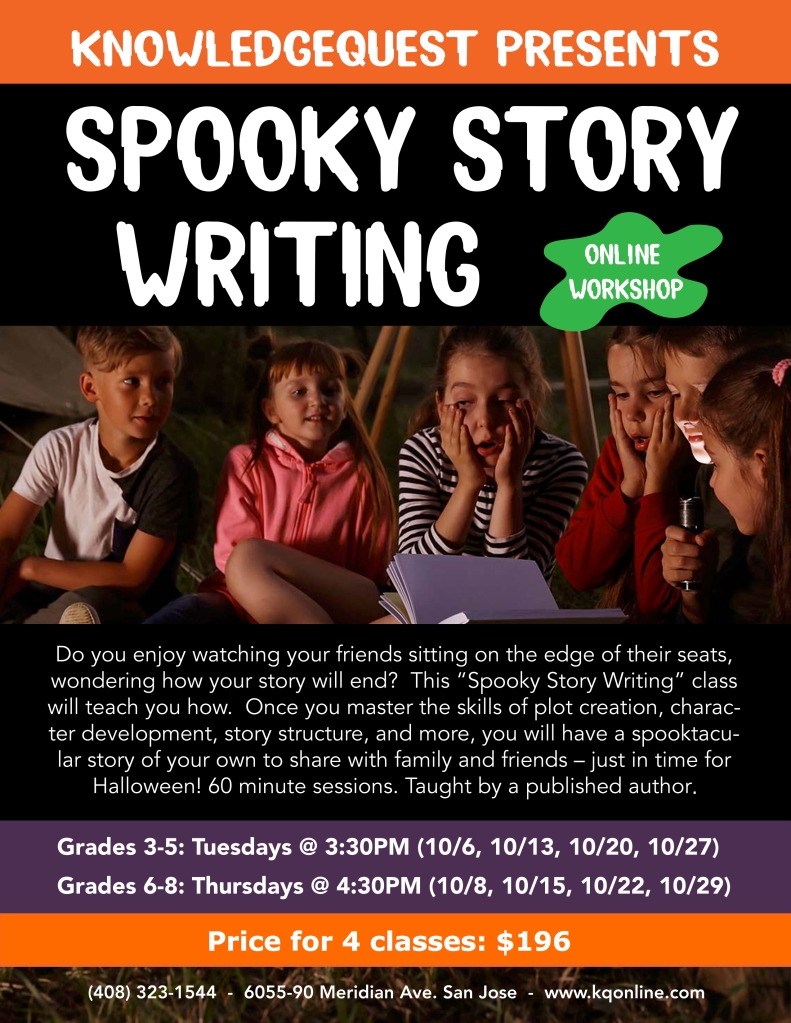
It’s getting near that spooky time of year. After over 15 years of teaching a spooky story workshop to my students, I’m offering it for the first time online. Bring Halloween indoors in an academic way, and keep this season spooky, fun and safe! It will be available two ways.

1) This first way to sign up for this workshop is as a full online in-person experience taught by myself live on Zoom. It will be available through the tutoring center called Knowledge Quest. I’ve worked there now for 3 years tutoring students in person and in local schools before the pandemic.

Now, the opportunity to learn from myself, a published author and certified teacher, is through Knowledge Quest. It starts on Oct. 5 through Oct. 29. There are two sessions, one for grades 3-5 and the other for grades 6-8. Each session will have one hour a week for four sessions. Kids will have an hour of instruction and will be walked through activities and given assignments to continue writing between sessions.

**Some at home support, such as looking over the story and doing feedback with your child, will be required.

I’ve taught and developed this spooky story unit over the years and I have put up some parts of it FREE to do through my website. But this is the full unit, developed by me, and available only this upcoming month of October. By the end of the sessions, all the students will have written their own stories that they can share on Halloween night. They will learn character development, create a plot with problem/solution structure, study the spooky genre, and have a lot of fun! They’ll have a chance to unlock the creativity within them.

**Note times are Pacific Daylight Time since I’ll be teaching the workshop live through Zoom. Sign-ups for the live Zoom instructional spooky workshop is through Knowledge Quest.

Find out more and REGISTER HERE!

2) The second way to take the workshop, especially if it would be difficult to in your time zone, is to sign up for my online writing school course. It’s the first course available, and I plan to develop more through the next several months. I’ve decided to develop the spooky story writing workshop first since the basic posts on the blog are so popular, and my students loved it as their favorite story during the school year.

Here is the blurb from my writing school “Keep On Writing”:

Ready to have some fun writing? Here’s a course to help children love writing and enjoy it. I often found children didn’t get to enjoy the writing projects assigned when I was a teacher. So, I developed an, exciting “Spooky Story” writing project for the month of October that I taught for over fifteen years in my classroom. Now, your child can experience the joy of writing and using their imagination.

Taught through a Writing Workshop format, I go over all the steps of writing, prewriting, drafting, revision and proofreading and creating a final draft. Each lesson includes mini-lessons on the craft of writing including organizing ideas through graph organizers, writing dialogue, “Show, Don’t Tell”, plot creation, character creation and conflict, and problem/solution story structure.

Write your own Spooky Story in either a live workshop with Mrs. Turner or in her online writing school. Get spooky and stay safe this Halloween! Use your imagination and write!

When your child finishes the course, they will have a fantastic story of their own creation to share with family and friends. As they go through the writing process, they are asked to work with a family member or guardian with the writing process in which they learn to gain feedback on their writing and make changes. Anyone in the family or through Zoom can fulfill this role making it a bonding activity with your child.

Whether this course is being used during the fall for a Halloween project or any time during the year to engage children in writing, or help adults write for children, it has always been a student and child favorite. I now present to you, the “Spooky Story” Writing Project to help bring the joys of writing to your child.

The online writing school course is $19.99.

LINK HERE TO FIND OUT MORE & REGISTER!

**Happy Halloween!

-Mrs. Turner

Day 2: Online Novel Study and Other Activities

Standard

imgres

Welcome everyone. Today is day two of activities and information for my online novel study for my book, The Lost Secret of Fairies. I’ve written several writing activities and lessons that are available through the website, Teachers Pay Teachers. I’ve put every lesson in the story on sale for 20% off (the most discount I’m allowed to give). There are writing story units, book report activities, and free writing download activities. The sale runs today, March 16th through March 19th. Check it all out here:

Making Writing Fun-Mrs. Turner’s Writing Lessons and Packets Online Store

Plus, I wanted to post the links for the full Spooky Story online unit that I wrote a few years ago to go along with Halloween. It is still fun to do all year long, and can take up to a week to complete. There are downloadable graphic organizers in the free blog edition, with more detailed instructions and worksheets in the store edition. I hope it helps in creating learning experiences for your little one(s) at home.

haunted character

Keep the kids learning at home with this Spooky Story Unit.

Day 1: Spooky Story Unit

Day 2: Spooky Story Unit

Day 3: Spooky Story Unit

Day 4: Spooky Story Unit

Day 5: Spooky Story Unit

Tomorrow, I’ll have some comprehension questions for those of you that have started reading The Lost Secret of Fairies. Until then, happy reading and writing.

-Tiffany Turner


Write Your Own Spooky Story For Halloween

Standard

halloween

Write your own Spooky Story this weekend, Oct. 26-31.

Each year, I would teach a unit on how to write you’re own spooky story to my class. Since my semi-retirement, I’ve posted the whole process over a 6 day period. Now, you can follow the same plan and create you’re own spooky story.

Here are the links to each step in the process. You can write your story over the next 6 days ending on Halloween, or take each step faster.

Day 1: Write Your Own Spooky Story, Create Your Main Character

Day 2: Creating a Spooky Setting Or Plot

Day 3: Starting the Rough Draft

Day 4: Continuing Rough Draft with Dialogue

Day 5: Revising and Proofreading Your Story

Day 6: Writing the Final Draft

If you’re a teacher and would like this entire unit to teach your class, here is the link for the Spooky Story Unit on TeachersPayTeachers.

Plus, if you’d like a more intense and easy online workshop for your child or students, I have put together the above Spooky Story Workshop into a tutorial workshop format in my new Online Writing School. Kids can work at their own pace on their own. It’s all set up and ready for them to begin. No prep for you!

HERE IS THE LINK FOR MORE INFORMATION ON THE ONLINE SPOOKY STORY WORKSHOP!

Pumperthumb

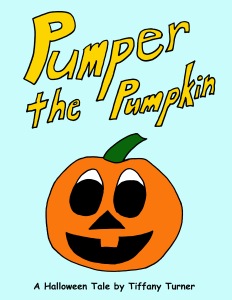
Pumper the Pumpkin: A Halloween Tale by Tiffany Turner

Also, I have a Halloween Picture Book, Pumper the Pumpkin, that is available on Amazon that was my own spooky story when I was a kid. It is only $0.99! Check it out start out your Halloween weekend. Great for young kids that are going to be carving pumpkins this weekend. 😉

This was my own spooky story that I wrote at the age of 10 in 5th grade, back in the day. I have since updated it and drew my own illustrations, but the core and idea was written when I was ten. I enjoyed creating my own Pumper the Pumpkin carvings and designs for several years after I wrote the story. In fact, I still do. 😉

Have fun and stay safe this Halloween! -Mrs. Turner

Halloween & Spooky Story Project: Step By Step Plan to Keep Your Kids or Students Busy Until Halloween

Standard

haunted character

Create your own spooky story this week with a step by step plan. Click on Day 1 below to get yourself started.

Note: This whole activity is available online at my new “Keep On Writing” Online Writing School. It’s set up as a tutorial to allow kids to work at their own pace with more in depth instruction. For more information, LINK HERE!

So, I am currently a semi-retired teacher writing full-time. But when I was teaching, I would teach my class one of my most loved and remembered writing units: A Write It Yourself Spooky Story Unit! I would spend a whole week, sometimes two, with my students writing a spooky story that they would then read-aloud on Halloween. We would spend the whole day in school reading them, and I’ve been told year after year, it was the one thing that my students remembered from being in my class.

So, I will share with you now, the step by step plan for getting your kids (or yourself) motivated and channeling that nervous Halloween energy into something productive. I first wrote these posts back in 2015. The links will take you to the original instructional posts.

If you are a teacher, and would like the full lesson plan for this unit. It is available on Teachers Pay Teachers in my Writing Is Fun Store.

Below is the list of each step. The link will take you to the post with all the information you need to get started.

Day 1: Write Your Own Spooky Story, Create Your Main Character

Day 2: Creating a Spooky Setting Or Plot

Day 3: Starting the Rough Draft

Day 4: Continuing Rough Draft with Dialogue

Day 5: Revising and Proofreading Your Story

Day 6: Writing the Final Draft

Pumper

Pumper the Pumpkin: A Halloween Tale by Tiffany Turner is a Kindle Unlimited title.

Also to celebrate Halloween, I’ve put my Halloween picture book, Pumper the Pumpkin, on sale for FREE from Friday Oct. 27 – Tuesday Oct. 31. I wrote the first draft when I was 10 years old and promised myself to finish it when I got older. I did.

So, have fun writing with your class or children this week. Or maybe you’re the child writer, and you’d like to take this on. Go for it! It may be the start of a new adventure for you. Writing is fun and challenging, and so worth the effort of seeing people enjoy your story.

Be sure to comment and let me know how you like this post. I’d love to hear what kind of stories you all come up with.

**If you liked this post or others, please be sure to follow my blog. My fourth book in the Crystal Keeper Chronicles is complete and is going through the revision process. So, get on the newsletter and blog list today. Be sure to get all the updates and informative posts coming up in the next several months!

And of course, HAPPY HALLOWEEN! WAAAHHAHHHHAHAHHAH!

-Tiffany Turner

Pumper the Pumpkin Picture Book Free Oct. 28-31/Write Your Own Spooky Story

Standard

Every year, I like to give away a little treat of my own. I’ve written a picture book from a story I originally wrote when I was 10. I originally wrote it back in Mrs. William’s class when I was in the Fifth Grade. 35 years later, here is the story of that long ago character I created, Pumper the Pumpkin.

Pumperthumb

Pumper the Pumpkin: A Halloween Tale by Tiffany Turner *Available for Free on Amazon 10/28-31

On Halloween Eve, Pumper is trying to be a jack-o-lantern. Only he needs to find the right family to adopt him. Will he in time? Join Pumper in this amazing Halloween quest of being a part of something bigger.

This Halloween short story is intended for ages 3-10. Get into the Halloween spirit with this family friendly tale.

For years, I’ve carved Pumper the Pumpkin has my pumpkin in hale to this character I created so long ago. Sometimes, things you make up as a kid, like having unicorn friends come hang out with you in your bedroom, can make their way into a children’s story to entertain children that were once your age.

Remembering those fun, creative activities always has been a plus for me. I use them all the time in my stories. And yes, I still have the Pumper original story. I promised myself that when I got bigger and my language arts skills improved, I would rewrite Pumper the Pumpkin. The original story had bully kids come in and throw all of Pumper’s family to the ground, breaking them into pieces. It’s how I said he was alone originally. But I cut that out in the rewrites, and made it that he just hadn’t been picked yet. I added the character Miraballe. Voila! A new, improved Pumper story was born.

So, if you’d like to write your own Spooky story over the next few days before Halloween, check out the steps on How To Write Your Own Spooky Story below. These can be done in a few days if you double up a few of the lessons. Try two lessons a day, and you can make your story in time for Halloween. Waaaahhahhahahahha!

Day 1 For Writing A Spooky Story: Main Character Creation

Day 2: Creating a Spooky Setting/Plot

Day 3: Starting the Rough Draft

Day 4: Continuing Rough Draft with Dialogue

Day 5: Revision and Proofreading your story

Day 6: Writing the Final Draft

For those of you that would like the full lesson plan, it is available on Teachers Pay Teachers at this link: https://www.teacherspayteachers.com/Product/Spooky-Story-and-Summary-Report-October-Writing-Unit-2763010

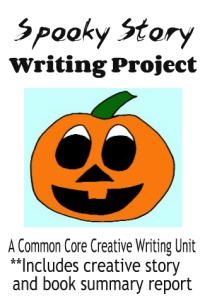
spookystoryunitbkcvr

The Spooky Story Writing Unit is available on Teachers Pay Teachers for $2.95.

Only $2.95!

Plus, Pumper the Pumpkin will be free on Amazon between Oct. 28-31!

https://www.amazon.com/Pumper-Pumpkin-Tiffany-Turner-ebook/dp/B005X1CS1A

HAVE A HAPPY AND SAFE HALLOWEEN!

-Tiffany Turner


Update: The Lost Secret of Time is Coming!

Standard

Tiffany Turner in the hospital ICU Dec. 2014

Tiffany Turner in the hospital ICU Dec. 2014

Greetings Crystal Keeper Fans! I’ve been rejuvenating my efforts to get back into the swing of writing. As always, life has thrown some curves at me. And they were some pretty big curves. There were a lot of changes in education, namely the Common Core, that has made it difficult for me to keep up with all my writing and still give all my efforts in teaching. Transitions are really hard in education, and this has been the worst and most difficult that I’ve seen in my career.

Then, I got blindsided by illness in December 2014. I got pneumonia and ended up in the hospital. While there, I went into Code Blue and cardiac arrest. Basically, I almost died, and the doctors were trying everything to help me pull through. I also had the complication of septic shock and the discovery of a heart blood clot. So, it was discovered that I have cardiomyopathy, a heart failure condition where my heart isn’t pumping enough blood to the rest of my body.

My monitors in the hospital.

My monitors in the hospital.

This has made it difficult for me to do much else but get better. I’ve been on medical leave from teaching, and I’m taking a year of absence to get my health back. The bonus of all the health issues is that as I start to feel better, I can start writing again.

So, over the next year, I’ll be working on The LOST SECRET OF TIME and finishing the Crystal Keeper Chronicles. I’ve always intended on doing so. But sometimes life just throws you a curve ball, and you have to adapt, pick yourself up, brush yourself off, and keep going.

Resting in my hospital bed Dec. 2014.

Resting in my hospital bed Dec. 2014.

All the encouragement is always helpful and appreciated. I’ve got a start on THE LOST SECRET OF TIME, and signed up for Camp NANO in April to make progress on the book. Things are underway, and I’ll be sure to give you updates as I move through the process. As for now, I’ll be continuing with featuring more Indie Authors once a month, and will try to get back into doing Indie writing posts to help out other authors.

So, hug your parents, kids, and pets. Positive thoughts can do so much. You just never know what path will lay before you. And with writing, everyone is on a different writing journey. I’m glad to be sharing mine with you.

Take care!-Tiffany Turner (Mrs. Turner)

Update: April 20, 2019

Since I wrote this post, I have spent a few years getting back my strength, getting into a writing routine, and returning to teaching with limited hours. I’m currently working for a private education tutoring company and going back into schools teaching after school workshops in Science, Math and Reading. Life it is a bit different now, but I am proud to announce I finished and published the last book in the Crystal Keeper’s Chronicles, The Lost Secret of Time. I’ve also been speaking on different Self-Publishing panels at local cons, working diligently on my romance pen name, Marilyn Vix, and continue to keep healing as I feel I’ve been given this second chance.

It just shows that no matter what happens, don’t give up. You can’t just throw in the towel, but think hey, what can I do with what I have now? Focusing on my writing and the support of my family and friends have made it possible to keep going, and of course, keep writing. If I’ve learned anything from all this, it’s to not let what life throws at you stop you. Keep moving towards your goals, and you can do anything.

How Do Writers Get Their Ideas?

Standard

How do writers get their ideas? This is a huge, diverse question . To start, you have to often ask writers. Most often, they come to me in a blinding flash; with a flurry sometimes I hardly have time to write them down. One time I was carrying the groceries, and dropped them in the doorway as I ran, grabbing a piece of paper to write down my ideas. Another time I woke up from a dream; finishing it as I was waking up. I didn’t want it to stop. I got up, grabbed my laptop, and by the time my first cup of coffee for the morning was done, I’d written the first scene of a new story.

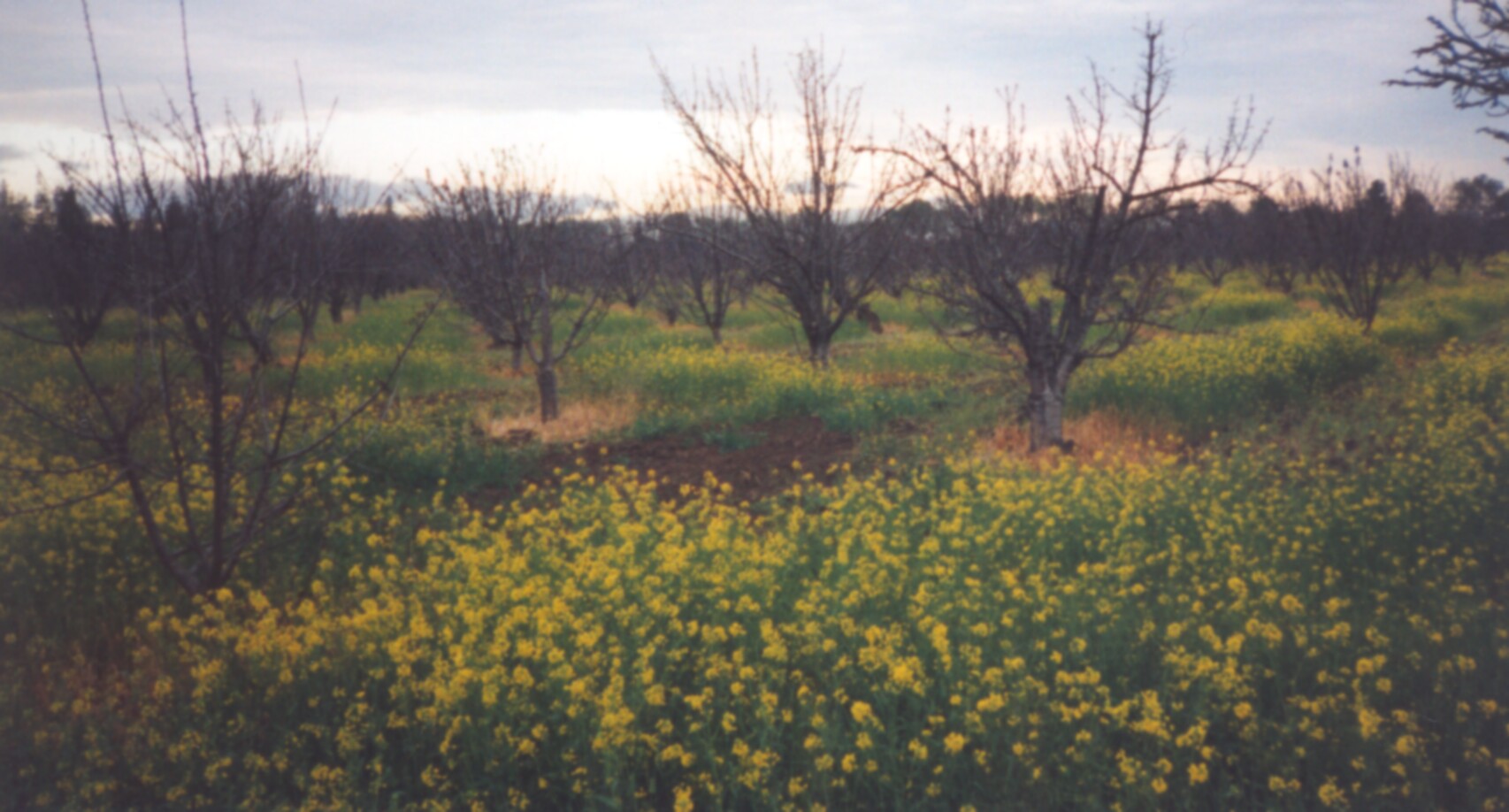
The orchard behind Tiffany Turner’s house growing up in the Santa Clara Valley.

The best way to get ideas is from your own experience. With my first book, The Lost Secret of Fairies, I drew my ideas from experiences as a kid. The big inspiration for the book was playing in the orchard behind my house growing up. Often, we put a ladder against the fence, climbed over, and ran about through the outer edge of the four acre orchard. At the time, it was known as the Santa Clara Valley. Orchards criss-crossed over the entire area that now have some of the top computer and Internet companies.

As a kid, there was nothing better than climbing up a tree and eating cherries just as they were ripening. We’d come up with exploring adventures that would take us through the orchard, into the creek, and travel beyond the freeway to see what lay beyond. Often, it was the next neighborhood or over-crossing for the freeway. But it was exploring beyond your own backyard, the best kind of kid adventure.

The "Boo" in his favorite sleeping position. He was the inspiration for the cat sorcerer, Brewford.

The “Boo” in his favorite sleeping position. He was the inspiration for the cat sorcerer, Brewford.

The other partner in my adventures was my cat. Often, I would sit in the orchard, and he would wander out to find me. I’d make a reading nest by mashing down the mustard plants, hiding among yellow flowers. One day, Booford, came out to see me. His tail bounced high above the tops of the mustard flowers as I heard his meows. I would yell back, shouting, “Boo, I’m over here.” Using my voice as radar, he entered my reading bowery covered in mustard petals meowing so loud as if to say, “Why didn’t you make that much easier? You know I’m not that tall.”

My family say I captured his attitude and personality in the Crystal Keeper series. Booford is my real cat that inspired Brewford, the cat sorcerer. I simply just asked myself the question, “What if Booford could talk?” So, from then on, he did, in my books. My family say I captured his personality. His half eyed stares had the wisdom of Garfield. He was an incredible cat, and he still lives today in my books.

When you put it all together, writers are inspired by the world around them. Whether you use your own experiences, dreams, or it comes to you in a flash, ideas come from everywhere. There is a saying, “Be careful, you might end up in my next novel.” This is not only true, but the more you write, the more the real world around you ends up in your books. If you know a writer, you might be the inspiration and don’t know it. If you are a writer, you already have an idea of what I’m talking about. So get out there, and experience life and the world. It’s the best way to write.

**This is the first of a series of blog posts that help support a novel study unit for The Lost Secret of Fairies, the first book in the Crystal Keeper Series.
Common Core Standards-4th Grade
Reading Level: 4.6 AR Level

ELA CCS Speaking/Listening 4.1 Engage effectively in a range of collaborative discussions (one-on-one, in groups, and teacher-led) with diverse partners on grade 4 topics and texts, building on others’ ideas and expressing their own clearly. (Discussion Question: How Do Authors Get Their Ideas?)

ELA CCS Reading/Literature 4.7 Make connections between the text of a story or drama and a visual or oral presentation of the text, identifying where each version reflects specific descriptions and directions in the text.

ELA CCS Writing 3.b: Use dialogue and description to develop experiences and events or show the responses of characters to situations.

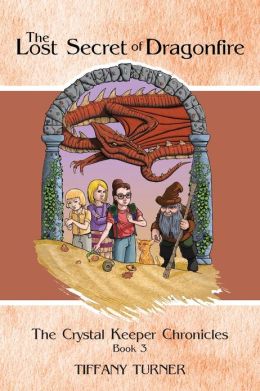
The Lost Secret of Dragonfire is available at Amazon and Barnes & Noble.

The Lost Secret of Dragonfire is available at Amazon and Barnes & Noble.

***Tiffany Turner has released her third book, The Lost Secret of Dragonfire, in her Crystal Keeper series. She continues to teach fourth graders in California while writing fantasy adventure middle grade novels. This is her 17th year of teaching. She is working on other writing projects in her No Limits Writing practices. She actively plays the Gaelic Harp at Renaissance festivals throughout Northern California.

**Follow to connect with more Common Core related blog posts over the next few months. Available for use in the classroom courtesy of Tiffany Turner.

Listening To The Inner Muse

Standard

Give your muse time to speak.

Give your muse time to speak.

There is a fact that happens after each New Year’s Eve. The questions start. What will I expect from the New Year? Will I write the best seller? Why isn’t my books selling better? Can I write a new genre? Will I get a good review?

Well, sometimes, you don’t know. You’ve got to step away, and just let it happen. But you just can’t write that good book. Your inner muse has to synthesize it for you. The only way that can happen is time. Give it all time. Walk away, and do something else, and the inner muse will speak.

I’ve been kicking the idea around for a NA Romance. I had several ideas in mind, and they weren’t connecting. I worked on another project for awhile, trusting the inner muse would connect the dots somehow.

Then one morning, I woke from a terrifying dream involving one of my past friends from those good ole’ college days. I woke with the thought, “She didn’t die that way.” Struggling with the horrors I’d been dreaming, I thought, “But what if she did?”

The rest of the day, I went to the mall, mailed a review copy of my book, and tried to get to Office Depot for some ink cartridges. Literally, the images kept replaying through my mind. As I’m walking from one store to another, the dots connected. My real life experiences were drawn up into some powerful ideas until it all spit out as a plot, all while walking from Target to my car. Literally, I had to concentrate to drive, but I didn’t want the muse to stop.

I finished the last errand, headed the car home, and drove directly to my laptop. Getting much written as I could, I started that NA Romance novel. The dots are connecting, and I can see it better. Somehow I trusted the inner muse to start it for me when she was ready. Trust is the biggest first step. It will happen when it’s ready.

Of course, this sucks when you got deadlines. But this is why I have different projects. Switching from one to another seems to unleash some subconscious explosion that will solve the problem when you least expect it. Sometimes that stop to take a moment, or do errands, can make all the difference.

Topic: Listen To Your Inner Muse

Topic: Listen To Your Inner Muse

**This post is part of the monthly
“Indie Life” posts linked on the Indelibles Blog.

The Lost Secret of Dragonfire is available at Amazon and Barnes & Noble.

The Lost Secret of Dragonfire is available at Amazon and Barnes & Noble.

***Tiffany Turner has released her third book, The Lost Secret of Dragonfire, in her Crystal Keeper series. She continues to teach fourth graders in California while writing fantasy adventure middle grade novels. She is working on other writing projects in her No Limits Writing practices. She actively plays the Gaelic Harp at Renaissance festivals throughout Northern California.