Tag Archives: distance learning support

Guest Blog Post: “Tips to Encourage Children to Read” by Chris Lewis

Standard

Tips to Encourage Children to Read

Guest Post by author, Chris Lewis

It is certainly handy when a book’s character or series matches the values you want to encourage. An association to a series could also support children in finding a common connection with other children.

We all learn in different ways. Sometimes you can learn at the same time you do something you enjoy. The following are a few tips to encourage children to read.

1. Look for relatable characters.

Connection with characters in a story may make it easier for children to learn from their experiences and perhaps appreciate a topic from a different view. Sometimes a situation can be better understood by a child when they see themselves represented in a group or activity.

2. Try something a little bit silly or unorthodox.

Animals are often used in picture books for their relatable factor. There are lots of examples in books where animals talk and live like humans. Sometimes, characters are a mix of both human and animal characteristics. Some stories have objects which are living, for example, a talking teapot. 

3. Think about the format. 

There are lots of book formats to choose from, but in summary, the choice is a physical version or an electronic copy. New books typically attract a new cost, but you can get access to free books from the library, or you can browse the Internet for a variety of free ones. 

Sometimes there are extra elements in an eBook compared to a print version. Animation is a good example. Traditional books take up more space than eBooks. Still, there is a print version preference because of the look and feel, and no batteries are required.

4. Support the reading journey.

A child could use the same book from early childhood to a point where they can potentially read it by themselves. The knowledge gained from familiarity can serve as a morale boost when children get to the stage they can read independently.

5. Find a book for the right development stage.

The need of every child differs in the course of their development. Whether a child will enjoy a book or find it boring depends on the length, grammar, and level of content the child is prepared for, emotionally.

About The Author

Chris Lewis is the author of the eBook picture book Jax and Sheba get Messy for ages three to five. A print version will be available to order on March 16th, 2021. For more information about their books, please visit his website here.

***Connect with this author, Chris Lewis, through the interview featured on this blog.

Link here to the interview with Chris Lewis.

Interview for Tracy Clinton

Standard

With all this time at home, it may be hard to teach social skills or even reorganize some kind of normal for your family. I have found a fabulous author that might be able to help.

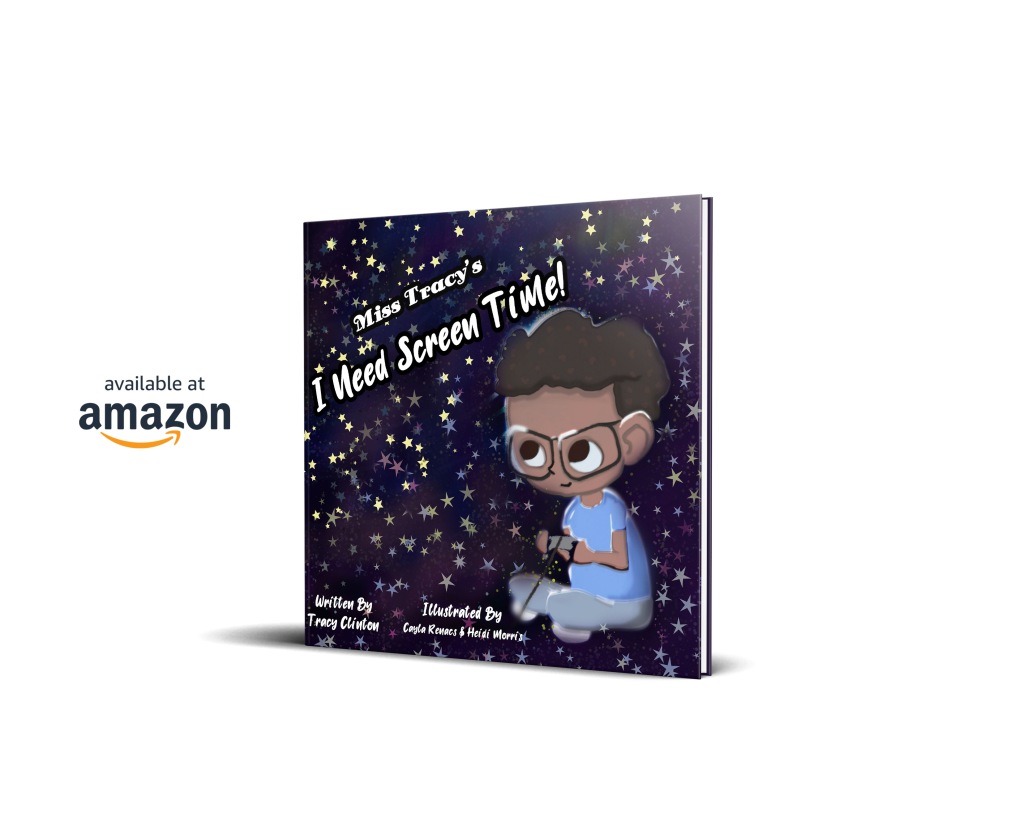
Tracy Clinton is the author of the children’s book, “Miss Tracy’s, I Need Screen Time”.

Tracy Clinton is a parenting coach with many years experience. Combined with her teaching background, she has come up with a fabulous new way to teach skills for growing up. Through literature, children and parents work together to teach new life skills. In her first book, “Miss Tracy’s, I Need Screen Time”, she has written a story that will teach a successful way to help your child balance their chores with their screen time.

I had the chance to chat with Tracy Clinton about her childhood reading memories, favorite author and influences, and what writing means to her.

1) What is your favorite memory from reading as a child?

Tracy Clinton:
In kindergarten, my school library had a treehouse built inside that went all the way up to the ceiling. It was full of pillows and it felt huge at the time. Once a week the teachers would pair us up with an older child that would read to us and that’s when we could climb up into that glorious treehouse. It felt so magical, to listen to fairytales and feel like I was living in one at the same time.

2) Who was your favorite author and how did they influence you?

Tracy Clinton:
When it comes to children’s books, I would have to say, Marcus Pfister. The Rainbow Fish was my favorite book as a child. Not only was it shiny and beautiful, but it taught an amazing lesson about finding joy in giving. I feel that it’s important to teach children lessons that will benefit them throughout their lives. Using children’s books is a great way to send them positive messages that will stick with them forever.

3) What is writing to you in one sentence?

Tracy Clinton:
Writing is creating alternate worlds, so others can find lessons and joy in them.

“Miss Tracy’s, I Need Screen Time!” is a book designed to be read with your child to help introduce the use of time allowance charts. Tristan doesn’t like doing his chores. He wants to spend all his time playing video games and watching videos. His mom is frustrated, and takes away his screen time. Tristan is super upset, and makes a wish for his screen time back. Suddenly, Miss Tracy appears. Will Tristan be able to follow what task he must do to get his screen time back?

“Miss Tracy’s, I Need Screen Time!” is available at Amazon.com.

For more information on Tracy Clinton, visit her author’s page here.

Martin Luther King Jr. Day Activity: Close Reading Activity for Distance Learning and Home School

Standard

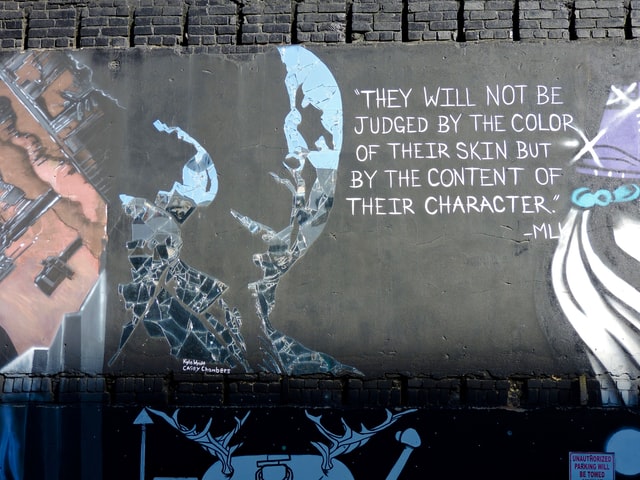
With the Martin Luther King Jr. holiday fast approaching, I thought I’d let all my readers know about the FREE close reading lesson available to download. I’ve had it on my teacher store on Teacherspayteachers for a couple years now, but would like to make it available for families and people teaching at home for this weekend. I know people like to do activities on MLKjr. Day, and it may be hard to go out and do community service this year due to the pandemic. But you can still participate by doing an activity at home to help your child understand why this holiday is important.

I developed this lesson in my classroom to specifically be taught around this time. I had noticed children were coming up from the grade before, 2nd or 3rd grade, without clearly understanding what his dream was. When asked about Martin Luther King Jr, they would respond that “He had a dream.” It was mostly due to the fact they were concrete thinkers and didn’t understand the abstract notion of what MLKjr’s Dream symbolized. I also would have a week of reading material on the civil rights movement using my district’s available reading books. So, this is a great lead into civil rights studies.

I would read the speech as a guided reading/read-aloud in my classroom. I’ve included a link to one book that is available like this. There are others, or you may already have one in your class or home library. Reading it before this downloadable lesson is recommended. It’s to show where the context is for the “I Have a Dream” references. Plus, focus on why he repeats the phrase, “I Have A Dream”, and discuss why he may have done that.

“I Have A Dream (Book & CD)” Link to purchase. There are other books like this available, but this is one that can be used with the downloadable lesson or another similar book with the speech text illustrated.

So, that is how I used this lesson in my classroom. I offer it now for use for other classrooms, online studies and of course, at home for families to discuss what Martin Luther King’s Dream actually was. And of course, talking or reading material about the civil right movements will help with this. I’ve included some links below.

All this will help children understand what is currently going on in our own country right now, with the current protests and BLM protests. Please let me know if you found this useful or general feedback in the comments below.

Download FREE Martin Luther King Jr. Dream Speech PDF Below!

Other Reading Material links for Children on the Civil Rights Movement:

“If You Were A Kid During the Civil Rights Movement”

“The Civil Rights Movement for Kids”

Happy Martin Luther King Jr. Weekend! Stay safe out there, and please, wear a mask!

-Tiffany Turner

Tiffany Turner is a children’s fantasy writer of the Crystal Keeper Chronicle series. She is the head writer and editor of the Indie Children’s Authors Connection blog.

Interview with Valerie Anne Hudson

Standard

One of my favorite books I read in 5th grade was called “Half Magic” by Edward Eager. I think it’s one of the books that drew me into fantasy as a kid. So, I’ve always been intrigued by wishing magic stories. I think I’ve found a great one to read aloud to your class or have your youngster dive into during this pandemic. Reading is such a great escape and distraction, as well as building literary skills. I think I’ve been doing more reading since the lockdowns started back in March 2020. So, this is the perfect new release to treat your class or child at the start of 2021.

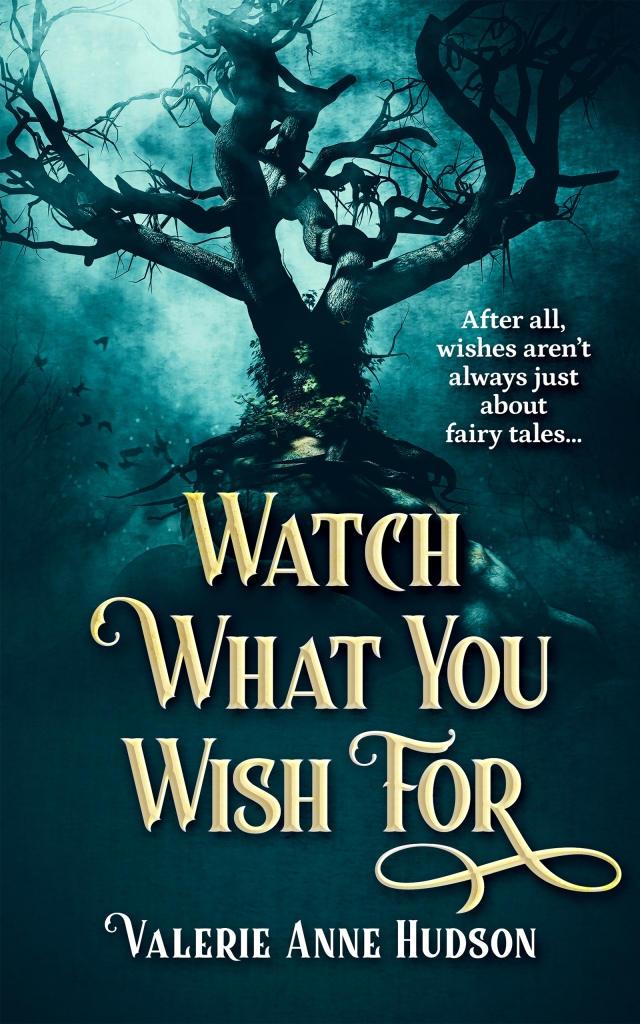
Valerie Anne Hudson is the author of the new children’s fantasy book, “Watch What You Wish For”.

I’d like to introduce you to the author, Valerie Anne Hudson. She’s written the book involving wish magic called “Watch What You Wish For”. I had the chance to ask her about her reading inspirations as a child, writing routines and helpful methods, and all sorts of interesting facts on her process for writing her book.

1) What is your favorite memory from reading as a child?

Valerie Anne Hudson: The sudden realization that I could read ‘grown up’ books.  I vividly remember having absolutely nothing to read one day. Out of desperation, I took one of my parents’ books off the bookshelf – it was a Readers’ Digest containing a variety of condensed novels.  I devoured the contents, and was so proud of myself!

2) Who was your favorite author and how did they influence you?

Valerie Anne Hudson: As a child my favorite author was Louisa May Alcott.  I still have my original dog-eared copy of “Little Women.” I must have read that book dozens of times over the years. What a superb achievement, to write a book that’s still enjoyable and relatable 150 years later.

3) Do you have a writing routine? Share what works for you.

Valerie Anne Hudson: I write for 4 or 5 hours a day, which is easy for me now that I’m retired. I’m truly fortunate to be able to do that!

4) What subjects would you like to write about in future projects?

Valerie Anne Hudson: At the moment I’m focused on fantasy:  the paranormal and the supernatural, and I write for children. I hope that my writing evolves, though, and would like to attempt something for adults in the future.

5) How has your day job/career prepared you to be a writer?

Valerie Anne Hudson: I taught school for 25 years, so there’s lots of writing involved there. I taught grades 4 to 6 for many of those years, and always loved teaching English and creative writing.


6) Why are you drawn to writing fantasy and about the paranormal?

Valerie Anne Hudson: An overactive imagination! I’m a huge Stephen King and Dean Koontz fan, along with JK Rowling, of course.  Such great escapism!


7) What activities do you do to help with the creative writing process?

Valerie Anne Hudson: I’m always on the alert for potential plots or scenes for upcoming stories. It’s amazing how many ideas you can get from real life news stories – truth is always stranger than fiction, as they say. Also, I try and read other people’s books as much as I can. All types and genres.


8) How did you get the idea for the “Wishing Tree” in your book, “Watch What You Wish For”?

Valerie Anne Hudson: I was thinking, what if you made a wish that actually came true? And what if you regretted making that wish and wanted to take it back? Then I started researching wishing wells and the stories associated with them, and discovered that there are actually wishing trees in some parts of the world. A tree seemed like it could be more dramatic than a well, so that’s how the idea blossomed.


9) Is the town of Mariposa a real town? If yes, why did you choose it? If no, was it inspired by a real town and which one?

Valerie Anne Hudson: Mariposa is a fictional Canadian town originally created by renowned author Stephen Leacock. Although he denied it, it was actually based on the town of Orillia, Ontario, which is where I live. I’ve changed the layout of the town and its surroundings around a fair bit in my story, so it wouldn’t have been fair to call it Orillia. Mariposa seemed like a good alternative choice.

10) What is writing to you in one sentence?

Valerie Anne Hudson: The desire to entertain my readers with sheer, delightful escapism!

Released on Jan. 8, 2021

“Watch What You Wish For” isn’t your normal fairy tale. 12-year-old Sophie isn’t happy about moving to the small town of Mariposa. She misses the big city, but luckily finds some friends also in the 7th grade. Their adventures lead to the discovery of an ancient Wishing Tree. They find the secret to unleash an evil power connected to the towns shadowy past. People start to go missing as lives turn upside down. Faced with the need to try to get things back to the way they were, our heroes embark on a journey that leads to self-discovery and friendship.

“Watch What You Wish For” is available at Amazon.com as a Kindle Unlimited title.

For more information on Valerie Anne Hudson, visit her website here.

Interview with Wolf Cub Chlo

Standard

With the first interview and book recommendation of this New Year, I thought all of us could use a good laugh. Not only have I found a book likely to make you smile, but also it will guide you into reading and how to tell jokes to brighten up your family’s day.

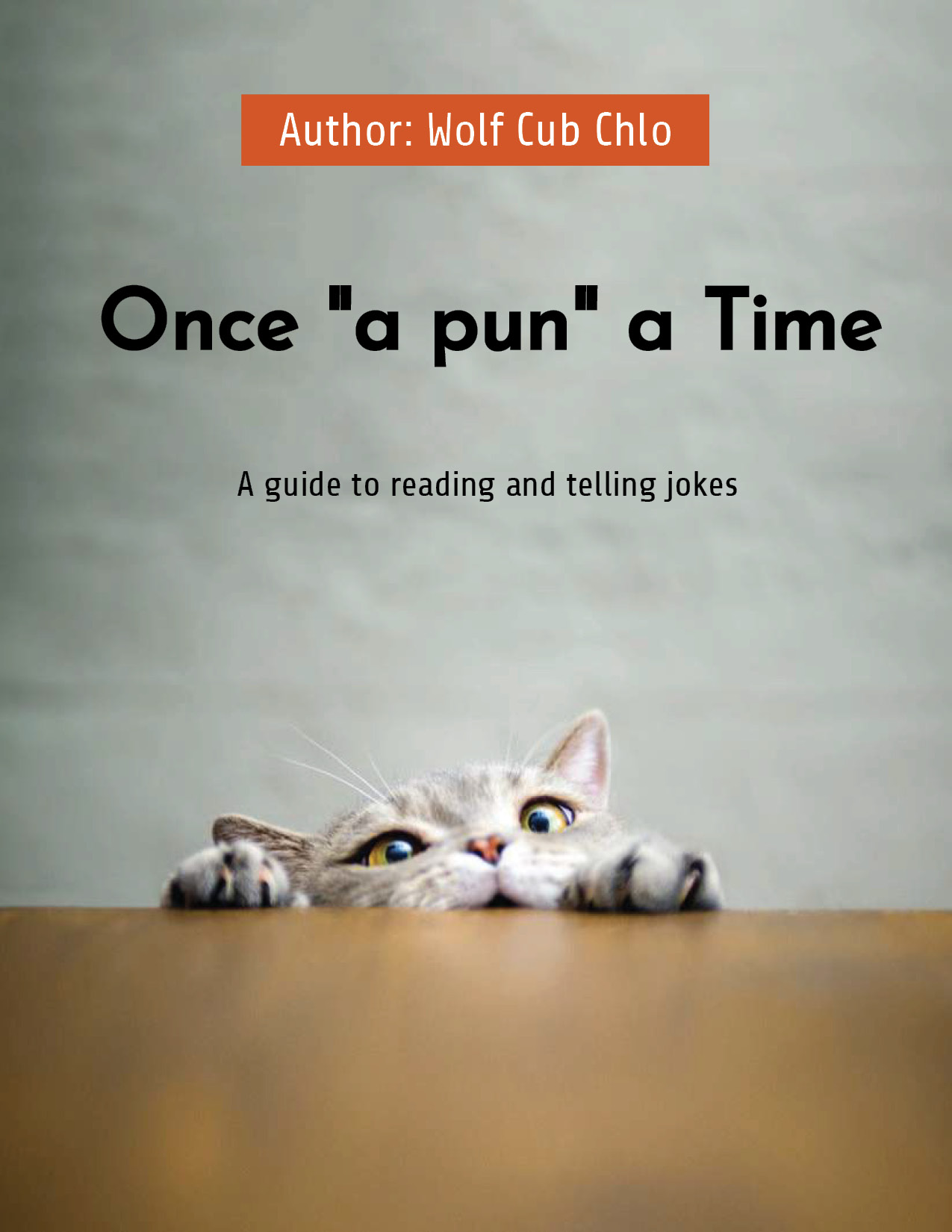
Wolf Cub Chlo is the author of the children’s joke book, “Once ‘a pun’ a Time: A Guide to reading and telling jokes”.

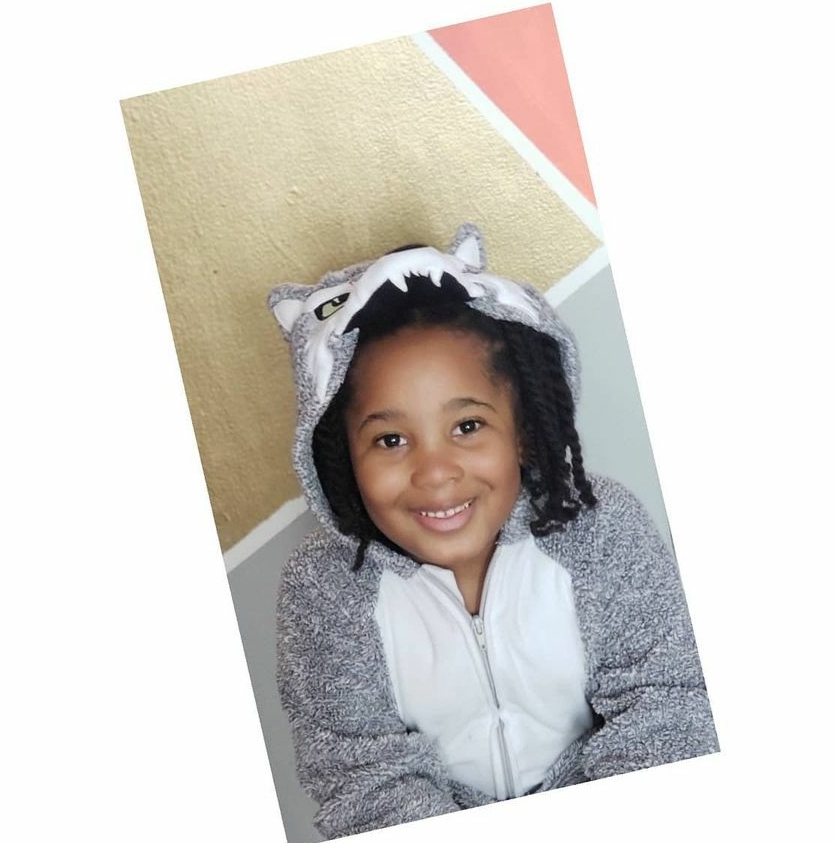
Wolf Cub Chlo is a child author that loves to tell a good joke. So much, she’s written a book about it. There’s nothing like a child giving insight to something that can make us all feel much better. What a great gift this little cub has given us all in her book, “Once ‘a pun’ a Time: A Guide to reading and telling jokes”. I had a chance to talk with Wolf Cub Chlo about why she writes, what she loves about reading and writing, and what future projects she is planning.

  1. Can you introduce yourself and tell us why you wanted to write your book, “Once ‘a pun’ a Time”?

Wolf Cub Chlo: Hi! My name is Chloé, but I write all my books under the name Wolf Cub Chlo, and I’m 6 years old. I like to think of silly words and create stories around a simple word. But, for my book, I turned those silly words into jokes.

  • What subjects would you like to write about in future projects?

Wolf Cub Chlo: For my next project, I would like to write silly stories using sight words to help other kids learn to read while having fun. I want it to be a series like Bob books. I really love those books too.

  • What is writing to you in one sentence?

Wolf Cub Chlo: To me, writing is a way to relax and bring a smile to my face. Just like coloring.

“Once ‘a pun’ a Time” is a book that is medicine to help you heal others through laughter. Laughter is something people need in their daily lives. Jokes are one way people can support each other during these difficult times during COVID lockdowns. Learn tips and tricks on how to tell and write your own jokes. Share laughter with friends and family through video conferencing and help others heal. Remember, we’ll all get through this together.

“Once ‘a pun’ at Time” is available from Amazon.com as a Kindle edition.

For more information on Wolf Cub Chlo, visit her website here.

Interview with Mac Hernandez

Standard

I’m excited to present my first Christmas book of the season. I found a darling picture book called “The Christmas Elf-e-phant” by Mac Hernandez. Mac is a Texas filmmaker, graphic artist, and storyteller that has had a passion for storytelling since he was a child. His new book helps bring children into the magical world of the Christmas Elf-e-phant. It’s a story of not fitting in with a positive message to its ending, and it’s a modern Dumbo story with Christmas at its heart. I had the chance to talk with Mac Hernandez about his childhood reading memories, future writing projects, and what writing means to him.

  1. What is your favorite memory from reading as a child?

Mac Hernandez: I loved learning about adventurers in history. From people fighting off pirates and looking for treasure to knights exploring far off lands.


2) What subjects would you like to write about in future projects?

Mac Hernandez: I’ll probably explore more fantasy and magical elements in my future projects.

3) What is writing to you in one sentence?

Mac Hernandez: The process of imagining and telling stories is a thread that pulls at my heart and soul.

“The Christmas Elf-e-phant” is a humorous rhyming story illustrated to bring alive the joy of a Christmas inspired world in which Elf-e-phant resides. Centering on a lovable elf character that doesn’t fit in, children are transported to Santa’s workshop and what it’s like to be within. But being different from the other elves can be hard. Comparable to a modern Dumbo, this Christmas themed story will bring delight and joy to any child and their family. It will make a great read-aloud to get into the Christmas spirit and take minds on a journey of humor and positive self-discovery.

“The Christmas Elf-e-phant” is available at Amazon.com. This is a Kindle Unlimited title.

For more information on books by Mac Hernandez, visit his author page here.

Interview with C. Lovelady

Standard

With the weather changing with the leaves, it’s a great time to cuddle up with a book, some hot cocoa and share a great story with your little ones. I’ve found a great read-aloud book to share on those cold, rainy days. C. Lovelady has written the book, “Mouse’s Splashy Tuesday” with a flare for the creative connection with animals and children.  I had the chance to talk to Ms. Lovelady about her childhood reading memories, future projects, and what writing means to her.

1) What is your favorite memory from reading as a child?

C. Lovelady: I loved when my mom would read “Stone Soup” by Ann McGovern just before bed. It was the type of book that beautifully combined weird and wholesome.

2) What subjects would you like to write about in future projects?

C. Lovelady: I’m currently developing a nonfiction book and two adult dramatic fiction novellas. For the future, I’d love to work on cybersecurity and technology-focused stories for children.

3) What is writing to you in one sentence?

C. Lovelady: For me, writing is how I find joy, love, and silly adventures in everyday life at home. 

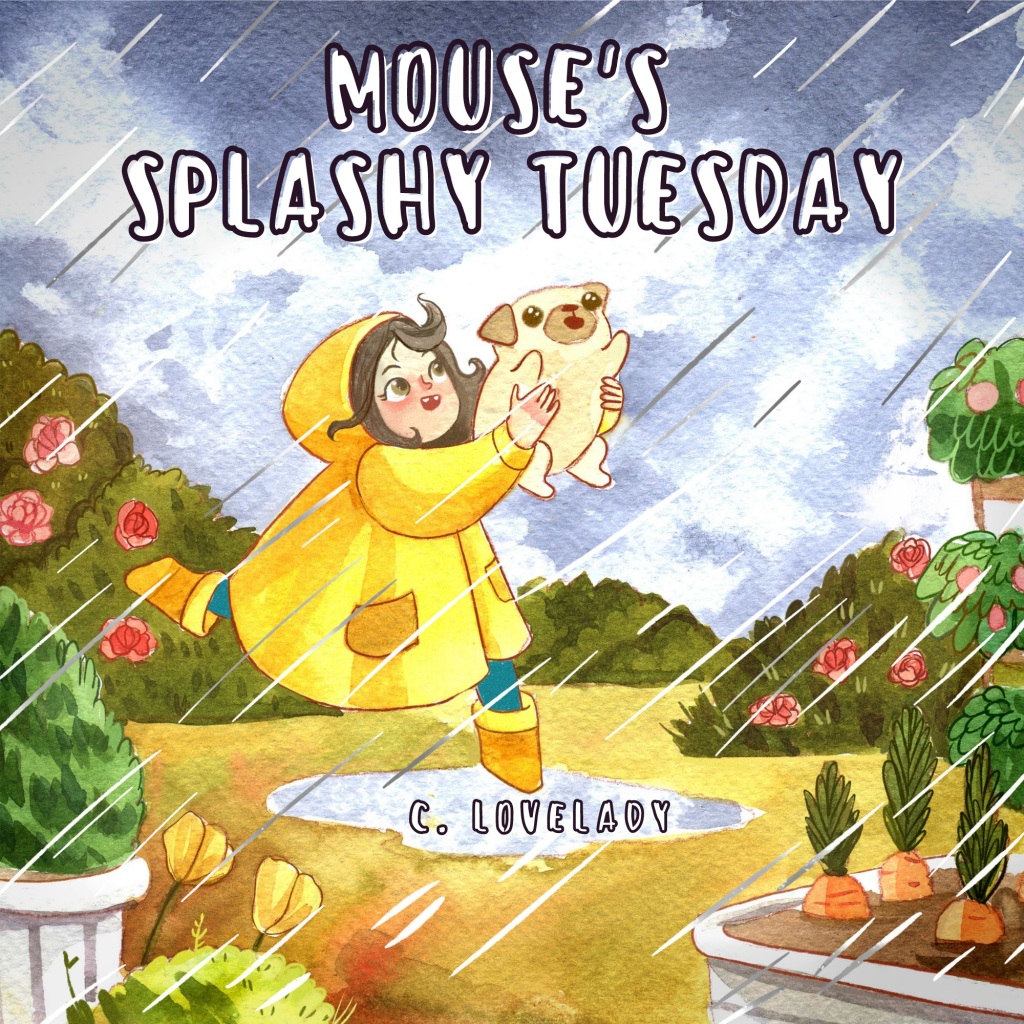
“Mouse’s Splashy Tuesday” is a creative take on a girl and her dog’s adventure. Journey with Chewie and Mouse as they take on a rainy day and the ensuing flood to save their neighborhood. Will they come up with a solution in time? This book is recommended for ages 3 through 10.

“Mouse’s Splashy Tuesday” is available on Amazon.com.

For more information on C. Lovelady and her books, visit her author page here.

Interview with Tymeka Coney

Standard
Tymeka Coney is the author of the children’s book, “I Don’t Like Racism”.

With the social change needing to be still addressed in the US, I’m proud to present the next book and author on my blog. Tymeka Coney has a long list of credentials and experience in the areas of entertainment and writing. With expertise as a Radio DJ and Personality to starting her own entertainment company, Tymeka lends her public speaking skills in pursuit of activism. In new children’s book, “I Don’t Like Racism”, Tymeka Coney tells the story through the eyes of a young African-American girl as she witnesses police brutality. Tymeka spoke to me about her childhood reading memories, what authors inspire her, and what she has planned for future projects.

1) What is your favorite memory from reading as a child?

Tymeka Coney: My favorite memory as a child is reading lots of books and ordering them from the Scholastic Book Clubs at school. I will always remember the quote, “Reading is Fundamental.”


2) Who was your favorite author and how did they influence you?

Tymeka Coney: Maya Angelou was my favorite author and poet. She influenced me with her quotes and wisdom and also in writing my first book which was, “Words Unspoken Volume I: Deeper Than Eyes Can See.”-Poetry Book


3) Do you have a writing routine? Share what works for you.

Tymeka Coney: My writing routine is to write what flows naturally and not force any writing. I like for it to be quiet so that I can hear the words I want to write about and hear the character’s dialogue in my head.

4) What subjects would you like to write about in future projects?

Tymeka Coney: I would certainly like to write another children’s book. My new children’s picture book, “I Don’t Like Racism,” was fun to write.


5) What is writing to you in one sentence?

Tymeka Coney: Writing to me is Serenity.

“I Don’t Like Racism” is a story told from the point of view of an African-American girl witnessing police brutality. She goes on a journey to understand what racism is, and how to seek peace and positive change as an activist. This book reaches out to teach all ages, genders and nationalities about racism while inspiring us all to unite and love despite the color of our skin. This book will get readers thinking about what they can do to effect positive change while choosing peace when fighting for social change. It will be a great read-aloud for any classroom library, and a useful tool for distance/online learning.

“I Don’t Like Racism” is available on Amazon.com.

For more information on the author Tymeka Coney, please visit her website at: https://www.tymekaconey.com/.

American Flag flown outside Mrs. Turner’s house to honor those veteran’s that have and are serving our great country.

I’d also like to end today’s post with a sincere thank you to all of our veteran’s for their sacrifice and service to our country. Thank you vets on this Veteran’s Day, November 11, 2020!

Interview with Judith A. Proffer

Standard
Judith A. Proffer is the author of the children’s book, “We Stayed At Home”.

With all the new changes with COVID and distance learning, it’s hard for children to understand why the changes are happening and to safely follow all the new expected procedures. I’ve found a great book that revisits the story that happened to us all this spring, and why it’s so important to embrace the changes in our lives and stay safe for everyone.

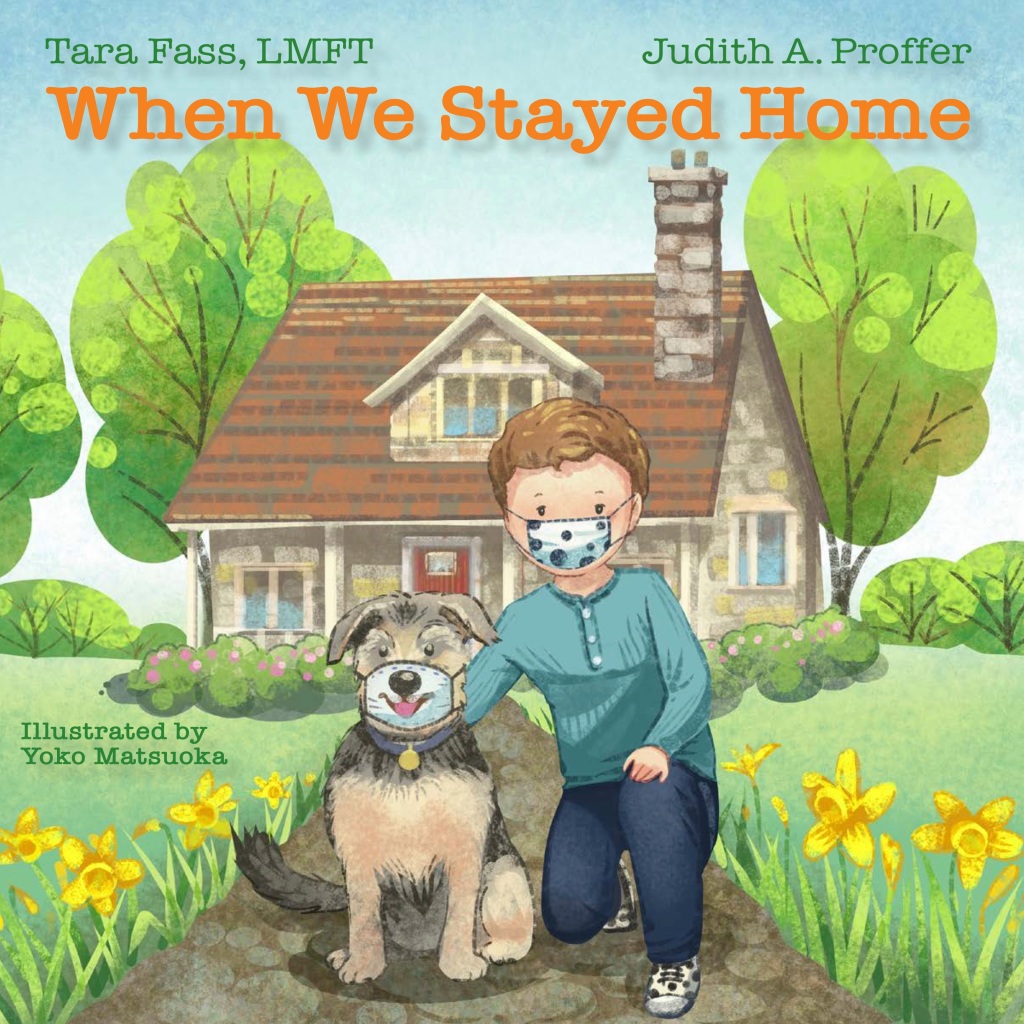
Judith A. Proffer is the co-author of the book “We Stayed At Home”.  Written with co-author Tara Fass, a licensed marriage and family therapist, this book helps illustrate the ups and downs that children are experiencing with the virus, and how they can be supported with school, home life, and their general well being. I had a chance to talk to Judith about her reading memories as a child, favorite authors, inspirations and why she loves to write.


1) What is your favorite memory from reading as a child?

Judith A. Proffer: Visiting the library weekly with my mother and sisters, we each could select a handful of books. It was such a rich experience. And for me it was more than the content, it was also about illustration, the feel of the paper, the typography. The entire book appreciation experience. I may have even smelled a brand new book or two. I shall neither confirm nor deny that.


2) Who was your favorite author and how did they influence you?

Judith A. Proffer: Asking me to name a favorite author is akin to asking me to consider my favorite song or book or dog. As a child I wasn’t a finicky reader, I enjoyed a swath of genres. I have a crush on storytellers and writers. As for how they may have influenced me. I learned early on that words don’t need to be particularly hefty or fancy to make an impact. They just need to be the right word in the right sentence to pack a powerful punch.


3) Do you have a writing routine? Share what works for you.

Judith A. Proffer: I love writing with my morning tea. I love writing in my rose garden at sunlight’s golden hour. And I even love those 2 a.m. moments of inspiration.


4) What subjects would you like to write about in future projects?

Judith A. Proffer: Travel, climate change, honoring the heroes among us.


5) What is writing to you in one sentence?

Judith A. Proffer: Writing is the purest expression of my truest self.

“When We Stayed Home” is a wonderfully, illustrated book that helps children cheer themselves on during these unusual times. It honors their role as “superheroes” by staying home and learning, but validating the necessity of the sacrifice of keeping distance, avoiding playgrounds, and limiting visits with family and friends. Co-authored with a family and marriage therapist, this book will help families navigate the bumps of the pandemic with a dash of hope and optimism.

For more information on Judith A. Proffer, please visit her website at: http://huquapress.com/.

Interview with Najah A. Jabbar

Standard

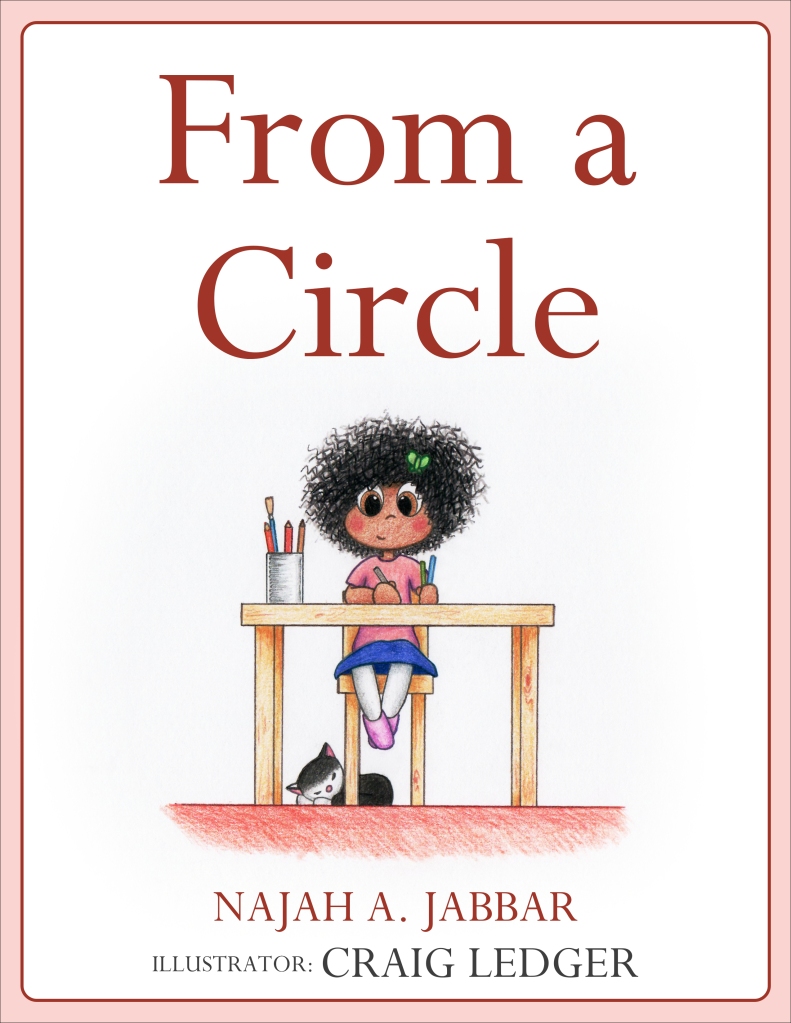
From a teaching perspective, this is the time of year where we start getting deep into the curriculum. I’ve found a book series and fabulous author that uses her teaching experience to create a unique, math and literary oriented book experience. Najah A. Jabbar is an elementary school teacher that has had a career also as a journalist. She combines these two areas of expertise to create a unique reading experience. Her new book, “From a Circle” is a continuation of her “From a Shape” series. It is a great way to introduce math concepts to your students or to your child in this current distance learning and home schooling environment.

I had the chance to talk to Najah about her reading memories as a child, inspirations as a writer, how to use her new series to introduce math concepts, and what she has in store for future projects.

1) What is your favorite memory from reading as a child?

Najah A. Jabbar: I was fascinated with fairytales and folktales, whether told by my mother, grandmother or read in published books. I would spend my library time sitting on my knees in that aisle, soaking in all the magic and lessons. Mostly, I was intrigued by the problems and solutions. While I don’t write in those genres, they made me aware that books speak to our inner selves, almost like telepathy. What’s going on in a child’s head is the inspiration for the “From a Shape” series, which “From a Circle” and “From a Rectangle” are a part of. The series introduces mathematics and artistic design to young readers while challenging them to figure out the problem.

2) Who was your favorite author and how did they influence you?

Najah A. Jabbar: My favorite writer is Fyodor Dostoyevsky for the novel, “Crime and Punishment” because of the way his writing absorbed readers into his character’s subconscious.

3) Do you have a writing routine? Share what works for you.

Najah A. Jabbar: The only routine I have is that I don’t have a routine. I feel bogged down if I must write. But that isn’t to say that I am inconsistent in writing. I am able to write in my head and play with it there. Sometimes I am crushed since I don’t have the luxury to write for a living, but then I visit that part of my brain to check if the stories are there and it’s a real good feeling when I find they can still come together.


4) What subjects would you like to write about in future projects?

Najah A. Jabbar: I want to continue with the “From a Shape” series, which incorporates elements of math, literature, and art. Right now, I am close to finishing the Lizzy and Izzy From a Shape series. While the story problems are universal, the illustrations in the first “From a Shape series represents the African race. (The first edition of From a Circle was published in 2015). But my plan is to represent all ethnicities in the illustrations with each new shape series.

5) Where did you get the idea to write your book, “From a Circle”?

Najah A. Jabbar: It’s a funny story about how “From a Circle” came to be. Before its conception, I wrote short stories, not children’s stories. My first attempt at writing a children’s book was in 2012, two years after my daughter was born. It read more like a poem. Really, it had no problem. But in 2014, my daughter drew a stick figure with a missing part. Bam, that was the problem I needed to make my story happen.


6) What kind of advice would you give aspiring writers?

Najah A. Jabbar: My advice to aspiring writers is to be your own kind of writer. To do that, you need to learn to listen to your inner self, because while you may have grown on the outside, that inner self is any age you want her to be. One other piece of advice, which helps me as a writer, is to draw your scenes, to test your story. So, when I’m done writing, I go scene by scene and sketch it out, basically scribbles in boxes, yet it helps you review the stories cohesiveness.


7) How is writing a picture book different than reporting for a newspaper?

Najah A. Jabbar: At one point in my life, I wrote for MetroNorth Newspapers, even winning a couple of Colorado Press Association awards. I became a journalist, so I could get paid to do what I love to do. There’s a fine line between fiction and reporting. Obviously, stories for newspapers must be fact-based. Fiction can be imagined, yet it needs to be believable or made possible in your reader’s minds, or you won’t hold them in your story. Be forewarned, while journalism helped improve my writing, it quieted my imagination to the point that I had stopped writing.


8) What has inspired you as a writer?

Najah A. Jabbar: When I first conceived “From a Circle,” it hadn’t occurred to me that I had a potential series. It took two years before the second book appeared. At that time, I worked as a guest teacher at Denver Public Schools. One day I happened to be in a preschool classroom. This little girl drew a house with a missing part. Bam! The next book played in my head for a week before I wrote it down. Thereafter, problems didn’t need to occur in reality for me to recognize a potential story.


9) How would you suggest a teacher could use the book, “From a Circle”?

Najah A. Jabbar: “From a Circle” incorporates art, math, and literature. Teachers could use the story as a starting point to teach children about shapes and elements of fiction. The problem in the story will keep students guessing until the end. Most importantly, this story could lead to conversations about helping friends.

10) What is writing to you in one sentence?

Najah A. Jabbar: Writing has nothing to do with your outer self, most of the time you’re unaware of the world around you, or the writing itself; you’re basically out of this world.

“From a Circle” is the next installment in the “From a Shape” book series. This time, Lizzy and her pencil dream of creating a perfect, circle friend. But instead, a smiling face appears from a lopsided circle. She tries again and again, sending her on the journey into her imagination. This is a great book to teach art and math, along with the exploration of a child’s creativity. Perfect for distance learning, home schooling, or for class read-alouds. Recommended for ages 3-8.

“From a Circle” is available at Amazon.com and is a Kindle Unlimited title.

For more information on Najah A. Jabbar, please visit her website at https://crazypigeonpress.com/ and her Amazon Author page at: https://www.amazon.com/Najah-Jabbar/e/B08BZSTSR9.