I am a teacher by day, writer during the evening and weekends. I've written a children's fantasy series called the Crystal Keeper Chronicles. I've learned a lot as an Independent author. I want to share that now through blog posts, interviewing fellow authors, and reviewing other children's books. If you don't see it out there, build the blog yourself. I'm hoping to create a resource for people to find quality children's books that don't always fall along the lines of mainstream.
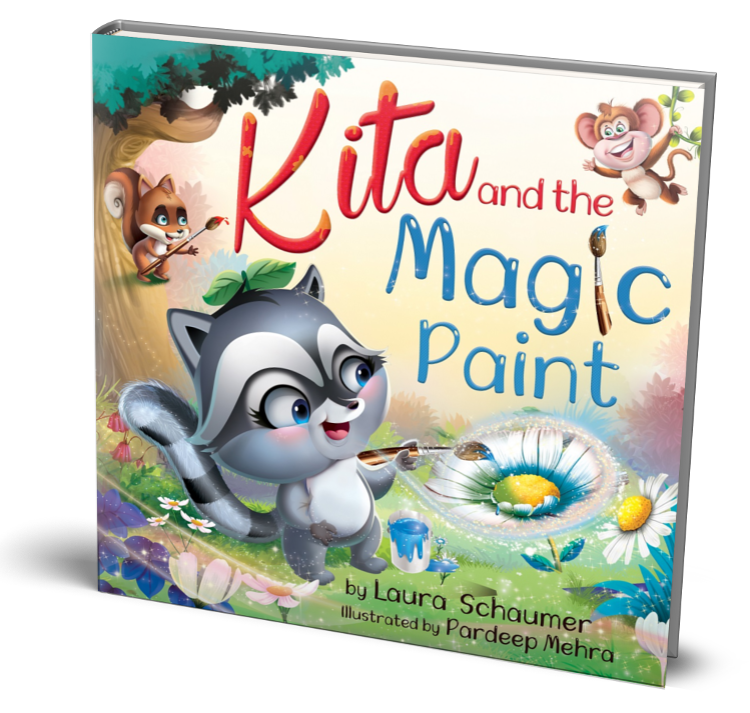
It’s Day Two of the Back to School Blog Tour for 2021. I’m starting with an exciting author and her book, “Kita and the Magic Paint” that can help instruct about secondary colors.
Laura Schaumer is a children’s writer with a degree from George Brown College and Certificate in American Sign Language. She has a background in knowing how to communicate with children, and uses this ability in her writing. She currently lives in Ontario, Canada, and loves to go camping, listen to live music and create arts and crafts. She lives with her husband and daughter. I had the chance to ask Laura about her favorite childhood reading memories, writing routine and what writing means to her.
What is your favorite memory from reading as a child?
Laura Schaumer: As child, my favorite thing to do was read under my blanket with a flashlight and immerse myself in any book I could get my hands on. It was one of my favorite things to do in my elementary years.
What future projects are you working on?
Laura Schaumer: Right now, I am working on my 2nd and 3rd book. I love to write about everything and anything. The most amazing thing about being a children’s author is that there is nothing that confines you to explore any idea that arises in your imagination.
What is writing to you in one sentence?
Laura Schaumer: Writing is endless freedom to share and discover with everyone.
“Kita and the Magic Paint” is a story where magic happens in art. Meet Kita the Raccoon and all her friends. They discover the magic of painting and a way to create new colors with primary colors. By combining certain colors, new colors called secondary colors, can be formed. It’s all a journey to the mystery of forming new out of what you have. This book will spark an experimentation mindset in your child to dip into their curiosity and explore their creativity. Basic color theory comes alive in relatable characters and reminds us that magic can be found everywhere, especially through making art.
For more information on Laura Schaumer and her other books, please visit her website here.
Thanks for stopping by for today’s featured author. Please don’t forget to enter the giveaway for a $25 Amazon Gift Card! It’s a big thank you for stopping by and supporting the participating authors. Winner will be announced Monday, Sept. 13, 2021.
Welcome to the first day of the 2021 Back to School Blog Tour hosted by the Indie Children’s Authors Connection blog. I’m excited to host this very different school year, as many children return from online or hybrid learning to in-person school. Along with diverse and inspirational titles and authors this year, I want to tank all of the readers and followers of the blog that have part of the several years of this blog tour. You’re behind the success of this event. So, up front, thank you for coming back year after year.
Plus, check back each day for a new featured author and enter the $25 Amazon Gift Card giveaway. Fill out your class or home library. Winner will be chosen Monday, September 13, 2021.
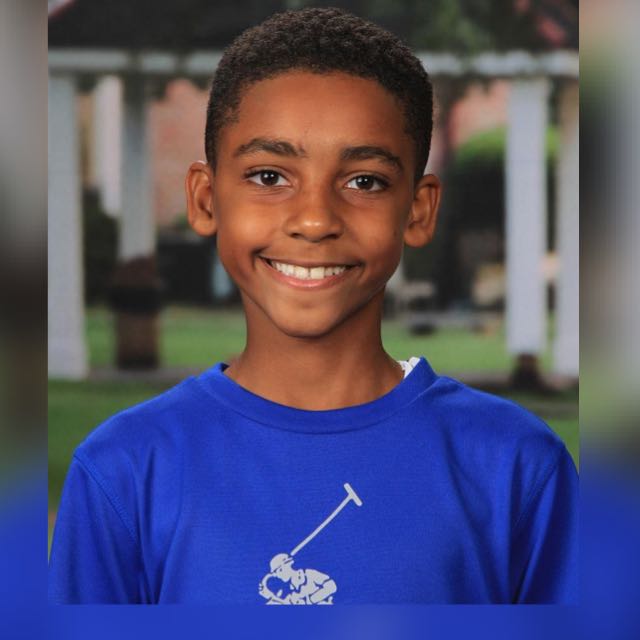
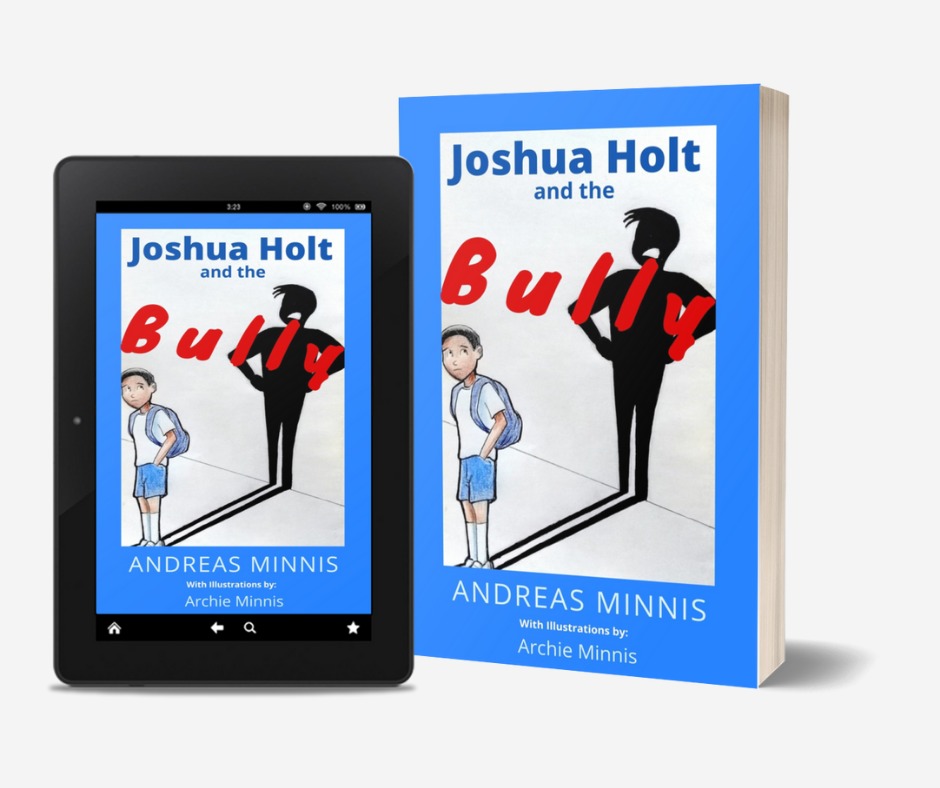
Andreas Minnis is an eleven-year-old children’s author that has written the featured book, “Joshua Holt and the Bully.”
And without a further adieu, here is our first author of the blog tour, Andreas Minnis. He is an eleven-year-old author that inspires many children his age to get involved and help others. He lives in New Orleans, but is originally from the Bahamas. He’s been featured on several international news sites, and shares his messages to kids at schools and conferences worldwide. Andreas and his mom work together to run their own publishing company called Universal Impact Press. His new book, “Joshua Holt and the Bully” is a book with a journey of resilience, courage, and forgiveness. I had the chance to talk with Andreas Minnis about his writing process, how he gets his ideas, and what kind of writing projects he has in store for the future.
1) What is your favorite memory from reading as a child?
Andreas Minnis: My favorite memory of reading as a young child is reading the book “Strega Nona” with my mom, it was her favorite book when she was a kid!
2) Who was your favorite author and how did they influence you? Andreas Minnis: My favorite author is my mom! Aisha Wonderfull. She has encouraged me to share my story to help other people. She always says: Your story is about you, but it’s not for you.
3) Do you have a writing routine? Share what works for you. Andreas Minnis: I like to plan out my books, and then dedicate specific times to work on it. Usually the weekend! I work better when I block out time to get it all done.
4) What subjects would you like to write about in future projects?
Andreas Minnis: I am going to keep writing about topics to help kids navigate being kids!
5) What is writing to you in one sentence?
Andreas Minnis: I love to write, and to share my experiences in stories that everyone else can relate to.
“Joshua Holt and the Bully” is the story of where bullying leads to friendship. Joshua is excited to be starting a new school year in the middle school. But his excitement disappears when he confronts his first enemy at school, a bully. Can Joshua learn that finding the courage to forgive can be the secret that saves everything?
Thank you for stopping by on the first day of the Back to School Blog Tour 2021. Don’t forget to enter the giveaway for a $25 Amazon Gift Card below. Return for a new chance each day, and for a new featured Indie Children’s Author.
The 8th Annual Back to School Blog Tour for 2021 is now taking sign-ups for the blog tour that will start on Labor Day, September 6, 2021.
Please sign up below to apply to be in the blog tour. I’m taking a limited amount of authors, so please sign-up ASAP. I will feature up to 2 authors a day. Last year, we had one per day, but I’d like to get a few more. This has been a special blog event that has been going on for several years now. And I think this year will be especially important to support teachers and students as they return to school during COVID. I want to be able to supply them with children’s literature that will be resourceful and relevant to the times.
Plus, I’d love to have some featured books that will help motivate children to read more. Basically, let’s help make this a great start to what has been a difficult period for many of us. Reading a good book can be comforting to a child when all else around them can seem out of sorts. Let’s bring the joy of reading to children at the start of this new, unique school year.
Here is the form to fill out to apply for the blog tour:
Deadline to apply is Friday, September 3 unless all the author slots fill up. If they do, I will post on the Blog Tour page when all slots of filled. Please mention that you are applying for this year’s blog tour and what kind of children’s book you have.
Savannah Cordorva is a writer with the website, Reedsy.com.
Good characters are the key to any novel’s connection with its readers, and this is no different in children’s books; if anything, it’s truer. Think of iconic children’s books like Harry Potter, Matilda, or The Hunger Games —what do they have in common? Their characters are relatable, driven, and memorable.
Indeed, even the most fantastical books rely on human themes to resonate with readers. After all, it’s usually the way that characters interact with elements in the book that makes it interesting, rather than the elements themselves!
This is why, no matter what sort of children’s book you’re writing, it’s crucial to develop strong characters that will stay in your young readers’ hearts for generations. Master these tips and you’ll be well on your way.
1. Establish your character’s age and relevancy
Many popular children’s books are remembered for their cherished protagonists. However, there are a couple of elements that set the best apart from the rest: age and relevancy.
Specifically, the ideal formula for long-lasting characters is that they should be both a few years older than the target readers and experiencing similar real-life issues. Children love reading stories that they can relate and aspire to!
For example, Percy Jackson is twelve years old in Percy Jackson and The Lightning Thief, and attracts readers around ten years old. Of course, while Percy’s young fans won’t be discovering their mythical powers, they are growing up and will soon be entering new environments and making new friends — just like him.
As long as you explore human themes, feel free to give your characters the most fantastical plotlines you can think of. And if you want total control of your characters, consider self-publishing your children’s book! Linking your protagonist’s story to a real-life lesson is the bread and butter of character writing, but if this lesson is somewhat unconventional, the self-pub route could be your best shot at conveying it without compromise.
2. Build their drive and motivations
You’ve established your character’s age and relevancy. Great! The next step is to make sure your protagonist’s main goal — the essence of your story — is clear. Whether you’re writing a short story or a novel, it’s crucial to get this right. A story’s narrative arc will fizzle without motivation to propel things forward. And with children’s relatively short attention spans, they certainly won’t be giving precious attention to a lackluster plot.
This means another huge part of well-written children’s characters is that what they want or need drives the plot. Imagine how boring a story like Treasure Island would be if Jim Hawkins didn’t want to find Captain Flint’s treasure. And Watership Down wouldn’t be nearly as memorable without Hazel’s need to escape from the warren’s destruction. Once your character’s key motivation is established, the rest of their story should unfold with ease!
3. Put thought into their appearance
While a character’s internal thoughts are very important, that doesn’t mean their external characteristics deserve none of your time. Though personality is Priority One in terms of story, physical characteristics are often what make a first impression, in books and reality.
So while your protagonist’s appearance might not directly affect the plot, it can impact how supporting characters respond to them. And of course, if you’re writing a picture book, how the characters look will be a major part of the reader’s experience — and will likely contain visual clues about their personalities, emotions, and so on.
This is why, regardless of your artistic abilities, it’s worth sketching out your characters, from their hair color to their type of shoes. It doesn’t have to be Van Gogh-worthy, but having a concrete reference for your character’s appearance will make it easier to imagine — and therefore write out — more realistic scenes in your story.
This may be particularly helpful when it comes to dialogue. Another useful thing to consider is your character’s voice: What do they sound like? How do they interact differently with one character vs. another? Does their voice match their physicality, or present a comical contrast?
(If this sounds like a lot of details to organize — or if you’re looking to go even more in-depth — try checking out some character profile templates to help, or perhaps just a few character-building questions to get the ball rolling.)
4. Choose meaningful, memorable names
Well-named characters are sure to stick in readers’ heads. It sounds simple, but giving a character a name that reflects their key traits will tie everything together — and tell readers what to expect!
A classic example of this is Harry Potter’s Remus Lupin: “Remus” nods to the Roman myth about the twins Romulus and Remus who were raised by a wolf, while Lupin is derived from the Latin for “wolf”. So — spoiler alert — it’s no surprise that Remus Lupin turned out to be a werewolf, with a name meaning “Wolf Wolf”. Another perfect example of this is the much-loved Miss Honey in Roald Dahl’s Matilda, who is adored for her sweetness.
Though a name might seem a small feature, plenty of creativity goes into naming popular children’s characters! Whether your characters’ names are obscure linguistic references or common synonyms, make sure they’re fun to learn and impossible to forget.
5. Make character conversations believable
Going back to dialogue for our final point, many children’s writers are tempted to write their dialogue as they think children speak. But unless you’re a preschool teacher or a parent, try to avoid presuming anything!
Indeed, it’s worth familiarizing yourself with your target audience to facilitate more believable conversations. Good ways to research might be volunteering at your local school or working at a library. Bonus points if you have friends and family with children that you can ask to proofread your book. Their endorsement is a major signifier that you’re on the way to helping your target audience feel understood and represented.
Of course, every child is different, with their own personalities, opinions, mannerisms, and quirks. Keep in mind that your characters should progress and change, but dispositions — for example, a sharp sense of humor or joyful attitude — aren’t usually as fluid. A good rule of thumb is to figure out the essential traits your character has and stick with them. With this in mind, your characters are sure to instill readers with plenty of intrigue and love.
Savannah Cordova is a writer with Reedsy, a marketplace that connects self-publishing authors with the world’s best editors, designers, and marketers. In her spare time, Savannah enjoys reading fiction (especially YA fantasy, and picture books to her niece and nephew!) and writing short stories.

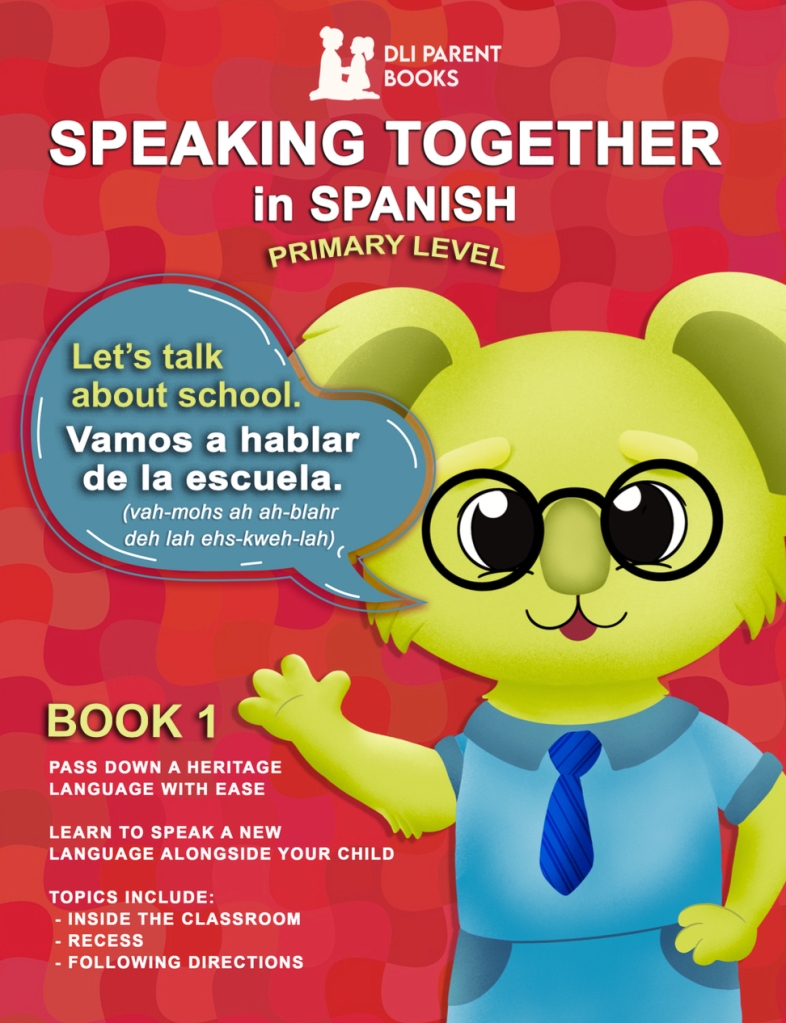
Marie Urquidi reading with her child from her “Speaking Together” workbook series.
The summer is an excellent opportunity for children to learn new skills and start a lifelong learning journey. Why not help them start learning language skills?
I’ve found a book series that has been written by a parent that wanted to teach her children their lost heritage of language. Marie Urquidi is Filipino but wasn’t encouraged to learn Tagalog, the Filipino language, as a child. Her husband has Mexican heritage and wasn’t motivated to learn Spanish. She decided to help her child to learn Spanish in school and enrolled her in a Spanish Dual Language Program. It turned out to be a Spanish course for herself as well.
She developed learning worksheets to help herself review the language as well as to support her child. Through this teaching opportunity, she has developed a unique set of workbooks to help children learn Spanish with their parents. Her “Speaking Together” workbook series covers how to teach your child Spanish, Tagalog, and English. I had the chance to ask Marie Urquidi about her influences growing up, writing projects, and what writing means to her.
Who is your favorite author and how did they influence you?
Marie Urquidi: Jane Yolen has written over 400 books, and I absolutely fell in love with “How Do Dinosaurs Say Goodnight?” I read that to my son one night, and we enjoyed it. It was a great way to bond over the pictures and the questions in her story. The engagement with my son as I read her books is what I want to emulate. She inspires me to write engagingly because I want to replicate that same experience for readers.
2) What subjects would you like to write about in future projects?
Marie Urquidi: My bilingual books aim to encourage parents and children to practice language learning in a fun and easy way. I currently have Language Workbooks for parents and children learning Spanish, Tagalog, and English. The books focus on conversations about school, recess, and playtime. I’m currently developing picture books that focus on other areas of language learning, for example, tenses and vocabulary. You can find my books on Amazon or my website: DLIParentBooks.com.
3) What is writing to you in one sentence?
Marie Urquidi: Writing is an opportunity to share a piece of you that’ll last beyond our own time here on earth.
“Speaking Together in Spanish” is a wonderful workbook to help reinforce your child’s Spanish lessons as well as learning the language yourself. With phonetic translations, easy phrases to start conversations, and extensive practice and review, you’ll have a tool to have you practice Spanish right along with your child. This workbook will give your child more opportunities to speak Spanish out of school, with private tutoring or even with Spanish-speaking playdates. You’ll gain intermediate-level grounding in four key skills: reading, writing, speaking and listening. This specially designed workbook is equipped to help monolingual parents facilitate supportive learning at home while learning the language. Great for private tutoring support or supplemental homework for the classroom, this series is a beautiful support for parents and home schooling programs.
For information on all the workbooks, here are the links:
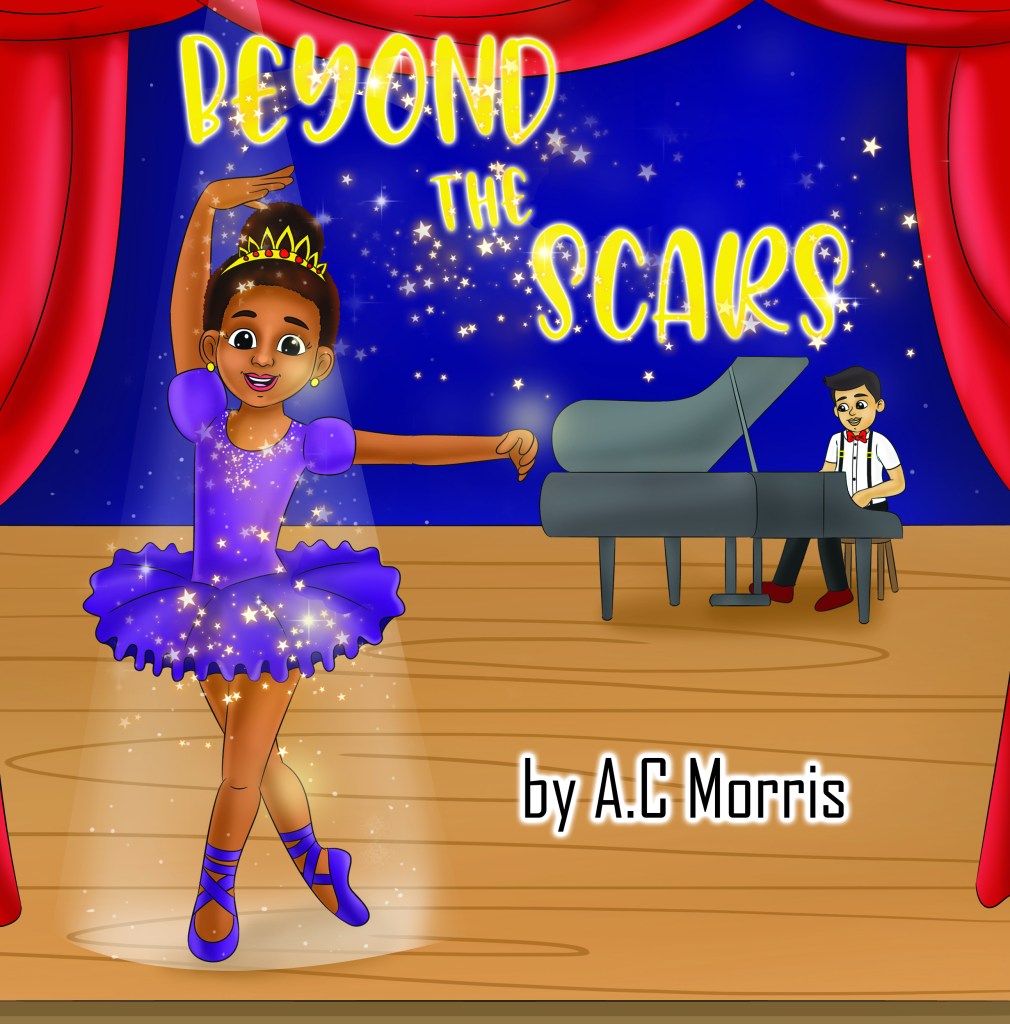
I’m always on the alert for helpful books for the classroom or at home for parents. I think I’ve found a series that will be helpful for children suffering from different traumas life can throw at you. A.C Morris has written an amazing book that touches children and helps to heal them. “Beyond the Scars” is her first book in the series, and it models how friendship can help a child mend from within. I had a chance to talk to A.C Morris about childhood reading memories, favorite authors, writing and what she has in store for us.
What is your favorite memory from reading as a child?
A.C Morris: There was a book named “Sam” by Ann Herbert Scott. It was about a young boy, the youngest of his siblings like myself, and Sam had a big age gap between his older siblings. So, he had no one to play with, as he kind of didn’t fit in. He was too young or too small or too, not enough, for everyone and couldn’t figure out what to do. I felt he was similar to me because I was the only girl with two older brothers. That book actually taught me how to have fun alone. I played and used my imagination. I was inspired by Sam. Ever since then, I loved reading.
Who was your favorite author and how did they influence you?
A.C Morris: My favorite author is Toni Cade Bambara. She wrote amazing short stories, which I love, short and sweet.
Do you have a writing routine? Share what works for you.
A.C Morris: My writing routine is to write down a general idea. Then, rewrite it again as a concept/outline and rewrite again. After, I get someone’s opinion, and ask if I am clearly expressing myself with the concept. Then, I start writing and rewriting, following that outline, adding in details. I like to actually write at night or by the lake where I can hear and feel nature the best.
What subjects would you like to write about in the future?
A.C Morris: I like to write about anything that will inspire a child to be their best and to be fearless.
What is writing to you in one sentence?
A.C Morris: Writing is Magical. I say magical because, just before your eyes, you can have this tiny vision only you could see, and you turn it into something the rest of the world can feel, see and hear.
“Beyond the Scars” is a book to help a child begin healing from trauma with a friend. Modeled with the relationship of Celeste and Miguel, the reader goes on a journey of healing as the two talk over their past traumas and heal. Celeste is an amazing ballerina, and Miguel is talented pianist. Together, their friendship forms the way to healing and dealing with the past.
“Beyond the Scars” is available at Amazon.com. This book is a Kindle Unlimited title.
For more information on A.C Morris and her books, visit her soon to launch website on August 1.
Dr. Terance Shipman is the author of the new book, “Mr. Shipman’s Kindergarten Chronicles: ABC”.
Look no further, Dr. Terance Shipman has a winning smile that wins over parents, students and I’m sure, everyone he meets. Being a teacher for almost 28 years, he’s got a lot of stories. Some of the best are from his eleven years teaching Kindergarten, and he’s put them together in a book called “Mr. Shipman’s Kindergarten Chronicles: ABC”. Each book in his new Kindergarten Chronicles helps to celebrate and emphasis the African American male teacher as a role model. He presents a positive and strong black male image in his book that children need to see. I had the chance to talk with Dr. Shipman about future projects, memories of reading as a child, and his writing routine.
What subjects would you like to write about in future projects?
Dr. Terance Shipman: I would like to write a motivational book. I post daily motivational and inspirational quotes each day on social media. I think it would be great to have them in a book.
What is your favorite memory from reading as a child?
Dr. Terance Shipman: One of my favorite memories was having my mother read to me each day. We would start a book and read a little each day. I remember placing the bookmark in the book to make sure we started in the right place.
Do you have a writing routine? Share what works for you.
Dr. Terance Shipman: I think about a story in my head for days sometimes weeks at a time. I write an outline of the story. Afterwards I sit with pen and paper and write. I have to get the story out of my head and on paper.
Great for early readers and English language learners, “Mr. Shipman’s Kindergarten Chronicles: ABC”, is a delightful presentation of the alphabet. Your child will enjoy the pictures, learning and humorous introduction written by a real teacher.
Prudence Williams is the author of the book “Ruby Smiles”.
I’ve got another fabulous summer read for your child. With school just around the corner, it’s a great idea to get some books lined up to get in the rhythm of reading again too.
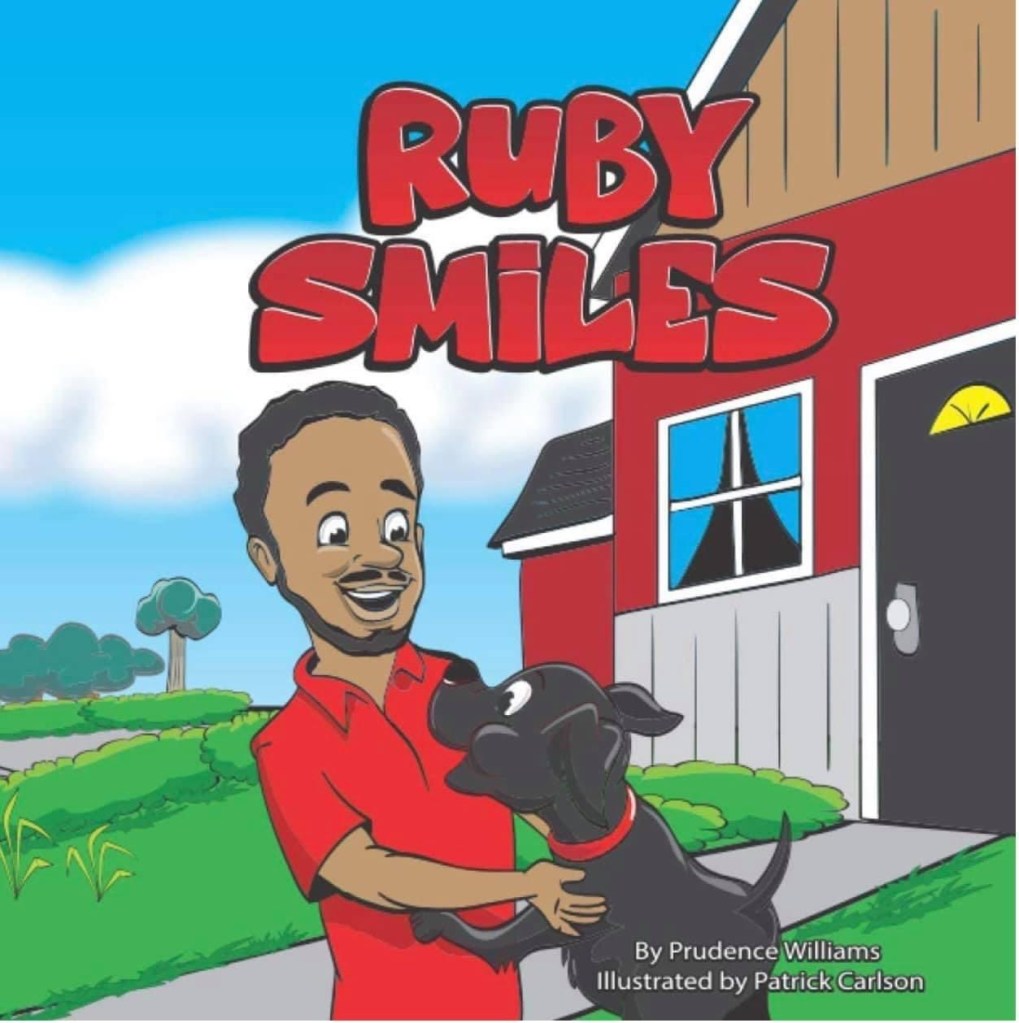
Author Prudence Williams knows a thing or two about school. She’s a 25-year veteran teacher that uses her experience with children to inspire them in her writing. Her new release, “Ruby Smiles”, is about a big sassy dog that needed her own book. I loved the way that a child is brought into Ruby’s world from a dog’s point of view. I had the chance to talk with Prudence Williams about her favorite reading memory from childhood, subjects for future projects, and what writing means to her.
What is your favorite memory from reading as a child?
Prudence Williams: My favorite memory from reading as a child is reading “Down These Mean Streets” by Piri Thomas. It was the first novel I picked by myself, and it was good! I was about nine years old and the book was probably too mature for me, but I loved it. It introduced me to new cultures, languages, foods, and ideas, and since then I’ve been a strong reader.
What subjects would you like to write about in future projects?
Prudence Williams: I would like to write a book for teen girls about being an African American girl and enjoying life and being happy and falling in love. Most of the literature about young African American girls is very heavy and serious. I want young black girls to know they can be playful and just enjoy growing up. I want to represent a stable two parent home with loving and consistent parents and sibling. I want to show the black girl as the heroine and the popular girl who get the guy, grades, and joy.
What is writing to you in one sentence?
Prudence Williams: Writing is an old friend that I always can depend on to help me understand the problem, share the news, and tell the story.
“Ruby Smiles” is a day-in-the-life of Ruby, a busy dog with responsibilities all day. But she has fun doing them, and you get to join her. Find out what a dog likes to do and how being responsible can be fun.
I’m happy to present the third part of my interview series with Harvey L. Frierson Jr. He is a songwriter instilling family values as his message within his books. It all started as a way to entertain and teach his niece, but it is becoming a literary legacy that will help future generations. I got to ask Harvey about his book soundtrack, the coloring book edition of “My Big Sister is the Best”, and the other editions of the book.
Why did you decide to write the single “Sleepy Time” and a sing-along soundtrack?
Harvey L. Frierson Jr: I wrote all the songs for my (2) month old niece Juliet, my brother and my sister-in-law Kim, so they have songs to sing along to at night.
You have some other editions of the book, like audio and translations into other languages. Can you tell us a little about them?
Harvey L. Frierson Jr: Children sing along with anything, so I gave my niece a sneaky language course. When Juliet grows up, she will be singing about her childhood memories in Mandarin, Spanish, French and English with ease.
Why did you decide to create a coloring book edition?
Harvey L. Frierson Jr: As Juliet grows; hopefully it will keep her interest in coloring and learning months from now. (lol) The coloring books reinforce our family values by telling stories that support my brother and his wife’s interest in teaching family values to my niece. I am just trying to do my uncle part. To be the best of her uncles. I have good competition, but I have coloring books and animation to entertain my niece. I am sure to make her laugh the most.
“Sleepy Time”, the sing-along audio track that accompanies the book “My Big Sister is the Best”, is available at Spotify in Mandarin, Spanish and soon in French and English.
A video is alsoavailable on YouTube with several of the songs from the “My Big Sister is the Best” soundtrack in English and the book, “I Love to Wave” in English and Spanish.
For more information on Harvey L. Frierson Jr., please visit his website here.
To read part 1 of Harvey L. Frierson’s Jr. interview, link here.
To read part 2 of Harvey L. Frierson’s Jr. interview, link here.
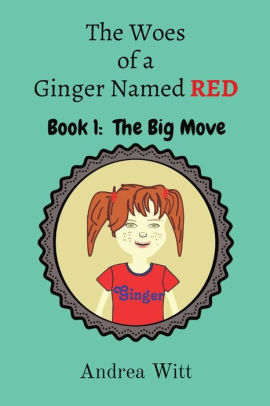
Sometimes you come along and find a great book series you just have to share. “The Woes of a Ginger Named Red” series deals with problems children need to hear about from a diverse voice. Real world problems are all brought to light in this heart-felt series written by Andrea Witt. Ginger is dealing with a seizure disorder, the medications, moving, and adapting to a new home. I was lucky enough to interview Andrea Witt, and asked her about memories from reading as a kid, her favorite authors and how they influenced her, and what writing means to her.
1) What is your favorite memory from reading as a child?
Andrea Witt: I used to be “dragged” to flea markets. I couldn’t stand it until I realized flea markets were full of books. I started collecting change from around the house to use to buy books. I started looking forward to going so I could find new books to read. The books I bought were used and I could get 4 for $1! Other people’s discards were my treasures and I bought many books I would have never had the opportunity to read had I not been “dragged to” those flea markets every weekend!
2) Who was your favorite author and how did they influence you?
Andrea Witt: As a small child, my favorite author was Dr. Seuss. I loved the silliness he added to each story. The rhyming aspect made them fun to read and I used to challenge myself to read them really fast since many of them were like tongue twisters. As I grew a bit older, Judy Blume and Beverly Cleary were among my favorite authors.
3) What is writing to you in one sentence?
Andrea Witt: Writing is the compilation of my thoughts, feelings, memories and imagination combined into a foundation that breeds new thoughts, feelings, memories, and imagination for its readers.
“The Woes of a Ginger Named Red–Book 1: The Move” is told from the perspective of nine-year-old Ginger. She has a mild seizure disorder. Although her seizures don’t happen very often, they are huge to her. Because of the seizures, Ginger is on medications that stunt her growth and make her feel like an outsider. When her mom announces that they’re going to move to a new home in the country, Ginger starts to panic about encountering bullies at her new school. Will Ginger crumble under the pressure of the move, or will she be able to learn to love her new home?