Tag Archives: Writing

How Do Writers Get Their Ideas?

Standard

How do writers get their ideas? This is a huge, diverse question . To start, you have to often ask writers. Most often, they come to me in a blinding flash; with a flurry sometimes I hardly have time to write them down. One time I was carrying the groceries, and dropped them in the doorway as I ran, grabbing a piece of paper to write down my ideas. Another time I woke up from a dream; finishing it as I was waking up. I didn’t want it to stop. I got up, grabbed my laptop, and by the time my first cup of coffee for the morning was done, I’d written the first scene of a new story.

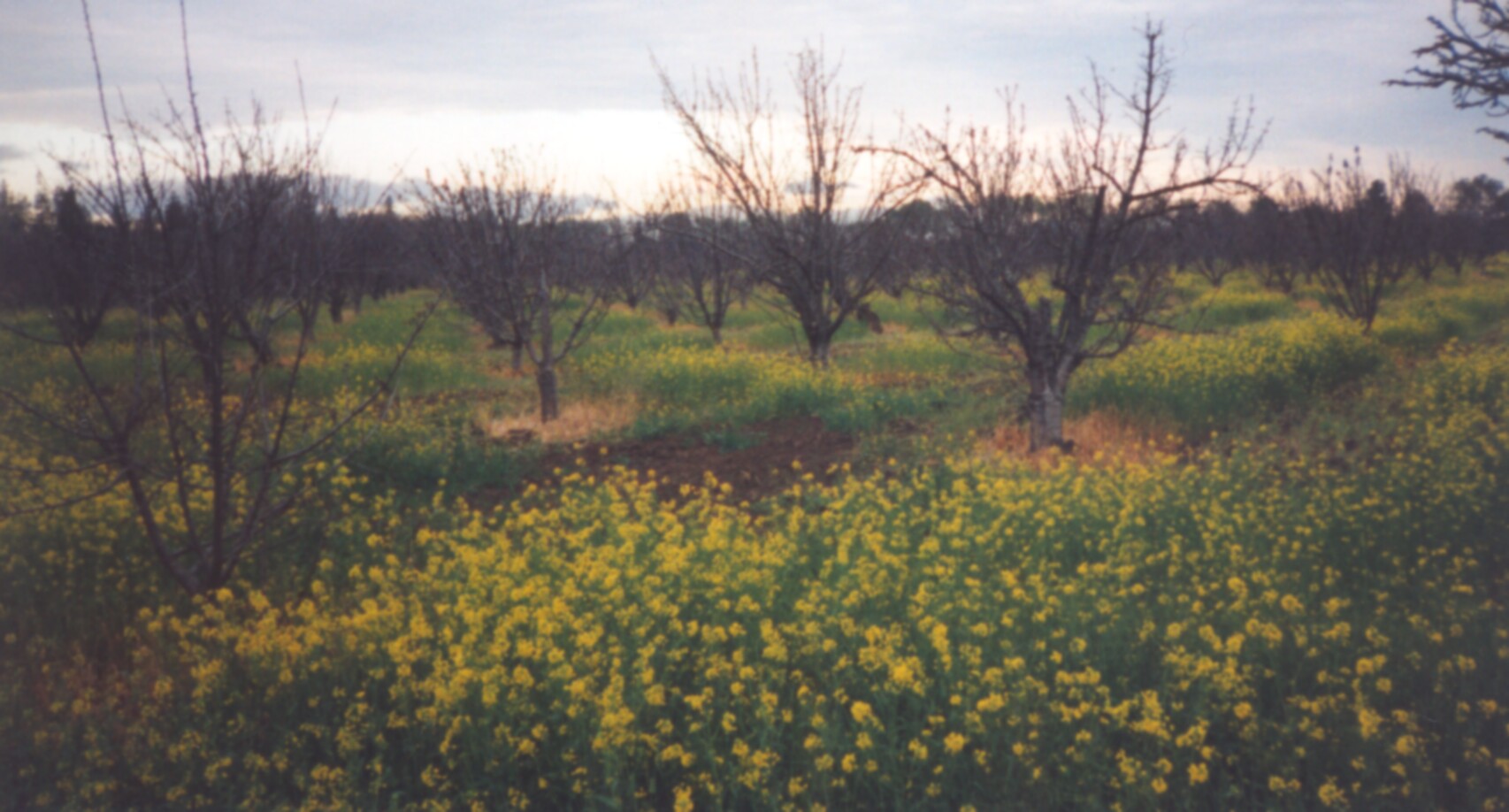
The orchard behind Tiffany Turner’s house growing up in the Santa Clara Valley.

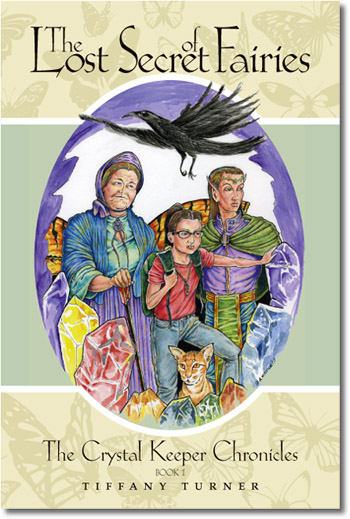
The best way to get ideas is from your own experience. With my first book, The Lost Secret of Fairies, I drew my ideas from experiences as a kid. The big inspiration for the book was playing in the orchard behind my house growing up. Often, we put a ladder against the fence, climbed over, and ran about through the outer edge of the four acre orchard. At the time, it was known as the Santa Clara Valley. Orchards criss-crossed over the entire area that now have some of the top computer and Internet companies.

As a kid, there was nothing better than climbing up a tree and eating cherries just as they were ripening. We’d come up with exploring adventures that would take us through the orchard, into the creek, and travel beyond the freeway to see what lay beyond. Often, it was the next neighborhood or over-crossing for the freeway. But it was exploring beyond your own backyard, the best kind of kid adventure.

The "Boo" in his favorite sleeping position. He was the inspiration for the cat sorcerer, Brewford.

The “Boo” in his favorite sleeping position. He was the inspiration for the cat sorcerer, Brewford.

The other partner in my adventures was my cat. Often, I would sit in the orchard, and he would wander out to find me. I’d make a reading nest by mashing down the mustard plants, hiding among yellow flowers. One day, Booford, came out to see me. His tail bounced high above the tops of the mustard flowers as I heard his meows. I would yell back, shouting, “Boo, I’m over here.” Using my voice as radar, he entered my reading bowery covered in mustard petals meowing so loud as if to say, “Why didn’t you make that much easier? You know I’m not that tall.”

My family say I captured his attitude and personality in the Crystal Keeper series. Booford is my real cat that inspired Brewford, the cat sorcerer. I simply just asked myself the question, “What if Booford could talk?” So, from then on, he did, in my books. My family say I captured his personality. His half eyed stares had the wisdom of Garfield. He was an incredible cat, and he still lives today in my books.

When you put it all together, writers are inspired by the world around them. Whether you use your own experiences, dreams, or it comes to you in a flash, ideas come from everywhere. There is a saying, “Be careful, you might end up in my next novel.” This is not only true, but the more you write, the more the real world around you ends up in your books. If you know a writer, you might be the inspiration and don’t know it. If you are a writer, you already have an idea of what I’m talking about. So get out there, and experience life and the world. It’s the best way to write.

**This is the first of a series of blog posts that help support a novel study unit for The Lost Secret of Fairies, the first book in the Crystal Keeper Series.
Common Core Standards-4th Grade
Reading Level: 4.6 AR Level

ELA CCS Speaking/Listening 4.1 Engage effectively in a range of collaborative discussions (one-on-one, in groups, and teacher-led) with diverse partners on grade 4 topics and texts, building on others’ ideas and expressing their own clearly. (Discussion Question: How Do Authors Get Their Ideas?)

ELA CCS Reading/Literature 4.7 Make connections between the text of a story or drama and a visual or oral presentation of the text, identifying where each version reflects specific descriptions and directions in the text.

ELA CCS Writing 3.b: Use dialogue and description to develop experiences and events or show the responses of characters to situations.

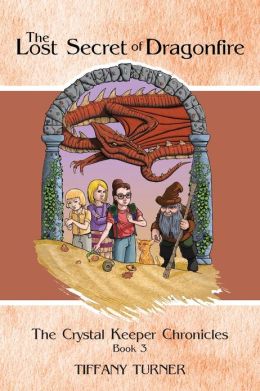
The Lost Secret of Dragonfire is available at Amazon and Barnes & Noble.

The Lost Secret of Dragonfire is available at Amazon and Barnes & Noble.

***Tiffany Turner has released her third book, The Lost Secret of Dragonfire, in her Crystal Keeper series. She continues to teach fourth graders in California while writing fantasy adventure middle grade novels. This is her 17th year of teaching. She is working on other writing projects in her No Limits Writing practices. She actively plays the Gaelic Harp at Renaissance festivals throughout Northern California.

**Follow to connect with more Common Core related blog posts over the next few months. Available for use in the classroom courtesy of Tiffany Turner.

No Limits: How To Write That Good Book

Standard

IndieLife7If anyone could pull a book out of their butt, they would. That’s why writing a book is hard. Harder still is writing that good book that will sell to the top of bestseller lists. Everyone wants that. What is the formula?

Well, I can’t say that I’ve got a book on the Top Bestseller list, yet. I’ve had my books pop up on the smaller bestseller Amazon lists for different categories with a different genre. They helped spur my sales for a few days. But that could be another blog post in the future. Plus, my other books are Middle Grade novels. I love writing children’s books, but they just don’t sell as well as adult books. So, I’ve been waiting for the right recipe. Something to gel.

What I’m going to share today is how to write a good book to get on those lists. You can get people to buy your book with a good cover or write up. What will get them to tell others to buy your book? The secret is write a good book at the start. The secret of writing the “good book” is every writer’s dream. I’ll share what I’ve learned so far, and let you pull what you need.

My current project is a Time Travel Romance. I’m feeling a need to share this since making the magic of a book click together is so difficult. I should know. I’ve tried for almost 3 years to write Young Adult or even New Adult. They are bigger markets, and really are the areas that are doing well in self published ebooks.

I’ve also heard that sometimes books do write themselves. I never knew until over the last few weeks, I’ve started to churn out not one, but two Romance Novels. How? I let myself “Just Write”. I stopped telling myself that the book had to be with a certain character, setting or plot. I’m just letting the book be. Here is the process I am using to write them.

Recently, I pulled a Romance Novel introduction out of my butt. I woke up, grabbed my laptop, and wrote the intro to what seemed to be a Romance Novel. It felt good to just have the scene roll from my mind to my fingers typing. When I was done, I thought to myself, “Well, it’s not crap.”

But the day went forward, and the next day, I kept writing. The day after, I finished Chapter 2 and kept writing. Wooh. This was unusual. I’d tried so hard to write a YA or something for the adult market that might sell a bit better than Middle Grade novels. After a failed YA about Mary, Queen of the Scots, this Time Travel Romance novel was just flowing from my fingers. Why was it working this time? Why was it gelling?

I do write Middle Grade Novels. In fact, I’ve now written three MG novels in a fantasy/adventure series. I’ve got a system down for writing a book. I have a freelance editor, a support group of friends and family, and I hang out a lot on Kboads.com/writerscafe which is essentially my writer’s group online. I also joined a children’s writing organization (SCBWI) when I wanted to learn the genre. Note these four things: 1) Family and Friends 2) Join a Writers Organization for Your Genre 3) Find an Editor 3) Writer’s Group. These are the first four steps to gain a stable writing environment that will drive you to write the good book.

The first step you may already have. But I recommend not showing your first draft to anyone until it is done. Sit butt in chair and finish the book. It could be absolute crap, but it needs to be done to be a book. Remember, you can always change the ending, add plot devices, or as the phrase says, flesh it out. You need the bare bones of the first draft.

To get that done, I’ve promised myself to write for at least one hour a day. Just get the butt in the chair and do it. The rest is just details. Then, I read back as I’m writing and fine tune as I go. A good first draft should be reread at least twice before letting others see it. At least, that’s how I feel. Some people might enjoy more feedback as they are writing. I do ask people questions and research things that come up. But in the end, it’s better to keep one cook in the kitchen, and get it done.

Step Two is find a writer’s organization that can help you with the genre. If you have been writing already for awhile or belong to a group, I’ve gone the option of just studying the new genre. I found out that the type of Romance I am writing is Time Travel. I also started a new project a few days ago that is clearly a Paranormal Romance. I’ve been downloading examples and getting advice from other Romance novelists on what books to look at from my writer’s board. It’s almost like researching for a term paper. But a lot more fun.

Step three is finding a good editor. There are great freelancers out there. I think the best thing to do is go to a place you know people could recommend a good, reputable editor. I found mine on my writer’s board by simply posting, “I need an editor” and explained the project. But I asked for a sample edit first. This is crucial. You want to see if their style of writing/editing will work with yours. It is usually just a few pages.

I had one editor that was recommended through my writing group that wanted to charge $250 for a sample edit. I ended up going with the editor willing to work to see if we fit before shelling out cash. So, find out if they have done previous work in your genre and if they can work for you. I loved chosing my own editor. I think it was a better fit that way.

Step Four: Get that writing support you need by joining a writing board or writing online group. Really. This is crucial. Writer’s are lone creatures, but very delicate. If you have a problem with your draft, questions, or a shoulder to cry on from bad reviews, this is the place you need to post to feel safe and vent. I go to kboards.com in the Writers’ Cafe. It’s great to post if you are an Indie Writer starting out, a hybrid author self-publishing older manuscripts, or what ever might be writing related. It’s kept me from throwing the computer through the window several times.

After these steps are in place, give yourself no limits. I recently had my third MG novel, The Lost Secret of Dragonfire, win an honorable mention in the children’s category at the 2013 San Francisco Book Festival. At the ceremony, the winning overall book was called The Power of Starting Something Stupid by Richie Norton. The whole premise of the book is that when you have a stupid idea, and you got all these reasons maybe not to do it; that’s the time you should follow through. Don’t put up a wall or limit yourself because it sounds stupid. That probably means it’s the best idea in the world.

So, the last and final step is don’t limit yourself. If it’s stupid, but it’s working, do it. There will be a reason why you’re writing it later. Get it out of your system and figure how it fits in later. In the end, it might be your best writing of all. It could be the good book that becomes a bestseller. Remember, no limits, and keep writing.

**This post is part of the monthly
“Indie Life” posts linked on the Indelibles Blog.
The Lost Secret of Dragonfire is available at Amazon and Barnes & Noble.

The Lost Secret of Dragonfire is available at Amazon and Barnes & Noble.

***Tiffany Turner has just released her third book, The Lost Secret of Dragonfire, in her Crystal Keeper series. She continues to teach fourth graders in California while writing fantasy adventure middle grade novels. She actively plays the Gaelic Harp at Renaissance festivals throughout Northern California.
Why is Self-Publishing Working?

Standard

IndieLife7There is a revolution going on in publishing right now. Self-publishing is taking off in different directions. At the forefront of this revolution are the innovative authors that share their ideas, articles, and experiences at a certain writing board that is popular for the Bohemians of this revolution. The writing board, KBoards.com, known before as Kindleboards.com, is a gathering place for a lot of the cutting edge Indie authors with ebooks listed on Amazon.com. Many problems are solved, innovations discussed, and ideas abound in a modern day Bohemian life search for getting ones book out and noticed. Four years ago, another self published author directed me to this board to get advice. And it has been a blessing in disguise. I am grateful for this writing board’s help and attention, and I’d like to share some of the advice I’ve found there, and how I’ve made self-publishing work for me.

As usual, there are voices always out there trying to share experiences of self-publishing. One such voice has been humbly sharing all of his processes including his recent signing with Simon & Schuster. His name is Hugh Howey. His book, Wool, is currently on the new release table at Barnes and Noble. His book, Wool(Omnibus edition) was voted runner up in the 2012 Goodreads Book of the Year for the Best Sci-Fiction category. Basically, he started with a good book and self-published. In the end, he’s kept his digital rights pioneering a new frontier for all authors. But then I digress. This is what happened this last week.

Hugh, being tired of seeing such negative comments about self-published authors, presented an article to Salon.com using the Kboard.com thread to research his article, Self Publishing is the Future-And Great for Writers. Basically, he wanted to point out that there are people out there making a living at self-publishing, mostly what would be considered mid-list authors. His basic point was that there are people making a living, or paying the basics such as rent, bills, and other critical things that help you launch as a writer.

There were the normal, negative comments. But there was a surprising amount of support from other self-published authors. Really, it proved to me that there is an underground community, a sense of realness and artist survival shared by many. There were many other stories shared, or even just income per month, on the success of being an Indie Author. It made me think; you just can’t sit around and wait at the drugstore counter to be discovered like everyone else. You have to go out and make self-publishing work for you.

Why is it working for many of us? It has to do with the royalty percentage. Ebooks are still relatively new. Most royalty percentage for self-published companies are 50-60%. My current publisher, Trafford Publishing, gives 50% of the ebook net sales. I have no agent to share this percentage. My average sales is about 10 ebooks a month. Now, this is not terribly impressive compared to some of the other numbers I’ve seen. I also know that children’s ebooks sales are slowly growing. Plus, I am selling books. This is better than collecting dust on a shelf. Most of the 5-6 figures of income of self-publishing authors are Romance and Mystery. Throw in sometimes Sci-Fi, and it is working for many people. It is working better than some people can imagine.

There are some advantages to self-publishing my book. In 2007, I published my first book, The Lost Secret of Fairies. In 2009, I published the second book in the series, The Lost Secret of the Green Man. As the third book, The Lost Secret of Dragonfire, releases this spring, all my previous books are available on the virtual shelf. Readers can go back and buy the earlier books at a listing price of $1.99 or $2.99. But that leads to the next point.

Being successful also depends on your selling price of the book. I saw indie author experiments with pricing influence the price of books. I tried my own with my Amazon Price Matching Experiment last year, and posted on my blog about it. In October 2012, Amazon had a settlement with the US State Attorney to reimburse customers for price fixing with three different publishers. Prices were no longer fixed at $9.99 for ebooks.

In fact, the price points started to drop, you guessed it, to $0.99 to $3.99. In April 2012, Mike Coker did a post on his blog showing what price points worked on his website, Smashwords.com, $0.99 and $3.99. He had all the Indie Author data of experimentation to back him up. That’s when others started to listen. Data is starting to show self-publishing can work. It’s not hard to connect the dots that self-publishing is not only working, but having it’s data and experiences used by other publishers.

Being tuned into all of this uprising is like a front row seat to some of the biggest change happening in publishing. Those of us who have nothing to loose, no overhead, and no corporate structure to answer to can try new things on a whim. I tried the Amazon price matching idea and watched my first book, The Lost Secret of Fairies, be downloaded for free over 9,000 times to build a whole new reader base. Three months later, Amazon switched to two separate buying lists so free downloads wouldn’t top their best seller lists. But it worked for me, because I was an indie author that had control of my pricing and distribution. This is a whole new concept for authors, and exciting to be at the forefront.

To add to this, I know where my ebooks have sold. I can log on and see how many sales I’ve had in the US, UK, and Canada. I’ve even had a few books sell in Japan. This is using listings for Kindle Direct Publishing and Smashwords.com. Smashwords distributes to Barnes and Noble, Kobo, Apple, and several other ebook retailers. These are just the ones that I use. Other avenues are available too.

In a way, I’ve been trying to make self-publishing work for me. My new book, The Lost Secret of Dragonfire, took three years to write. I spent the last year editing with a fabulous freelance editor named Shelley Holloway. I’ve hired an artist, Rich Wallace, to do the cover and inside illustrations for the last three books. In the end, I learned it really doesn’t matter to your reader how your book gets to them, but that it does. Whether your book is self published or traditionally published, a reader will want your book if they like it. So, the most important thing is to write a good book. That is what any successful author does. Write a good book that people will want. If your book is good and available, people will want it, no matter how it is published.

**This post is part of the monthly
“Indie Life” posts linked on the Indelibles Blog.

dragonfiretbnailjpgTiffany Turner is a self-published author the children’s fantasy adventure series called The Crystal Keeper Chronicles. Her current release, The Lost Secret of Dragonfire, is the third book in the series. She has been an elementary teacher in California for 16 years.

Smashwords Offers Library Pricing

Standard

It continues to amaze me how new things come up for Indie Authors. Right now, it’s all about pricing. Whether to have your book priced free in a promo, or set it at price points of $0.99, $1.99, or $2.99. But fresh ground has been broken with Smashwords announcement yesterday of Library Pricing.

According to their blog, Smashwords announced their new program, Library Direct. This new program allows library’s to obtain Indie Books for their ebook check out systems. Several large library networks placed preorders from Colorado and California. It’s will help establish more available books in the ever growing ebook library systems.

Smashwords’s authors received emails about the news, letting them know they can now choose a separate price for libraries. The ability to set a price that is lower or even free for libraries is a great way to promote. Not only can libraries be supported to insure a future for books, it gives a whole new reader base to budding authors.

As with anything new, there are lots of questions. Should a book be listed for free? How will the libraries know which book to buy? How big could this reach?

All I can say is that libraries are hard to break into as a beginning author. With limited funds, libraries rely on book reviews and top seller’s list to choose purchases. Many Indie authors don’t make the NY bestseller’s list. But there is a chance for them to be on the Smashwords Best Seller’s List. And with just a few library systems starting out, I’m sure more will follow. With low priced or free books to choose from, ebook libraries will be larger than any possible brick and mortar library. The shelves would never end.

I am happy to announce that both my books will be available at a lower than retail price for this new library endeavor. It’s a great way to support the future of our library systems and reach a new readership. Plus, it makes me proud to be an Indie Author.

The Amazon Price Matching Experiment

Standard

Book 1 sold over 9,000 free copies in over a month.

Sometimes you can find some really good ideas on Writing Boards. Some turn out to be fabulous ideas. Back in Dec. 2011, I noticed some posts on kindleboards.com in the Writer’s Cafe about a back door way of getting your books to go free on Amazon. I’ve heard from another author this is even difficult for traditional publishers to do. Amazon tends to not let books go free. Unless you know the back door.

The key ingredients to start the experiment turned out to be Smashwords and having your book on the Premium Catalog. Other authors tried this with having their book published on the Apple Store as well. I don’t have a directly published edition through Apple, but it is something to be noted. This way was possible as well.

I listed my first book, The Lost Secret of Fairies, as $0.00 on Smashwords. It takes a few weeks for it to set to that price on the other websites like Barnes and Nobles. But I noticed that it went free on the Nook within 2 weeks. Once it hits a big site like Barnes and Nobles, Amazon will often price match it with the Kindle edition. Then the fun really begins.

By the end of January, I’d sold 400 free books of The Lost Secrets of Fairies. Amazon matched it on Jan. 24, 2012. I watched the numbers climb to 1,739 to 2,037 by the next day. I noticed it averaged about 200 free downloads in one hour. As I tracked the numbers, it slowed down to 100 free downloads an hour over the next few days. By the end of January, I had 5,386 free downloads for my first book. The second book in my series, The Lost Secret of the Green Man, had 21 books sold.

February was a fun month. The sales continued with free downloads changing to 100 a day for The Lost Secret of Fairies. Sales of the second book followed. My first book returned to its normal price of $0.99 by March 15. The total free downloads for Feb. included 3,642. There were only 9 refunds in that time. Making the total free downloads for end of January, February, and beg. of March at: 9,894.

To see if all this would benefit my second book sales, I crunched some numbers. There were 21 sales of the Secrets of the Lost Green Man in January. February had 35 paid sales, and March had 24. The grand total of sales was 80. So, for about every 125 free downloads, I had a paid sale for my second book.

The Lost Secret of Fairies became the top in the Free Store for several listings. On Feb. 6, it listed as #1 children’s books/social situations. On Feb. 7 it was #1 children’s books/self esteem and respect. I witnessed it topping out at #110 in the Kindle Free Store around the same time.

After my first book returned back to $0.99, the free bump kept it selling at 2/3 higher than normal. My average sales is about 10 books a month. In March, it was at 64 sales, and for April dropped in sales down to 29.

About the end of March 2012, other authors noticed drops in sales ratings even with free book sales. After a while, people reported back trends on the Writer’s Cafe board that Amazon must have changed their algorithms in regards to free book sales. Free book sales were no longer being counted the same as paid book sales. The ratios seemed to work out to 10 free book sales equaling 1 paid book sale.

For the month of May, things returned to normal. The Lost Secret of Fairies had 12 Kindle Ebook sales while my second book, The Lost Secret of the Green Man, had 9.

What did I learn from this experiment? I’ll benefit from the over 10,000 sales of my first book, free and paid. I have an awesome reader base now. This will help when the third book is ready for release this fall(2012). Plus, for every 60 copies downloaded for my first book, a second book was bought. The Free Download bump raised my sales for two months. I even received 3 new reviews on Amazon, and 4 new reviews for the Nook. They were all positive. In addition, there were fewer refunds than I thought.

The most important thing I walked away with; I have thousands of new readers introduced to my series. That, in itself, is priceless.

Crystal Cluster**The Crystal Keeper Chronicles are available on Amazon.com as paperback or Kindle editions.
Also available on Smashwords.com. and the Nook by Barnes and Nobles.

#SampleSunday Jan. 1, 2012 Sneak Peek Into Dragonfire

Standard

I’ve been busy writing the third book in my Crystal Keeper Chronicles, The Lost Secret of Dragonfire. Here is a sneak peek into my current draft. The last look was in May 2011. Wanda had her little brother break her crystal pendant. So, she was off to visit master miners and makers of crystal pendants, the dwarves.

A Look Into the third book of the Crystal Chronicles: The Lost Secret of Dragonfire:

There was a sudden flare of light. Then, I saw standing in front of us, a shaggy man as tall as me. He had a long, brown beard, a bulbous nose, and beady brown eyes. His eyebrows were beyond bushy, and he held a torch flooding the corridor with enough light to make the crystals glint in all directions. His cloths looked like a peasants drawing from one of my fairy tale books. You know, long following sleeves, vest, drawstring at the collar, and brown baggy pants. But the most distinguishing thing was his hands. They were large and beefy. It made him look out of proportion. I saw the glint of boots under the cuff of his trouser.

“Welcome to the City of the Dwarves. For a human child, to be this close, you must be a Crystal Keeper and on fairy business. I’m Clarkson. The Watch for the Western Edge of the Dwarf Capital. Be what business ye on?”

I cleared my thought and stood up a bit. I tried to sound official by saying, “I am a Crystal Keeper of the Western Realms of Fairy. You are right. I have come on fairy business. I be named Wanda.” Flashbacks of the visit to the Renaisance Fair came flooding back to me. I pointed down at Brewford. “This is my cat sorcerer and assistant, Brewford.”

And instructor, guide, and general reference for advice. Brewford nodded. His head voice was filled with cat dignity.

“What is it that you wish of the Dwarf Kingdom?” The dwarf folded his arms. “It is my job to find the best resource to guide ye.”

I couldn’t continue with the Faire language. I was going to have to switch to normal talk. “Well, Clarkson, my little brother totally broke my crystal. I need a new one. My unicorn guide said this was the best place to come.”

He answered with a gruff affirmative that ended in a grin. “Good to switch into the informal language. I was never good at it in school, you see. Your unicorn was right. We supply the Fairy World with most of their crystals for Keepers, healing, building, and pretty much anything else that could be needed. If a dwarf knows anything, it’s crystals, stones and the earth. It is our speciality. If you need it, we can mine it.” He gave me a wink and motioned to follow. “I think the Dwarf King would be interested in hearing your problem. Maybe you can help us with ours.”

We did notice a magical imbalance in the paths on the way here Dwarf Clarkson. Brewford had taken the lead in front of me. He slipped right next to the dwarf. If I’m not mistaken, the energy flow is being interrupted. Have you found the source?

“That is the problem Cat Sorcerer. We can’t find the interruption point. If we knew where it was, we could fix the imbalance. It’s as if someone has found a way to divert power from the paths, and it’s starting to affect the roots. We need to find it, or the fairy paths themselves will start to collapse. The Fairy World would be divided permanently from the Real World. The imbalance could destroy both worlds.”

There was a tisk, tisk from Brewford. It is more serious than I thought. You’re right in taking us to the Dwarf King. I’m going to need to ask some questions as well.

This sounded like some kind of Fairy Armageddon. I had to get this straight. “Do you mean, the Fairy Paths would collapse? Be destroyed? How would the fairies travel and communicate?”

It’s worse than that Wanda. Brewford’s head voice actually held a note of concern. The fairy paths connect the World of Fairy, but it is also the conduit for all of the Fairy Magic. Without the Fairy Paths functioning correctly, Fairy World magic will be cut off or worse, fade from the World of Fairy.

“And the World of Fairy,…” I left it hanging in the air as it started to settle into my mind.

“…would die.” Brewford’s words were more chilling than the air around me.

Oh boy. Not good. I hope we could find this Dwarf King fast. I was right that I felt a need to go quickly.

We arrived at the corridor end. It opened up to the glow at the end of the tunnel, and I couldn’t speak. We were in a cavern, the largest crystal cave I had ever seen. The walls were lined with crystals and structures of crystal, stone, and rock. It was beyond cave dwelling and cave man like. It was a catacomb of crystals and caves.

In and out of different level openings, dwarves moved in and out. Some had beards. Some had long walking sticks, carts, baskets, and even small mules. The rush of industry was about this place, and dwarves were everywhere.

“Welcome to Geldenar”, said Clarkson. He waved his hand about and grew with a big smile. “I can tell this is your first visit to the Dwarf Nation. Your eyes are huge. Glad that you seem impressed.”

Look for other sneak peeks and release information for The Lost Secret of Dragonfire through this blog.

**The Crystal Keeper Chronicles are available on Amazon.com as paperback or Kindle editions.
Also available on Smashwords.com.

What Is Success? Looking At What Makes Your Book Important

Standard

The end of the year, you always look back. What I seem to be looking back on is the success I’ve had as an Indie Children’s author. Really pondering, if I had any success at all.

Then, I downloaded an ebook to help with that ever elusive book marketing that all authors are faced with. Again, I think of the choices I made choosing a drama degree instead of marketing which would have fed my love of promotions back in college. I smile about this as I turn back to the ebook. After all, I didn’t find out about this fact until my senior year. Who would change majors then? I get back to the book.

Advanced Book Marketing by E.J. Thornton states an idea. I was considering the answer to being successful as an author. Was I successful? When I read it, I felt the “Ah Ha” moment take hold. At the 9% point in the book, noting of course it’s an ebook, is this quote:
“The third and most important objective of a book is getting it read by someone other than your mother!”

Really, it goes on to state how important it is. In fact, it is the single most important reason why someone writes, that someone, a magical reader that might like and enjoy it, will read your story, book, article, manifesto. And I agree. It is the most important reason in the end. Not that an editor reads and buys it or that you self-publish it, but that you’ve gotten it to the masses of readers out there to read. If you write it and publish it, it will get read.

This brings me to the point of what is success? In terms of being a writer, it must be that someone reads your book. So, if this be true, than anyway that you can get people to read your writing makes it a success. Whether you self-publish, get signed by a small or micropublisher, or even one of the Big 6 publishers, your book will get read. But then, it comes down to numbers. You want a grand, large, mammoth, sizable, humongous, gargantuan amount of people to read your book.

So, then one must reflect, am I successful?

Step one: Yes, you are successful if you have published and people are reading your book. It’s out there, no longer on your shelf collecting dust, or waiting for months in a slush pile at the bottom of an editorial assistant’s desk. Good start.

Step Two: Do you have an internet presence? Website, blog, listings at multiple websites? Interviews on blogs, book reviews, and even the very occasional email or message from an actual reader(of course being the cause for great celebration when ever you get one) all spell success.

Step Three: How great is your success? The measurement of how grand all this is depends on what you want to do with your writing. Of course, having it recommended by the Oprah Book Club might be considered more successful than an interview on a Mom Book Club blog. But, a mention is a mention. Word of mouth is key. The internet is a big mouth. Cram it full of things spoken about your book and soon, hopefully, it won’t shut up.

Did I make it? Am I successful? I answer loudly for the world, yes. 2011 has been an up and down year of success for me. I’ve done interviews, got a few more reviews, sold some books, and participated in a book festival. This all measures as something to promote myself and my books. It’s out there. People are reading it. Oh yes, books. I have two now.

As I look towards the next year, it is filled with the promise of getting my third book out there for others to read. Key to this thought, I have a third book I’m working on. This leads to my overall thought that drives me to keep going, keep writing. Nothing will happen if you don’t do that.

And who knows? With a New Year ready to break forward, anything could happen. But mostly, I’ll keep writing. After all, I have readers waiting for a third book. I don’t want to disappoint them. And that’s the greatest measure of success. I’ve got readers.

Music To Write By

Standard

One thing that writers use is music. In the background either on my IPod earphones or playing on the computer, I’ll listen to several different playlists as I write. For some reason, music seems to keep my train of thought going. The music will lead me to places in my mind that I need to capture. So, I wanted to share some of my favorite songs I use to write my stories.

You might already enjoy listening to them, or maybe they’ll be a new discovery for you. Some artists are well known, and some aren’t. But what can I say. I’m a child of the 1980s. So I listen to a lot of New Wave while I write. But I love a lot of the modern artists such as Adam Lambert, Katy Perry, and Lady GaGa. So here is a sample of my playlist.

1) “Firework” by Katy Perry
2) “If I Had You” by Adam Lambert
3) “Sometimes” by Erasure
4) “Out of Touch” by Hall and Oats
5) “Dog Days Are Over” by Florence and The Machine
6) “Hold On” by Wilson Phillips
7) “Born This Way” by Lady GaGa

I am using this playlist as I write my third book in the Crystal Keeper Chronicles. Out of this current playlist is springing a labyrinth of mines, a dwarf city, a dragon guide, and more adventures for Wanda. Music will guide me to new ideas and directions in the third book, The Lost Secret of Dragonfire. Time to get back to writing. Enjoy!

Writer’s Village Summer 2011-Shortlisted Story Winner

Standard

I’m happy to announce I’ve just been awarded a Shortlisted award for the Writer’s Village Writing Contest Summer 2011. I think it’s a bit like getting an Honorable Mention. It’s a British hosted contest you see.

I don’t get to toot my own horn often. So, I am excited that I’ve won something with my writing. I found a link through one of my writing groups to a summer writing contest for creative writing. I entered one of the children’s picture book stories I’ve been working on. I’ve taken it to some writing conferences, gotten feedback from editors. One of the tips an editor gave me was to rewrite into prose what I tried in sing-song poetry. Good tip. The result is listed on the site.

Writer’s Village Writing Contest Summer 2011-My Shortlisted Winner Listing
http://www.writers-village.org/11-1-turner.php

Writer’s Village Listing for All Winners Summer 2011
http://www.writers-village.org/winners-2011-1.php

The moral of this, if you don’t keep writing, you won’t have anything to enter or sell. So, just keep writing!

J.K. Rowling is Self-Publishing Ebooks through New Pottermore.com Website

Standard

Amazing as this sounds, it’s true. J.K. Rowling announced yesterday in a press release and a YouTube video on her new innovative website to be launched in October 2011. It’s called Pottermore.

J.K. Rowling has developed an on-line experience to hearld Harry into the digital age. Armed with new writing material, the website will feature a way to interact with the characters/places/objects found in the Harry Potter books. It will soon include an Ebook Store that will sell the series in ebook format. It is in partnership with Sony and her publishing partner, Scholastic.

What makes this such a phenomenal milestone in self-publishing is that Rowling’s publishers get a percentage for assisting in marketing and promotions. She’s calling the shots now, especially since she owns her digital rights. She is also bypassing big on-line retailers such as Amazon.com, to sell directly from an on-line ebook shop on her website.

What does this all mean? First, I’m stunned. I knew self-publishing was starting a new age, but now that an author as big as J.K. Rowling has started to take advantage of publishing herself, keeping her digital rights, and launching a site like this. There. That stunned moment again.

For children’s authors, it might mean a lot. She has changed the face of children’s publishing and created a series in which she broke and created rules. Now she’s out to create a new publishing platform, shaping a future generation by reaching out through technology. I love the possibilities of what she can do with her site; the building of a Harry Potter world on-line, feedback from her readers, that creative control so often enjoyed in self-publishing and doing things yourself.

I wish her the best, and await to see what will happen next in the publishing world. Look out, it’s going to be a bumpy ride.