Tag Archives: teaching art

Day 5 of the 2021 Back to School Blog Tour: Z. B. Sanders

Standard

Welcome to the last day of the 2021 Back to School Blog Tour. I have really enjoyed introducing you to these fantastic authors and their books all week. It’s always a highpoint of my year and my pleasure to help support teachers, parents and children in their reading journey and learning paths. I’m closing this blog tour with a fantastic author and artist, Z. B. Sanders.
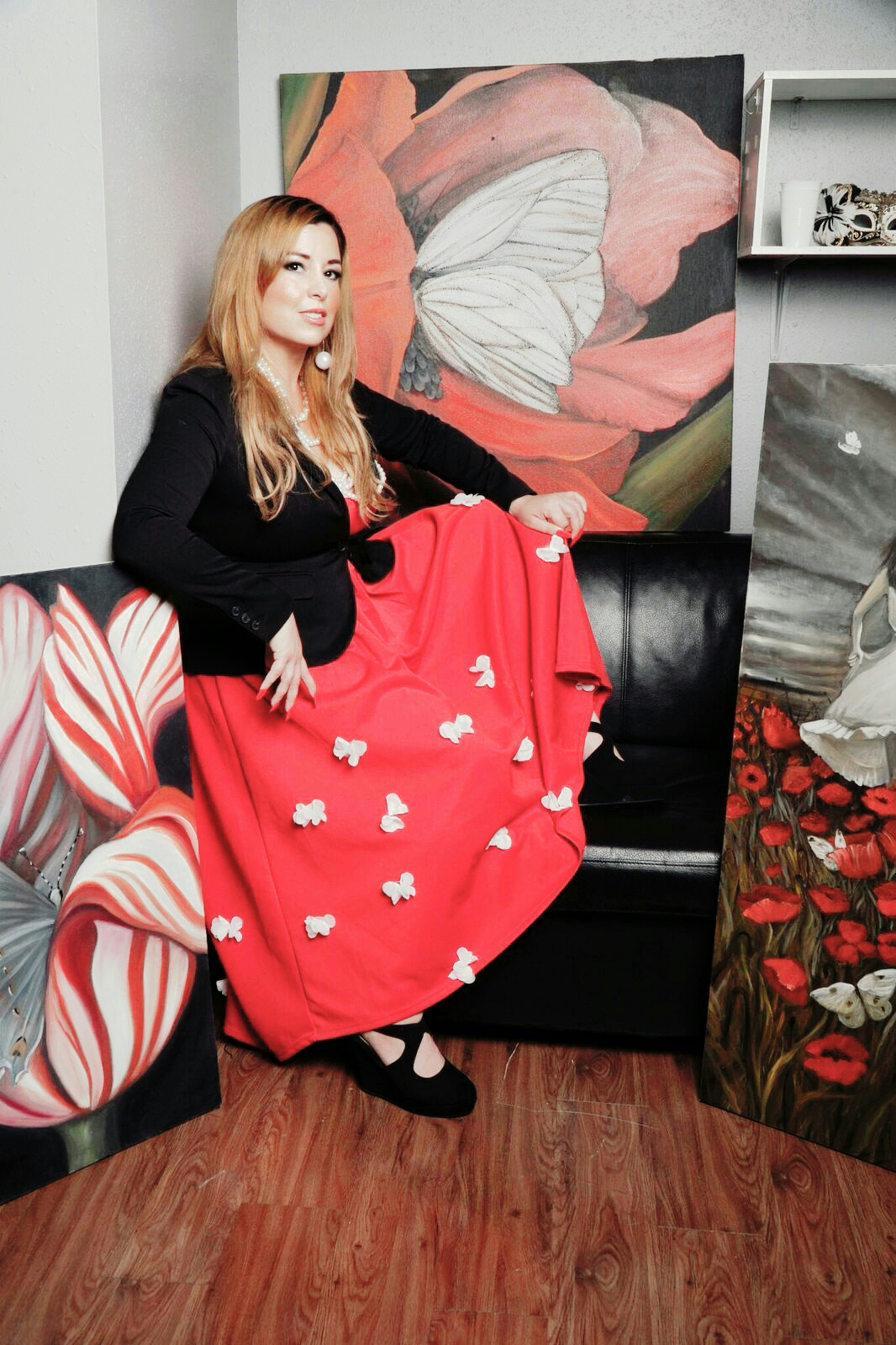
Z. B. Sanders is the author of the children’s books, “Hands” and “The Little Blue Worm”.

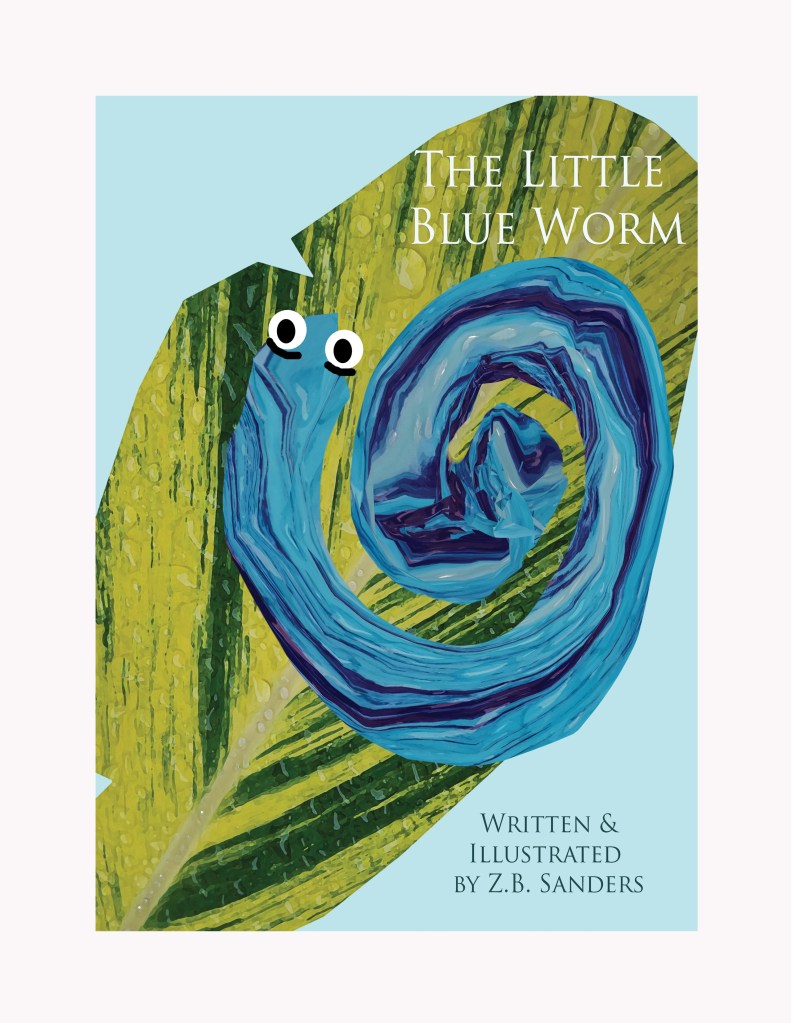
Z. B. Sanders loves to connect art appreciation and basic skills into literature. Her first book, “Hands” teaches art to young readers by transforming an average Joe into an artist through a series of comical events. Her second and most recent book, “The Little Blue Worm” deals with bullying by combining storytelling and art. I had the chance to talk with Z. B. Sanders about her childhood reading memories, her inspirational author, writing process, and future projects.

  • What is your favorite memory from reading as a child?

Z. B. Sanders: My favorite childhood reading memory is from storytime at the public library after school. Growing up I had nearly perfect reading comprehension scores and a creative mind. I attribute this to group storytime sessions my mom would take me to afterschool. The library made a special room where an entertaining librarian would read out the stories in funny voices. Afterward, they would ask children what was the moral of the story. These questions sparked group discussions.

When I decided to write my own children’s book, I kept group discussion in mind. That’s why my book addresses bullying. I hope to create an open dialogue with elementary schools about bullying with my book. Conducting an open discussion doesn’t target anyone to embarrass (because early aggression in children can be the result of mimicking behavior they don’t even know is wrong. For example, a child that watches wrestling may mimic a wrestler on the playground unaware of their behavior). An open dialogue addressing this issue early will hopefully provide a number of students with several positive courses of action so they do not feel powerless. My goal with the book is to take some early preventative steps towards preventing fights and more serious issues down the line.

  • Who was your favorite author and how did they influence you?

Z. B. Sanders: My favorite author is Antoine de Saint-Exupery, author and illustrator of “The Little Prince.” This was a book my mom loved so much that it followed the family from childhood to adulthood. As a child, I read a story about a little prince guarding a rose. As an adult, I read a story about love. Similarly, I aspire to create work that speaks to children, but also carries greater wisdom so that it can be revisited later with greater insight. I wrote “The Little Blue Worm” as a tool to prevent bullying from an early age. My greater aspiration for my book is that the lessons learned can be referenced later on, as a teenager or even as an adult. I want people to keep it with them, pass it down, and cherish it.

  • Do you have a writing routine? Share what works for you.

    Z. B. Sanders:
    Right now I have two books out and both were created differently. “Hands”, my first book, was created in a series of blog posts. I dedicated roughly fifteen minutes at least (longer if I was compelled by the story) towards my single post. After a good year, I pulled down the blog to create the book. This was a fun way to write because I had “followers.” In fact, while I wrote “Hands” I ran into readers on the street. I got instant feedback in knowing that it must be entertaining to have people following my online work.

    “The Little Blue Worm” was more or less an art project. Art is an activity I do to relax. I had a very stressful job when I developed “The Little Blue Worm.” I would use a couple hours on the weekends to create a couple of pages (while I put on some good music, or listened to a show). The important part of the creative process is that I let myself feel free. My illustrations carry a very childlike quality for this reason.
  • What subjects would you like to write about in future projects?

Z. B. Sanders: I was actually inspired by my children’s book, “The Little Blue Worm” to expand into the subject of bullying for an older crowd. I recently finished “Hollywood Park” by author Mikel Jollett, and found a new energy to revive a project I put on the back-burner. A while back, I was developing a fictional teen drama inspired by some of my life events. I lost focus on the project.

After taking a step back to reflect, especially when developing “The Little Blue Worm,” I feel inspired to add more on the topic of bullies. I feel it is essential that I add an educational message, greater lessons, inside of my work.
One of my inspirations in writing is Charles Dickens for creating work that inspires social changes. He picked the “have vs. have not” themes in order to shed light on social issues in a way that didn’t preach or condemn. In that way, he was “heard” by people who would not listen otherwise. Dickens simply wanted to show the world to itself and raise the question, “is this fair?” In that respect, writing that influences behavior should put the readers in the character’s shoes, then ask, “is it fair?” Writing provides us with a mirror in which we see ourselves in other people.

  • What is writing to you in one sentence?

    Z. B. Sanders:
    Purposely reiterating: Writing provides us with a mirror in which we see ourselves in other people.

“The Little Blue Worm” is a new take on the old tale, “The Ugly Duckling” to address bullying with an artistic twist. The Little Blue Worm is ridiculed for his inability to fly, connecting children to the discussion of bullying. Helpful as a read-aloud to create a safe learning environment, this book will make a great addition into any class or home library.

“The Little Blue Worm” is available as a print edition at Amazon.com.

For more information, please visit and follow Z. B. Sander’s Facebook page.

So, this is going to wrap up the blog tour for this year. I want to thank you, the reader, for stopping by and checking out these fantastic authors. There is still time to enter the $25 Amazon GC giveaway. It will still continue through the weekend, and the winner will be chosen on Monday, Sept. 13, 2021. Click on the button below to enter. Giveaway is powered by Rafflecopter.

Until next year, keep reading, writing and please stay safe! Best wishes for a great year to all those teachers and students out there.

-Tiffany Turner

Head editor/writer for the Indie Children’s Authors Connection Blog

Interview with Najah A. Jabbar

Standard

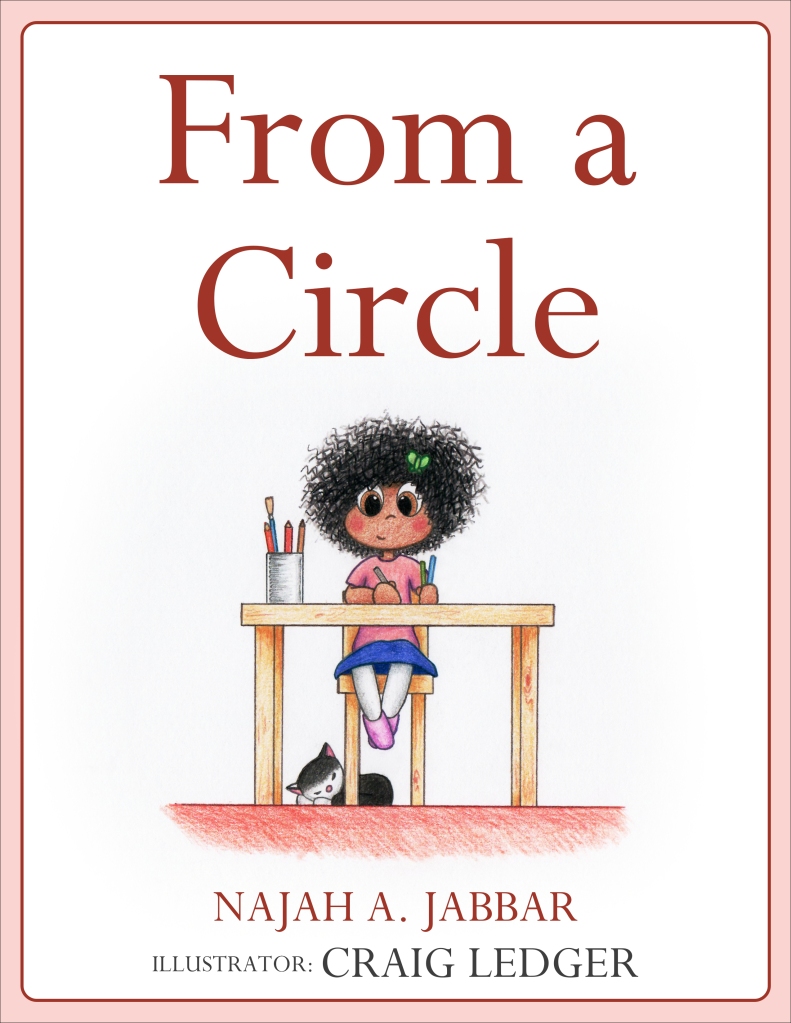
From a teaching perspective, this is the time of year where we start getting deep into the curriculum. I’ve found a book series and fabulous author that uses her teaching experience to create a unique, math and literary oriented book experience. Najah A. Jabbar is an elementary school teacher that has had a career also as a journalist. She combines these two areas of expertise to create a unique reading experience. Her new book, “From a Circle” is a continuation of her “From a Shape” series. It is a great way to introduce math concepts to your students or to your child in this current distance learning and home schooling environment.

I had the chance to talk to Najah about her reading memories as a child, inspirations as a writer, how to use her new series to introduce math concepts, and what she has in store for future projects.

1) What is your favorite memory from reading as a child?

Najah A. Jabbar: I was fascinated with fairytales and folktales, whether told by my mother, grandmother or read in published books. I would spend my library time sitting on my knees in that aisle, soaking in all the magic and lessons. Mostly, I was intrigued by the problems and solutions. While I don’t write in those genres, they made me aware that books speak to our inner selves, almost like telepathy. What’s going on in a child’s head is the inspiration for the “From a Shape” series, which “From a Circle” and “From a Rectangle” are a part of. The series introduces mathematics and artistic design to young readers while challenging them to figure out the problem.

2) Who was your favorite author and how did they influence you?

Najah A. Jabbar: My favorite writer is Fyodor Dostoyevsky for the novel, “Crime and Punishment” because of the way his writing absorbed readers into his character’s subconscious.

3) Do you have a writing routine? Share what works for you.

Najah A. Jabbar: The only routine I have is that I don’t have a routine. I feel bogged down if I must write. But that isn’t to say that I am inconsistent in writing. I am able to write in my head and play with it there. Sometimes I am crushed since I don’t have the luxury to write for a living, but then I visit that part of my brain to check if the stories are there and it’s a real good feeling when I find they can still come together.


4) What subjects would you like to write about in future projects?

Najah A. Jabbar: I want to continue with the “From a Shape” series, which incorporates elements of math, literature, and art. Right now, I am close to finishing the Lizzy and Izzy From a Shape series. While the story problems are universal, the illustrations in the first “From a Shape series represents the African race. (The first edition of From a Circle was published in 2015). But my plan is to represent all ethnicities in the illustrations with each new shape series.

5) Where did you get the idea to write your book, “From a Circle”?

Najah A. Jabbar: It’s a funny story about how “From a Circle” came to be. Before its conception, I wrote short stories, not children’s stories. My first attempt at writing a children’s book was in 2012, two years after my daughter was born. It read more like a poem. Really, it had no problem. But in 2014, my daughter drew a stick figure with a missing part. Bam, that was the problem I needed to make my story happen.


6) What kind of advice would you give aspiring writers?

Najah A. Jabbar: My advice to aspiring writers is to be your own kind of writer. To do that, you need to learn to listen to your inner self, because while you may have grown on the outside, that inner self is any age you want her to be. One other piece of advice, which helps me as a writer, is to draw your scenes, to test your story. So, when I’m done writing, I go scene by scene and sketch it out, basically scribbles in boxes, yet it helps you review the stories cohesiveness.


7) How is writing a picture book different than reporting for a newspaper?

Najah A. Jabbar: At one point in my life, I wrote for MetroNorth Newspapers, even winning a couple of Colorado Press Association awards. I became a journalist, so I could get paid to do what I love to do. There’s a fine line between fiction and reporting. Obviously, stories for newspapers must be fact-based. Fiction can be imagined, yet it needs to be believable or made possible in your reader’s minds, or you won’t hold them in your story. Be forewarned, while journalism helped improve my writing, it quieted my imagination to the point that I had stopped writing.


8) What has inspired you as a writer?

Najah A. Jabbar: When I first conceived “From a Circle,” it hadn’t occurred to me that I had a potential series. It took two years before the second book appeared. At that time, I worked as a guest teacher at Denver Public Schools. One day I happened to be in a preschool classroom. This little girl drew a house with a missing part. Bam! The next book played in my head for a week before I wrote it down. Thereafter, problems didn’t need to occur in reality for me to recognize a potential story.


9) How would you suggest a teacher could use the book, “From a Circle”?

Najah A. Jabbar: “From a Circle” incorporates art, math, and literature. Teachers could use the story as a starting point to teach children about shapes and elements of fiction. The problem in the story will keep students guessing until the end. Most importantly, this story could lead to conversations about helping friends.

10) What is writing to you in one sentence?

Najah A. Jabbar: Writing has nothing to do with your outer self, most of the time you’re unaware of the world around you, or the writing itself; you’re basically out of this world.

“From a Circle” is the next installment in the “From a Shape” book series. This time, Lizzy and her pencil dream of creating a perfect, circle friend. But instead, a smiling face appears from a lopsided circle. She tries again and again, sending her on the journey into her imagination. This is a great book to teach art and math, along with the exploration of a child’s creativity. Perfect for distance learning, home schooling, or for class read-alouds. Recommended for ages 3-8.

“From a Circle” is available at Amazon.com and is a Kindle Unlimited title.

For more information on Najah A. Jabbar, please visit her website at https://crazypigeonpress.com/ and her Amazon Author page at: https://www.amazon.com/Najah-Jabbar/e/B08BZSTSR9.

Interview for L. A. Davis

Standard

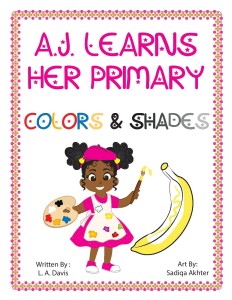
Summer reading will be starting soon. I’ve got a lot of fabulous books lined up to add to your child’s reading list. My first author in the series of recommendations is L. A. Davis. She has written a fabulous coloring book called “AJ Learns Her Colors & Shades”. The character is based on her granddaughter and is the first in a learning series. Children can learn primary colors, secondary colors, tertiary colors, the colors of the rainbow, and shades with the help of their parents. It’s a great activity book for the summer days ahead. I had a chance to talk to author L. A. Davis about childhood reading memories and about writing.

1) What is your favorite memory from reading as a child?
L. A Davis: My second-grade teacher allowed each student to sit in front of the class and read a book from the “library” we had in the back of the classroom. I hate that I don’t remember the name of that book, but I do remember it was about snow and the child had on a red coat with a pointy hat. It might have even been a bunny suit, but it was red and the hood part was pointy. It stood out to me because I was born on an island and we don’t have snow. Another book I do remember is called “The Little House.” I got to read that one in front of the class also.

2) Do you have a writing routine? Share what works for you.
L. A Davis: Usually when I write, I pick a song and play that song to inspire me. I haven’t found a routine in writing the coloring books, but give me time :0).

3) What is writing to you in one sentence?
L. A Davis: Writing is so much fun!

aj cover-pagefront“AJ Learns Her Colors & Shades” is a fabulous child’s coloring book that teaches the basics of colors and the rainbow. Fill summer days and weekends with this fun activity, and apply new artistic skills to decorate your home. This is a great activity book for distance learning and for the summer months ahead.

“AJ Learns Her Colors & Shades” is available at: Barnes & Noble.com and Amazon.com.