Tag Archives: self-publishing

Why is Self-Publishing Working?

Standard

IndieLife7There is a revolution going on in publishing right now. Self-publishing is taking off in different directions. At the forefront of this revolution are the innovative authors that share their ideas, articles, and experiences at a certain writing board that is popular for the Bohemians of this revolution. The writing board, KBoards.com, known before as Kindleboards.com, is a gathering place for a lot of the cutting edge Indie authors with ebooks listed on Amazon.com. Many problems are solved, innovations discussed, and ideas abound in a modern day Bohemian life search for getting ones book out and noticed. Four years ago, another self published author directed me to this board to get advice. And it has been a blessing in disguise. I am grateful for this writing board’s help and attention, and I’d like to share some of the advice I’ve found there, and how I’ve made self-publishing work for me.

As usual, there are voices always out there trying to share experiences of self-publishing. One such voice has been humbly sharing all of his processes including his recent signing with Simon & Schuster. His name is Hugh Howey. His book, Wool, is currently on the new release table at Barnes and Noble. His book, Wool(Omnibus edition) was voted runner up in the 2012 Goodreads Book of the Year for the Best Sci-Fiction category. Basically, he started with a good book and self-published. In the end, he’s kept his digital rights pioneering a new frontier for all authors. But then I digress. This is what happened this last week.

Hugh, being tired of seeing such negative comments about self-published authors, presented an article to Salon.com using the Kboard.com thread to research his article, Self Publishing is the Future-And Great for Writers. Basically, he wanted to point out that there are people out there making a living at self-publishing, mostly what would be considered mid-list authors. His basic point was that there are people making a living, or paying the basics such as rent, bills, and other critical things that help you launch as a writer.

There were the normal, negative comments. But there was a surprising amount of support from other self-published authors. Really, it proved to me that there is an underground community, a sense of realness and artist survival shared by many. There were many other stories shared, or even just income per month, on the success of being an Indie Author. It made me think; you just can’t sit around and wait at the drugstore counter to be discovered like everyone else. You have to go out and make self-publishing work for you.

Why is it working for many of us? It has to do with the royalty percentage. Ebooks are still relatively new. Most royalty percentage for self-published companies are 50-60%. My current publisher, Trafford Publishing, gives 50% of the ebook net sales. I have no agent to share this percentage. My average sales is about 10 ebooks a month. Now, this is not terribly impressive compared to some of the other numbers I’ve seen. I also know that children’s ebooks sales are slowly growing. Plus, I am selling books. This is better than collecting dust on a shelf. Most of the 5-6 figures of income of self-publishing authors are Romance and Mystery. Throw in sometimes Sci-Fi, and it is working for many people. It is working better than some people can imagine.

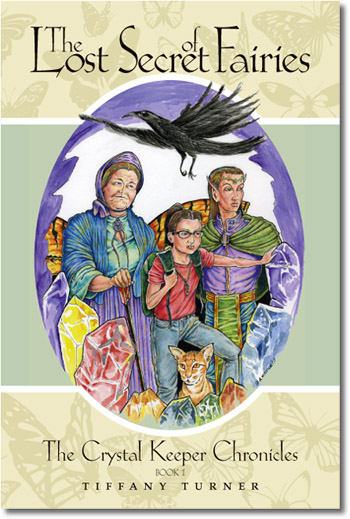
There are some advantages to self-publishing my book. In 2007, I published my first book, The Lost Secret of Fairies. In 2009, I published the second book in the series, The Lost Secret of the Green Man. As the third book, The Lost Secret of Dragonfire, releases this spring, all my previous books are available on the virtual shelf. Readers can go back and buy the earlier books at a listing price of $1.99 or $2.99. But that leads to the next point.

Being successful also depends on your selling price of the book. I saw indie author experiments with pricing influence the price of books. I tried my own with my Amazon Price Matching Experiment last year, and posted on my blog about it. In October 2012, Amazon had a settlement with the US State Attorney to reimburse customers for price fixing with three different publishers. Prices were no longer fixed at $9.99 for ebooks.

In fact, the price points started to drop, you guessed it, to $0.99 to $3.99. In April 2012, Mike Coker did a post on his blog showing what price points worked on his website, Smashwords.com, $0.99 and $3.99. He had all the Indie Author data of experimentation to back him up. That’s when others started to listen. Data is starting to show self-publishing can work. It’s not hard to connect the dots that self-publishing is not only working, but having it’s data and experiences used by other publishers.

Being tuned into all of this uprising is like a front row seat to some of the biggest change happening in publishing. Those of us who have nothing to loose, no overhead, and no corporate structure to answer to can try new things on a whim. I tried the Amazon price matching idea and watched my first book, The Lost Secret of Fairies, be downloaded for free over 9,000 times to build a whole new reader base. Three months later, Amazon switched to two separate buying lists so free downloads wouldn’t top their best seller lists. But it worked for me, because I was an indie author that had control of my pricing and distribution. This is a whole new concept for authors, and exciting to be at the forefront.

To add to this, I know where my ebooks have sold. I can log on and see how many sales I’ve had in the US, UK, and Canada. I’ve even had a few books sell in Japan. This is using listings for Kindle Direct Publishing and Smashwords.com. Smashwords distributes to Barnes and Noble, Kobo, Apple, and several other ebook retailers. These are just the ones that I use. Other avenues are available too.

In a way, I’ve been trying to make self-publishing work for me. My new book, The Lost Secret of Dragonfire, took three years to write. I spent the last year editing with a fabulous freelance editor named Shelley Holloway. I’ve hired an artist, Rich Wallace, to do the cover and inside illustrations for the last three books. In the end, I learned it really doesn’t matter to your reader how your book gets to them, but that it does. Whether your book is self published or traditionally published, a reader will want your book if they like it. So, the most important thing is to write a good book. That is what any successful author does. Write a good book that people will want. If your book is good and available, people will want it, no matter how it is published.

**This post is part of the monthly
“Indie Life” posts linked on the Indelibles Blog.

dragonfiretbnailjpgTiffany Turner is a self-published author the children’s fantasy adventure series called The Crystal Keeper Chronicles. Her current release, The Lost Secret of Dragonfire, is the third book in the series. She has been an elementary teacher in California for 16 years.
Smashwords Offers Library Pricing

Standard

It continues to amaze me how new things come up for Indie Authors. Right now, it’s all about pricing. Whether to have your book priced free in a promo, or set it at price points of $0.99, $1.99, or $2.99. But fresh ground has been broken with Smashwords announcement yesterday of Library Pricing.

According to their blog, Smashwords announced their new program, Library Direct. This new program allows library’s to obtain Indie Books for their ebook check out systems. Several large library networks placed preorders from Colorado and California. It’s will help establish more available books in the ever growing ebook library systems.

Smashwords’s authors received emails about the news, letting them know they can now choose a separate price for libraries. The ability to set a price that is lower or even free for libraries is a great way to promote. Not only can libraries be supported to insure a future for books, it gives a whole new reader base to budding authors.

As with anything new, there are lots of questions. Should a book be listed for free? How will the libraries know which book to buy? How big could this reach?

All I can say is that libraries are hard to break into as a beginning author. With limited funds, libraries rely on book reviews and top seller’s list to choose purchases. Many Indie authors don’t make the NY bestseller’s list. But there is a chance for them to be on the Smashwords Best Seller’s List. And with just a few library systems starting out, I’m sure more will follow. With low priced or free books to choose from, ebook libraries will be larger than any possible brick and mortar library. The shelves would never end.

I am happy to announce that both my books will be available at a lower than retail price for this new library endeavor. It’s a great way to support the future of our library systems and reach a new readership. Plus, it makes me proud to be an Indie Author.

The Amazon Price Matching Experiment

Standard

Book 1 sold over 9,000 free copies in over a month.

Sometimes you can find some really good ideas on Writing Boards. Some turn out to be fabulous ideas. Back in Dec. 2011, I noticed some posts on kindleboards.com in the Writer’s Cafe about a back door way of getting your books to go free on Amazon. I’ve heard from another author this is even difficult for traditional publishers to do. Amazon tends to not let books go free. Unless you know the back door.

The key ingredients to start the experiment turned out to be Smashwords and having your book on the Premium Catalog. Other authors tried this with having their book published on the Apple Store as well. I don’t have a directly published edition through Apple, but it is something to be noted. This way was possible as well.

I listed my first book, The Lost Secret of Fairies, as $0.00 on Smashwords. It takes a few weeks for it to set to that price on the other websites like Barnes and Nobles. But I noticed that it went free on the Nook within 2 weeks. Once it hits a big site like Barnes and Nobles, Amazon will often price match it with the Kindle edition. Then the fun really begins.

By the end of January, I’d sold 400 free books of The Lost Secrets of Fairies. Amazon matched it on Jan. 24, 2012. I watched the numbers climb to 1,739 to 2,037 by the next day. I noticed it averaged about 200 free downloads in one hour. As I tracked the numbers, it slowed down to 100 free downloads an hour over the next few days. By the end of January, I had 5,386 free downloads for my first book. The second book in my series, The Lost Secret of the Green Man, had 21 books sold.

February was a fun month. The sales continued with free downloads changing to 100 a day for The Lost Secret of Fairies. Sales of the second book followed. My first book returned to its normal price of $0.99 by March 15. The total free downloads for Feb. included 3,642. There were only 9 refunds in that time. Making the total free downloads for end of January, February, and beg. of March at: 9,894.

To see if all this would benefit my second book sales, I crunched some numbers. There were 21 sales of the Secrets of the Lost Green Man in January. February had 35 paid sales, and March had 24. The grand total of sales was 80. So, for about every 125 free downloads, I had a paid sale for my second book.

The Lost Secret of Fairies became the top in the Free Store for several listings. On Feb. 6, it listed as #1 children’s books/social situations. On Feb. 7 it was #1 children’s books/self esteem and respect. I witnessed it topping out at #110 in the Kindle Free Store around the same time.

After my first book returned back to $0.99, the free bump kept it selling at 2/3 higher than normal. My average sales is about 10 books a month. In March, it was at 64 sales, and for April dropped in sales down to 29.

About the end of March 2012, other authors noticed drops in sales ratings even with free book sales. After a while, people reported back trends on the Writer’s Cafe board that Amazon must have changed their algorithms in regards to free book sales. Free book sales were no longer being counted the same as paid book sales. The ratios seemed to work out to 10 free book sales equaling 1 paid book sale.

For the month of May, things returned to normal. The Lost Secret of Fairies had 12 Kindle Ebook sales while my second book, The Lost Secret of the Green Man, had 9.

What did I learn from this experiment? I’ll benefit from the over 10,000 sales of my first book, free and paid. I have an awesome reader base now. This will help when the third book is ready for release this fall(2012). Plus, for every 60 copies downloaded for my first book, a second book was bought. The Free Download bump raised my sales for two months. I even received 3 new reviews on Amazon, and 4 new reviews for the Nook. They were all positive. In addition, there were fewer refunds than I thought.

The most important thing I walked away with; I have thousands of new readers introduced to my series. That, in itself, is priceless.

Crystal Cluster**The Crystal Keeper Chronicles are available on Amazon.com as paperback or Kindle editions.
Also available on Smashwords.com. and the Nook by Barnes and Nobles.

What Is Success? Looking At What Makes Your Book Important

Standard

The end of the year, you always look back. What I seem to be looking back on is the success I’ve had as an Indie Children’s author. Really pondering, if I had any success at all.

Then, I downloaded an ebook to help with that ever elusive book marketing that all authors are faced with. Again, I think of the choices I made choosing a drama degree instead of marketing which would have fed my love of promotions back in college. I smile about this as I turn back to the ebook. After all, I didn’t find out about this fact until my senior year. Who would change majors then? I get back to the book.

Advanced Book Marketing by E.J. Thornton states an idea. I was considering the answer to being successful as an author. Was I successful? When I read it, I felt the “Ah Ha” moment take hold. At the 9% point in the book, noting of course it’s an ebook, is this quote:
“The third and most important objective of a book is getting it read by someone other than your mother!”

Really, it goes on to state how important it is. In fact, it is the single most important reason why someone writes, that someone, a magical reader that might like and enjoy it, will read your story, book, article, manifesto. And I agree. It is the most important reason in the end. Not that an editor reads and buys it or that you self-publish it, but that you’ve gotten it to the masses of readers out there to read. If you write it and publish it, it will get read.

This brings me to the point of what is success? In terms of being a writer, it must be that someone reads your book. So, if this be true, than anyway that you can get people to read your writing makes it a success. Whether you self-publish, get signed by a small or micropublisher, or even one of the Big 6 publishers, your book will get read. But then, it comes down to numbers. You want a grand, large, mammoth, sizable, humongous, gargantuan amount of people to read your book.

So, then one must reflect, am I successful?

Step one: Yes, you are successful if you have published and people are reading your book. It’s out there, no longer on your shelf collecting dust, or waiting for months in a slush pile at the bottom of an editorial assistant’s desk. Good start.

Step Two: Do you have an internet presence? Website, blog, listings at multiple websites? Interviews on blogs, book reviews, and even the very occasional email or message from an actual reader(of course being the cause for great celebration when ever you get one) all spell success.

Step Three: How great is your success? The measurement of how grand all this is depends on what you want to do with your writing. Of course, having it recommended by the Oprah Book Club might be considered more successful than an interview on a Mom Book Club blog. But, a mention is a mention. Word of mouth is key. The internet is a big mouth. Cram it full of things spoken about your book and soon, hopefully, it won’t shut up.

Did I make it? Am I successful? I answer loudly for the world, yes. 2011 has been an up and down year of success for me. I’ve done interviews, got a few more reviews, sold some books, and participated in a book festival. This all measures as something to promote myself and my books. It’s out there. People are reading it. Oh yes, books. I have two now.

As I look towards the next year, it is filled with the promise of getting my third book out there for others to read. Key to this thought, I have a third book I’m working on. This leads to my overall thought that drives me to keep going, keep writing. Nothing will happen if you don’t do that.

And who knows? With a New Year ready to break forward, anything could happen. But mostly, I’ll keep writing. After all, I have readers waiting for a third book. I don’t want to disappoint them. And that’s the greatest measure of success. I’ve got readers.

J.K. Rowling is Self-Publishing Ebooks through New Pottermore.com Website

Standard

Amazing as this sounds, it’s true. J.K. Rowling announced yesterday in a press release and a YouTube video on her new innovative website to be launched in October 2011. It’s called Pottermore.

J.K. Rowling has developed an on-line experience to hearld Harry into the digital age. Armed with new writing material, the website will feature a way to interact with the characters/places/objects found in the Harry Potter books. It will soon include an Ebook Store that will sell the series in ebook format. It is in partnership with Sony and her publishing partner, Scholastic.

What makes this such a phenomenal milestone in self-publishing is that Rowling’s publishers get a percentage for assisting in marketing and promotions. She’s calling the shots now, especially since she owns her digital rights. She is also bypassing big on-line retailers such as Amazon.com, to sell directly from an on-line ebook shop on her website.

What does this all mean? First, I’m stunned. I knew self-publishing was starting a new age, but now that an author as big as J.K. Rowling has started to take advantage of publishing herself, keeping her digital rights, and launching a site like this. There. That stunned moment again.

For children’s authors, it might mean a lot. She has changed the face of children’s publishing and created a series in which she broke and created rules. Now she’s out to create a new publishing platform, shaping a future generation by reaching out through technology. I love the possibilities of what she can do with her site; the building of a Harry Potter world on-line, feedback from her readers, that creative control so often enjoyed in self-publishing and doing things yourself.

I wish her the best, and await to see what will happen next in the publishing world. Look out, it’s going to be a bumpy ride.