Tag Archives: online learning for children

Interview with Solonge L. Robinson

Standard

I’ve found another great book to help with math concepts at home and during online learning. Solonge L. Robinson has written a book called “Shaping Families” combines math shapes with introducing diverse families. Solonge has been inspired by her travel journaling. In 2018, a horrific fire destroyed many of her family’s belongings, including their precious books. The tragedy inspired her to replace her children’s books with some written by her. Dive into what Solonge had to share about her childhood reading memories, future projects, and what writing means to her.


1) What is your favorite memory from reading as a child?

Solonge L. Robinson: Childhood memories of reading bring me directly back to The Babysitters Club series. Going to the Scholastic Book Fairs in the fall and spring at school was always a much-anticipated event. I’d often beg my mother, weeks in advance, for enough money to buy the next few chapters of my most beloved Babysitters Club books. I was hooked after the first six books, which I probably read about a dozen times each.

Even now, several decades later, when I see the titles and book covers for the first six books, Kristy’s Great Idea, Claudia and the Phantom Phone Calls, The Truth About Stacey, Mary Anne Saves the Day, Dawn and the Impossible Three, and Kristy’s Big Day, I am immediately transported to the 3rd-floor bedroom in my parents’ house in Brooklyn, NY. It’s a Saturday afternoon and I am curled up under a cover, next to my window, deeply engrossed in one of these amazing adolescent stories. The only thing to break my attention is the church bells ringing every hour, on the hour, until dusk. By then, I would have been part of Kristy, Claudia, Stacey, and Dawn’s world, so sad to have to leave.


2) What subjects would you like to write about in future projects?

Solonge L. Robinson: Oh, there are so many. Right now, my future projects include subjects on self-love and financial literacy for children. I also have collaborative works in motion on topics dealing with health and wellness; one a children’s book series inspired by my daughter and the other an adult fiction book about Physical Therapy.


3) What is writing to you in one sentence?

Solonge L. Robinson: Writing is freedom in its purest form.

“Shaping Families” is a unique, mathematical tale of diverse families. Join Poly-Anna, the polygon kid, as she learns about all the shapes that make up her unique family. From Triangles to Decagons, her journey will guide the reader to discover that families come in different sizes and form together a circle of love.

“Shaping Families” is available at Amazon.com. This is a Kindle Unlimited title.

For more information on Solonge L. Robinson, visit her author page HERE!
Interview with C. Lovelady

Standard

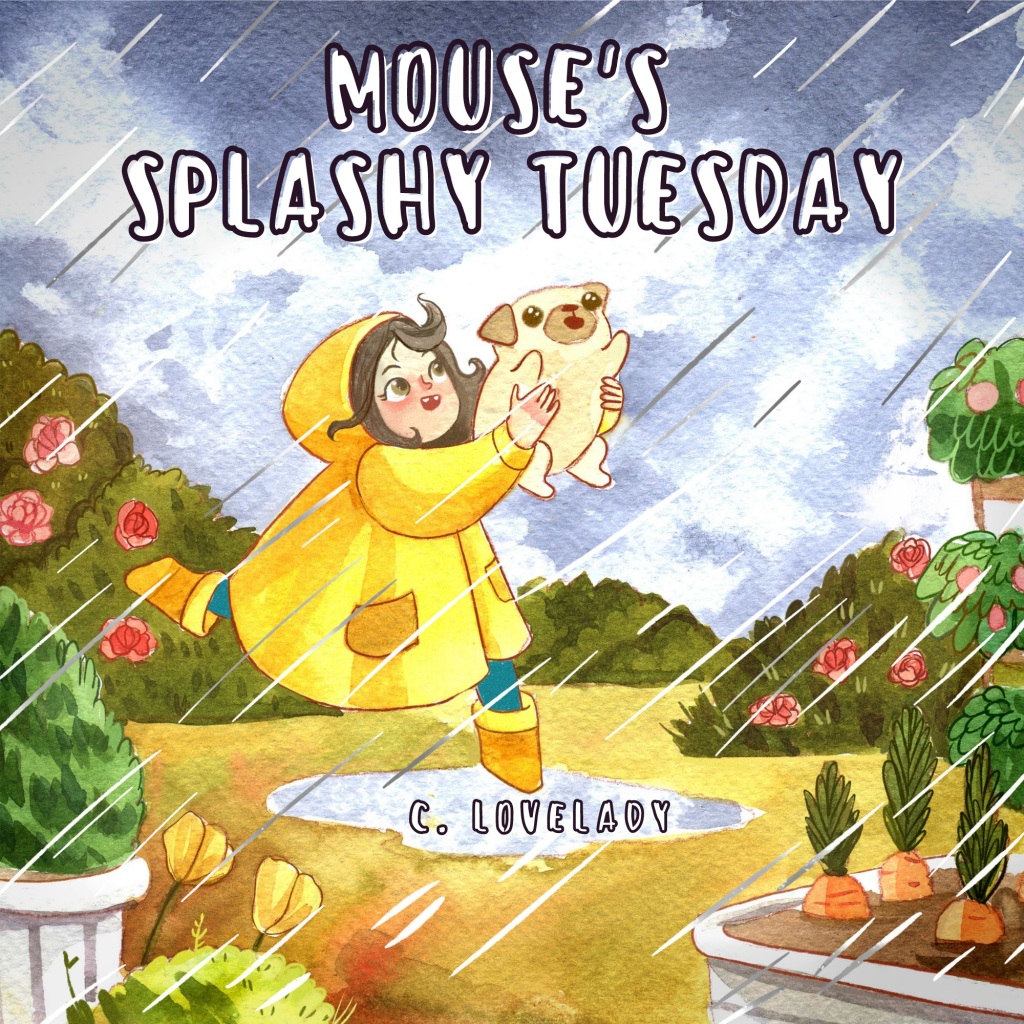
With the weather changing with the leaves, it’s a great time to cuddle up with a book, some hot cocoa and share a great story with your little ones. I’ve found a great read-aloud book to share on those cold, rainy days. C. Lovelady has written the book, “Mouse’s Splashy Tuesday” with a flare for the creative connection with animals and children.  I had the chance to talk to Ms. Lovelady about her childhood reading memories, future projects, and what writing means to her.

1) What is your favorite memory from reading as a child?

C. Lovelady: I loved when my mom would read “Stone Soup” by Ann McGovern just before bed. It was the type of book that beautifully combined weird and wholesome.

2) What subjects would you like to write about in future projects?

C. Lovelady: I’m currently developing a nonfiction book and two adult dramatic fiction novellas. For the future, I’d love to work on cybersecurity and technology-focused stories for children.

3) What is writing to you in one sentence?

C. Lovelady: For me, writing is how I find joy, love, and silly adventures in everyday life at home. 

“Mouse’s Splashy Tuesday” is a creative take on a girl and her dog’s adventure. Journey with Chewie and Mouse as they take on a rainy day and the ensuing flood to save their neighborhood. Will they come up with a solution in time? This book is recommended for ages 3 through 10.

“Mouse’s Splashy Tuesday” is available on Amazon.com.

For more information on C. Lovelady and her books, visit her author page here.

Interview with Tymeka Coney

Standard
Tymeka Coney is the author of the children’s book, “I Don’t Like Racism”.

With the social change needing to be still addressed in the US, I’m proud to present the next book and author on my blog. Tymeka Coney has a long list of credentials and experience in the areas of entertainment and writing. With expertise as a Radio DJ and Personality to starting her own entertainment company, Tymeka lends her public speaking skills in pursuit of activism. In new children’s book, “I Don’t Like Racism”, Tymeka Coney tells the story through the eyes of a young African-American girl as she witnesses police brutality. Tymeka spoke to me about her childhood reading memories, what authors inspire her, and what she has planned for future projects.

1) What is your favorite memory from reading as a child?

Tymeka Coney: My favorite memory as a child is reading lots of books and ordering them from the Scholastic Book Clubs at school. I will always remember the quote, “Reading is Fundamental.”


2) Who was your favorite author and how did they influence you?

Tymeka Coney: Maya Angelou was my favorite author and poet. She influenced me with her quotes and wisdom and also in writing my first book which was, “Words Unspoken Volume I: Deeper Than Eyes Can See.”-Poetry Book


3) Do you have a writing routine? Share what works for you.

Tymeka Coney: My writing routine is to write what flows naturally and not force any writing. I like for it to be quiet so that I can hear the words I want to write about and hear the character’s dialogue in my head.

4) What subjects would you like to write about in future projects?

Tymeka Coney: I would certainly like to write another children’s book. My new children’s picture book, “I Don’t Like Racism,” was fun to write.


5) What is writing to you in one sentence?

Tymeka Coney: Writing to me is Serenity.

“I Don’t Like Racism” is a story told from the point of view of an African-American girl witnessing police brutality. She goes on a journey to understand what racism is, and how to seek peace and positive change as an activist. This book reaches out to teach all ages, genders and nationalities about racism while inspiring us all to unite and love despite the color of our skin. This book will get readers thinking about what they can do to effect positive change while choosing peace when fighting for social change. It will be a great read-aloud for any classroom library, and a useful tool for distance/online learning.

“I Don’t Like Racism” is available on Amazon.com.

For more information on the author Tymeka Coney, please visit her website at: https://www.tymekaconey.com/.

American Flag flown outside Mrs. Turner’s house to honor those veteran’s that have and are serving our great country.

I’d also like to end today’s post with a sincere thank you to all of our veteran’s for their sacrifice and service to our country. Thank you vets on this Veteran’s Day, November 11, 2020!

Interview with Lisa Luttrell

Standard
Lisa Luttrell is the author of the book, “The Little Green Armchair and Tales of Echo Forest”.

As the beautiful colors of fall remind us of the seasons’ changes, I wanted to share a beautiful book that helps you and your child take a moment to admire nature and its beauty. This is a great time to connect with nature to ease the turmoil of the world around us. A book is the perfect catalyst for this.

Lisa Luttrell finds inspiration on her nature walks around her home with her trusty Jack Russell terrier, Scout. With her background as a teacher, she uses her writing skill to connect readers to the nature all around us. I had a chance to talk to Lisa about the inspiration for writing her book, The Little Green Armchair and Tales of Echo Forest. Plus, she shared her writing process and her literary choices for this book. Enjoy.

What was your inspiration behind writing The Little Green Armchair and Tales of Echo Forest?  How long did it take you to write it?

Lisa Luttrell: The Little Green Armchair and Tales of Echo Forest took me less than a week and a half to write. My inspirations behind writing this book were based on my own personal experiences. I indeed took a little green armchair from inside my own home and placed it in our acre side yard for my outdoor cat, Violet, to sleep and sit on in the sun. I rescued a little possum in my driveway one evening and took him to a wildlife rescue center only to discover he was at a juvenile age appropriate to jump from his Mother’s back to start his own life and adventures. Lastly, I rescued a little green stinkbug that had fallen into my cat’s outdoor metal water bowl.

What’s your writing process like/challenges you faced while writing this?

Lisa Luttrell: My writing process entails paper interpretation of animals that I have known or owned and puts them into human-like situations. They come alive on paper as little creatures with human emotions such as love, happiness, kindness, intelligence, sorrow and humorous thought processes. I can honestly say that I did not have any challenges in constructing my text for this little book; my ideas seemed to effortlessly appear on paper.

Why did you choose to write this story in a far more literary form than many children’s books? 

Lisa Luttrell: A volume of printed context tells a story. I consider my writing style vintage in the aspect that this fondly was the way children’s books were composed in my reading generation of the mid-1960’s through the early 1970’s. It is within my comfort zone for me to construct.  I love to work with detailed imagery and create a canvas for others to imagine what my characters might look like, how their voices may sound and how lovely Echo Forest truly is.  I want to create a people/animal connection engaged in adventure, display various emotions, present hardships or conflict that are resolved in a sentimental manner. 

The Little Green Armchair and Tales of Echo Forest is a story collection for children to connect to nature through literature. From the Little Green Armchair that provides the catalyst for a new forest to spring forth, to a picnic with possums in Echo Forest and the adventures of The Thirsty Little Stink Bug, your child will become immersed in the bountiful, lush tales of spring and fall in Echo Forest. Take their minds outside into nature with this short story collection.

The Little Green Armchair and Tales of Echo Forest is available at Amazon.com and Barnes and Noble.com.

For more information on Lisa Luttrell, visit her website at: https://www.lingofromlisa.com/.

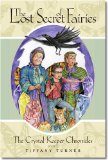
Day 9: The Lost Secret of Fairies Online Novel Study, Theme Response Worksheet & Video Lesson Link

Standard

Greetings for Day 9 for the Lost Secret of Fairies Online Novel Study. I know I threw a lot into the last post, and I even realized I need to add one more thing before the final essay test, a lesson on theme or message. That is on the essay test, and I wanted to do at least one lesson with The Lost Secret of Fairies since it is an original fairy tale, and working with morals and themes is a standard for 3rd and 4th grade. It’s reviewed in 5th grade to get ready for looking over Tale Tales and American Folk Tales.

So, here you go. I’ve added the theme response worksheet to my free downloads for this novel study. Plus, below is a video from BrainPop. The literature concept of theme/message is taught with animated Star Wars universe characters. It’s about 6 minutes long. Most children are familiar with Stars Wars, so I thought it was a good fit to talk about message and theme.


When your child is done watching, they should have a better understanding of theme for books and movies. You can talk with them about the following discussion questions below:

  1. What is a moral? Can you think of any morals for some of your favorite fairy tales.
  2. What kind of patterns and ideas can you think of in the book, The Lost Secret of Fairies? What idea can you think of to connect them?
  3. What is a basic motif in Star Wars? What do you think is a motif in the book The Lost Secret of Fairies?
  4. Where can you go hunt for themes in a story?
  5. What is one theme in the Star Wars movies? What are clues and examples that support this theme?

summer1Now, they should be able to work on the theme response worksheet below. They can download the webbing graphic to help them organize their ideas. And yes, this will be on the essay test. So, they’ll need to do this. 

Theme Response Sheet for LSOF

The Lost Secret of Fairies- Webbing Graphic Organizer

I’m sorry about this oversight, but it is an important lesson to incorporate into the unit. I’ll post the essay test tomorrow, I promise.

Until then, enjoy the lesson on theme and messages. Stay safe, wash your hands, and together, we’ll get through this.

-Mrs. Turner

***Tiffany Turner is the author of the children’s fantasy series, the Crystal Keeper Chronicles. She has had 18 years experience teaching in California as a public elementary teacher. She is currently tutoring in the private sector and continuing to write full time.