Tag Archives: homeschooling help

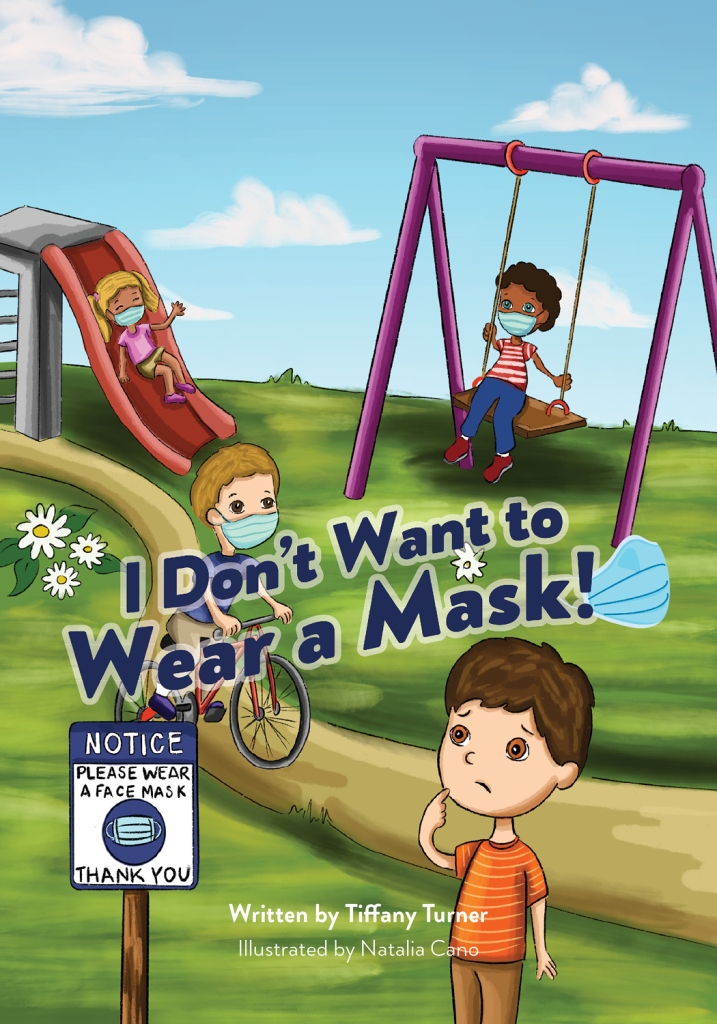
“I Don’t Want to Wear a Mask!” has won the Silver Medal in the Reader Views Reviewer’s Choice Awards 2021!

Standard
“I Don’t Want to Wear a Mask!” has won the Silver Award in the Children’s Books Ages 0-5 category in the 2021 Reader Views Reviewer’s Choice Awards.

I am proud to announce that my most recent picture book, “I Don’t Want to Wear a Mask!”, has won the Silver Medal award in the Children’s Books 0-5 age category. I am awfully pleased to accept this award and want to thank my illustrator, Natalia Cano, for her fantastic illustrations that capture perfectly the message and theme of the book.

Also, to my father, who supported me in all of my writing and always encouraged me. I lost him in 2018, and dedicated the book to him. I’d also like to thank my husband, family and friends for their continued support in my writing endeavors. Without all of you, it would be hard to keep going.

Most of all, I’d like to thank all the readers of my books through the years. I started writing back in 2005 with the self-publishing of my first children’s book in 2007. It’s been a long path, but I want to continue bringing you unique voices and perspectives in my books. You’ve made it all possible. Thank you.

“I Don’t Want to Wear a Mask!” is available as an ebook or as a paperback edition at Amazon.com.

-Tiffany Turner

Guest Blog Post: “Tips to Encourage Children to Read” by Chris Lewis

Standard

Tips to Encourage Children to Read

Guest Post by author, Chris Lewis

It is certainly handy when a book’s character or series matches the values you want to encourage. An association to a series could also support children in finding a common connection with other children.

We all learn in different ways. Sometimes you can learn at the same time you do something you enjoy. The following are a few tips to encourage children to read.

1. Look for relatable characters.

Connection with characters in a story may make it easier for children to learn from their experiences and perhaps appreciate a topic from a different view. Sometimes a situation can be better understood by a child when they see themselves represented in a group or activity.

2. Try something a little bit silly or unorthodox.

Animals are often used in picture books for their relatable factor. There are lots of examples in books where animals talk and live like humans. Sometimes, characters are a mix of both human and animal characteristics. Some stories have objects which are living, for example, a talking teapot. 

3. Think about the format. 

There are lots of book formats to choose from, but in summary, the choice is a physical version or an electronic copy. New books typically attract a new cost, but you can get access to free books from the library, or you can browse the Internet for a variety of free ones. 

Sometimes there are extra elements in an eBook compared to a print version. Animation is a good example. Traditional books take up more space than eBooks. Still, there is a print version preference because of the look and feel, and no batteries are required.

4. Support the reading journey.

A child could use the same book from early childhood to a point where they can potentially read it by themselves. The knowledge gained from familiarity can serve as a morale boost when children get to the stage they can read independently.

5. Find a book for the right development stage.

The need of every child differs in the course of their development. Whether a child will enjoy a book or find it boring depends on the length, grammar, and level of content the child is prepared for, emotionally.

About The Author

Chris Lewis is the author of the eBook picture book Jax and Sheba get Messy for ages three to five. A print version will be available to order on March 16th, 2021. For more information about their books, please visit his website here.

***Connect with this author, Chris Lewis, through the interview featured on this blog.

Link here to the interview with Chris Lewis.

Day 4: Online Novel Study, Blog Article Activity & Study Questions

Standard

imgres

Look for other story projects on my blog in the coming days. Please follow to not miss them!

Welcome to Day 4 of The Lost Secret of Fairies novel study. Today, I continue with study questions for the next few chapters, and am featuring a blog article activity that goes along with the novel study. I have three auxiliary activities that go along with reading The Lost Secret of Fairies. They relate to science, author craft, and literature, specifically fairy tales and legends. So, let’s begin with the first activity followed by the study questions for chapters 4-6.

This is a link to a blog post written by me in how I get my ideas as an author. It is called: “How Do Writer’s Get Their Ideas?”

Here are the activity directions. It can be used in conjunction with the novel study or as a separate children’s reading activity.

  1. Read the blog post “How Do Writer’s Get Their Ideas?” by Tiffany Turner
  2. Print out the blog post if possible. Circle or highlight evidence or details you thing are important in regards to writers getting ideas.
  3. Now, answer the questions about the blog post below.
  • What are some examples that Mrs. Turner uses to explain how she got her ideas?
  • How do you get your ideas for your stories?
  • Bonus: Think about writing your favorite author about how they get their ideas. What would you ask them?

summer1Chapter 4 – 6: Study Guide Questions for The Lost Secret of Fairies

  1. What are character traits of Brewford that make him unusual?
  2. How does Wanda over come the obstacles she faces getting the spring water?
  3. What would you do if you had to face off those bullies?
  4. What would you say to Brewford if he was your cat?

Bonus: Have you ever been creek walking?

Tomorrow, I have a fabulous author and picture book to introduce you to, with more study guide questions and advice on how to keep a school at home routine.

Until then, keep reading and learning!

-Tiffany Turner

(Mrs. Turner)