Tag Archives: covid-19

New Picture Book Release: “I Don’t Want to Wear a Mask!” Coronavirus Pandemic Back to School Support

Standard

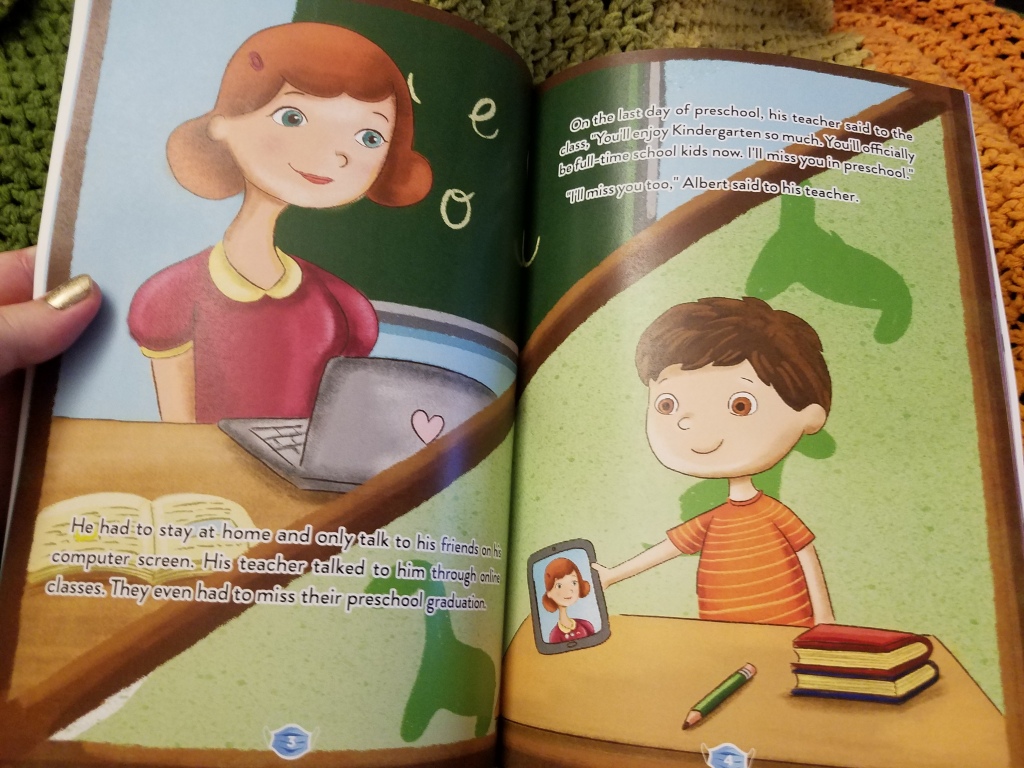
I have a surprise for everyone. I have written a picture book to help support all the parents and teachers during these strange times. It’s called “I Don’t Want to Wear a Mask!”. It helps children validate their feelings with all the strange routine changes, and models a parent lovingly supporting and validating their little one’s emotional turmoil. With all the different return-to-school programs through out the country, structure and safety is what kids need to help them right now. I wanted to help reassure them, and support their emotional needs.

“Back to School” has never been so difficult. Some school districts are returning to in-person school, some are remaining online with distance learning, and others are doing a combination of both depending on their communities. With so many changes, parents and children need support in adapting to these new structures. So, I wrote a loving and supportive book to help children understand the changes around them.

I targeted the preschooler and kindergartener, even though the book could be read up through third grade. It will hopefully lead to discussions and communication with parents, teachers, and the children that are going through this huge, educational upheaval together.

Tiffany Turner is the author of “I Don’t Want to Wear a Mask!” and head editor/writer of this blog.

I am an elementary teacher that has been writing and self-publishing for children since 2007. I’ve also been a teacher for 20 years. I have a middle reader series, and another self-published picture book called “Pumper the Pumpkin.” For this new book, I hired a fabulous illustrator from Columbia, Natalia Cuno. She captures the beautiful warmth and caring that I wanted to convey with this book.

I invite you to check out the book on Amazon.com. It is available as an ebook for many tablets and the Kindle phone app as well as a print edition. I welcome feedback in its many forms, such as reviews or as comments below in this post. I would love to hear what you think and how your child reacts to the book.

We can all get through this together, and remember to wear a mask.

-Tiffany Turner

Day 3: Back to School Blog Tour 2020

Standard

back2schoolbanner2020Welcome to day three of the Back to School Blog Tour. Today, I’d like to introduce you to the featured author for today, Devin Martin. During the day he’s his school community’s “Mr. Lunch Lady”. At night, he writes up a storm of stories to emphasize empathy, understanding, self-awareness, and reassure the next generation. In his book, “Mama Nuni”, he’s brought to life a fantastic character in Mama. Mama Nuni’s ranch is her version of heaven where she teaches her students lessons of life. When she hires a clumsy ranch hand, he becomes the catalyst for teaching kindness and empathy. This book is a teaching treat for many instructors and parents.

DevinMartinAuthorBioPic

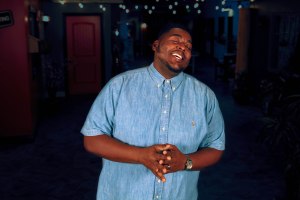
Devin Martin is the author of the children’s book, “Mama Nuni”.

I had the chance to talk to Devin about his childhood reading memories, writing process, and what he has in store for us with future projects.

1) What is your favorite memory from reading as a child?

Devin Martin: My favorite memory from reading as a child, would have to be my 3rd grade teacher reading Witches to the class. She would get all animated and creep through the rows of desks, and use crazy witch voices. She was awesome! She would make us read a paragraph, so I would try to jump ahead and memorize my paragraph so I didn’t mess up when it was my turn. Never worked. HAHA!

 2) Who was your favorite author and how did they influence you?

Devin Martin: My favorite author growing up those early years would have to be Joanna Cole. “The Magic School Bus” was my go-to-the-T.V. show. Matched up with the books, I just retained so much information. After that, I really didn’t start reading for fun again until late in high school. I got into autobiographies of people and athletes I was interested in.


3) Do you have a writing routine? Share what works for you.

Devin Martin: All of my stories start as a poem. I like to think, they are better described as allegories. I use thesauruses often, to help with imagery in the words. Sometimes it takes me 5 minutes. Sometimes it takes me a week to write one story.


4) What subjects would you like to write about in future projects?

Devin Martin: All of my books will be related to reasoning with the human condition. We, as parents, often have a hard time reasoning with our kids (for obvious reasons ;-), let alone trying to educate them on what it means to be reasonable and self-aware, especially in those elementary age years. So in the future, you will see more content related to attitude and effort, understanding, empathy, personal accountability, etc.


5) What is writing to you in one sentence?

Devin Martin: For me writing is what binds emotions and logic.

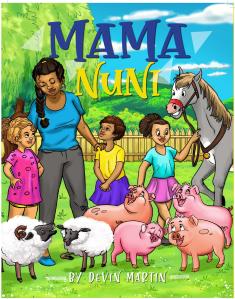
MamaNuniCover-DevinMartin“Mama Nuni” has a big heart, and loves teaching valuable lessons on her ranch. It’s her heaven on Earth. When she hires a clumsy ranch hand, she discovers that her students are teasing him. Seizing the opportunity to instill a lesson of tolerance, kindness and empathy, she works towards showing her students the importance of standing up for others. This heartwarming story shows the power of showing kindness to others and the ability to use the power of love.

“Mama Nuni” is available at: Amazon.com.

For more information on Devin Martin, please visit his Facebook page at https://m.facebook.com/jrshoocreativeinc.

Don’t forget, there is still time to enter the Back to School Blog Tour Giveaway. You can enter to win a $25 Amazon Gift Card hosted by Rafflecopter.com.

LINK TO WIN YOUR $25 BACK TO SCHOOL SHOPPING SPREE!

Plus, each day I’m including links to help parents and teachers with distance learning. Back when everyone went into the pandemic lockdown during the spring, I wrote up a complete on-line novel to go along with my first book, The Lost Secret of Fairies. 

Here is the link for the full FREE online novel study. Download all the helpful graphic organizers for journal entries, character traits essay responses, theme & message exercises, and an essay short answer test at the end of the study. I developed it over the last couple of years I taught in the classroom, and offer it for free to go along with my book. Hopefully, it will be helpful in your distance learning planning.

ONLINE NOVEL STUDY LINK!

Tomorrow, another children’s author interview and more links to help support distance learning during these crazy, pandemic times. Until then, keep reading and writing!

-Mrs. Turner


Interview with Adrianne Ashford

Standard

AdrienneBioPic

Adrianne Ashford is one of the co-authors of the picture book, “Noni Bugs Returns to School”.

In anticipation of the Back to School Blog tour, I’m doing a series of pre-interviews and post-interviews to get everyone into the mood for this special time of year. This is an extra extraordinary time because of the challenges of COVID19 and distance learning. So, I’ve been looking all over for great read-alouds and literature to help with your home schooling, whether you’re a parent or teacher.

Court Pic

Courtney Ashford is the other co-author of the book, “Noni Bugs Returns to School”.

Let me introduce you to my first find. It is co-written by Adrianne Ashford and Courtney Ashford. They are a mother and daughter writing team. With Adrianne’s school counseling experience and Courtney’s storytelling memories from her grandmother, they’ve combined their efforts to bring a fabulous new series of books. “Noni Bugs Returns to School” is their new book that addresses the fears of returning to school during the COVID19 pandemic. It’s a wonderful book to calm your little ones anxiety about this school year.

I had the chance to talk to Adrianne Ashford about her childhood reading memories, favorite authors and writing routines.

1) What is your favorite memory from reading as a child?

Adrianne Ashford: My favorite memory from reading as a child is my mother sitting on the edge of my bed and reading Little Women with me. l developed a love for the amazing, adventurous world that a book could take me to.

2) Who was your favorite author and how did they influence you?

Adrianne Ashford: My favorite author was Louisa May Alcott, author of Little Women. Her ability to describe characters and bring them to life, made me feel like I knew them and today that makes me want to do the same for my readers.

3) Do you have a writing routine? Share what works for you.

Adrianne Ashford: My writing routine includes writing down main ideas, conversations between characters, then drafting a storyline.
4) What subjects would you like to write about in future projects?

Adrianne Ashford: I am looking forward to writing about topics that will help children identify their feelings and develop health coping skills. Topics like accepting diversity, coping with divorce, the feelings after the loss of a grandparent or someone they love, and moving to a new school. Anything that addresses real-life issues that I can present through a fun loving cat named Noni Bugs.

5) What is writing to you in one sentence?

Adrianne Ashford: Writing is the opportunity to help others and contribute to something bigger than myself.

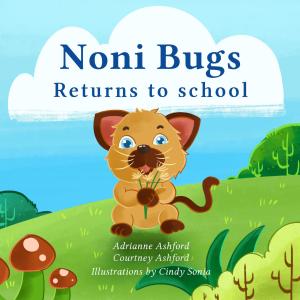
childrens book return to school postcovid19 kids book cover“Noni Bugs Returns to School” is a picture book about facing the fear of COVID19 while returning to school. Noni Bugs has been doing her schoolwork at home over the last several months. Now, it’s time to return to in-person school, but she’s nervous. Everything is so different. But her wonderful teacher, Mrs. Cook, is there to help her and all the kids adjust to this new type of schooling. Help your little one adjust to the changes in their daily school routine with this comforting topical tale.

“Noni Bugs Returns to School” is available at Amazon.com and BarnesandNoble.com.

For more information about Adrianne Ashford and her books, please visit her website/author page at https://www.amazon.com/Adrianne-Ashford/e/B08F6TFVFW.

For more information about Courtney Ashford, please visit her author page at: https://www.amazon.com/Courtney-Ashford/e/B08F7MQ5F3.


Interview with Daniel and Madison Davis

Standard

Dan _ Madi

Daniel and Madison Davis are the authors of the children’s poetry book, Melancholy Musings: Children’s Poetry for Life’s Darker Moments

With so much sad news and depressing events happening around us, there is nothing better than poetry to perk up your summer. I’ve found a fabulous father and daughter writing duo. Meet Daniel and Madison Davis. Dr. Daniel Davis is a sociology professor at San Diego State University. His daughter, Madi, loves art, writing and hip-hop dancing. They paired up during the Spring Shutdown to write poetry together to cheer themselves up and to share a positive literature experience with readers.

Their book, Melancholy Musings: Children’s Poetry for Life’s Darker Moments, presents children’s poetry to share and read to help with the stress and pain of growing up and other tragic events in life. I had a chance to ask Madi and Daniel about their writing adventure during this pandemic, and what they have in further store for us.

1) What is your favorite memory from reading as a child?

Madi: I’m still reading as a child! But I did feel happy when I finished the longest Harry Potter book. It was like 600 pages.

Daniel: I remember my mom signed me up for a summer reading challenge at the local library. I read as many kids books as I could, and don’t remember how many it was, but I ended up winning the challenge and felt pretty cool about it.

2) Who was your favorite author and how did they influence you?

Madi: J.K. Rowling is my favorite. I’ve read everything she’s written. They made me really eager to keep reading.

Daniel: For fun, probably Douglas Adams’ The Hitchhiker’s Guide to the Galaxy. I love that genre of zany British humor, always makes me laugh. More seriously, probably Peter Berger’s work on the social construction of reality, which helped me see the many ways that society is our own creation. 

3) Do you have a writing routine? Share what works for you.

Madi: I write whenever I feel like it, but if it’s for school I always finish a rough draft the first day, add to it the second day. If there’s a third day, I spend that one editing it. For Melancholy Musings, there were also some deadlines from my writing coach and Dad that helped keep us going.

Daniel: I try to set up a process for each project. Like for this one, I would brainstorm poem topics with Madi and have her come up with some rhyming word pairs and ideas. Then I might create a few lines another day and she would go over them and add some still another day. It was a back and forth approach. 

4) What subjects would you like to write about in future projects?

Madi: Most things fiction. I sort of hate non-fiction. I like writing stories with drama, suspense, and mystery.

Daniel: Probably non-fiction or journal articles. I’m a sociologist, so either research or materials students can use in sociology classes.

5) How was your current poetry book written?

Daniel: While we were apart, Madi and I shared a Google doc and would take turns talking on the phone and adding lines and poem ideas. Madi also had the idea of making all of the imagery from the same family and centered on the main little girl. As new poem ideas came along, the family of characters kept growing.

6) Why do you feel this was an important poetry collection to create?


Daniel: Children’s books and poems typically center on happy topics or fantasy, but difficult things happen to kids too. We thought it might be meaningful to create a set that parents could pull from to allow for discussions about these things with their kids. Ultimately pets pass away, families have to move or get divorced, loved ones get sick; it can be helpful to have opened up some of these conversations with kids in advance. It helps them understand that these things happen to everyone; they are part of life.

7) What message do you have for aspiring poets?


Madi: Just keep practicing! I could tell by the end, we had better poems than what we had first written.

Daniel: Brainstorm lots of ideas, take your time, have fun with it, and find a good website to help you think of rhyming words.

8) As a parent, why do you think working on a project like this during the pandemic helped you and your daughter cope?

Daniel: It gave us something to focus on other than all of the bad news that was happening every day. We also had little deadlines we self-imposed every Tuesday at noon. So, sticking to some kind of structure like that helped make sure we kept working on it, but also that we made time to FaceTime each other every week. It was nice to connect with her and hear her ideas and thoughts. I could tell some of the topics were easy for her to think of, like the death of a goldfish or getting lost in a crowd, which she had experienced before. But there were other topics that were more of a stretch, like imagining what it would be like to have an older sister go away to college or an aunt tired of hosting family for the holidays.

9) What suggestions do you have for parents trying to help their children through the COVID19 pandemic?

Daniel: It depends on the age of the kids, of course. With a tween, I try to keep her informed and aware of what’s going on, but she doesn’t need daily updates on virus numbers and such. She is careful about social distancing and understands it, but not getting to see her friends or have her fifth-grade promotion, missing summer trips and camp are certainly a disappointment. The pandemic will forever be a milestone of her generation’s collective memory, like 9-11 for the cohort before. But unlike 9-11, Covid-19 is such a prolonged tragedy. It’s hard to say what the long-term impacts will be.

But I think the best thing we can do is keep listening to our kids and giving them room to process. It’s an unprecedented situation, so it’s hard to give one-size-fits-all advice. Different kids will need different things. But, I think if we listen empathetically and ask lots of questions about how they feel, in most cases they can tell us what they need. We don’t have to guess.

10) What is writing to you in one sentence?

Madi: Writing is a hobby that I really like, especially writing surprising stories where a character might get hurt, go insane, or die all of a sudden. Not really horror, but things people don’t expect me to write.

Daniel: It’s a way to share ideas and inspiration with others, and possibly even a way to create a legacy that will outlive us.

Melancholy Musings Front CoverMelancholy Musings: Children’s Poetry for Life’s Darker Moments is a fantastic read-aloud to share with family to discuss times such as the pandemic or the other difficulties children face. Death of pets, life transitions, moving to a new place and others can be difficult events in a child’s life. This collection addresses these tough subjects along with others in a humorous and empathic poetic approach. It encourages families to have discussions together with poetry as the catalyst. Written as collaboration between a father and daughter during the Spring Pandemic Lockdown of 2020, these light-hearted poems will be a wonderful addition to any home library.

Book Trailer Link: https://www.youtube.com/watch?v=ro1xd9P1qKU&t

Melancholy Musings: Children’s Poetry for Life’s Darker Moments is available at: Amazon.com. This is a Kindle Unlimited title.



Interview with Eric DeSio

Standard

eric-blue-1

Eric DeSio is the author of the children’s book, The Social Distance King.

As we head further into summer, families are starting to emerge and take safe holidays. To help you with your quest back into the world, I found a great book to help with some of the new normals that are going to be part of our every day lives for a while.

A new book by author Eric DeSio helps to teach social distancing. It is called The Social Distance King. With school starting in the fall, teachers will also be interested in new class structure introduction books as we all take on dealing with the continued pandemic. This book will help in the quest for educators to find books to introduce these new topics to children.

I had a chance to interview Eric DeSio. He shared his love for story telling, and the need to teach lessons in his books. The Social Distance King by Eric DeSio helps introduce the topic of social distancing to children. In the interview, he shares his childhood reading memories, his favorite authors, and what projects he has in story for us.

1) What is your favorite memory from reading as a child? 

My favorite childhood reading memory would be reading Dr. Seuss’s The Lorax.  I remember feeling totally immersed in the imaginary world of that book. The characters and scenery were real and alive for me.

2) Who was your favorite author and how did they influence you? 

As a child I would say Dr. Seuss. I enjoyed and continue to enjoy the rhyming and visual presentation. I’m not certain about how Dr. Seuss influenced my writing exactly, but I appreciate that he seems to have lose rules if any. I love the originality of his stories.

3) Do you have a writing routine? Share what works for you. 

Often my writing starts with me singing about something. If I’m singing something, then I will usually write about it. And if I write about it, then I usually will start singing about it. I often write about stories or topics that intrigue me and that don’t “go away”. If the story and idea stay with me for a while, then I feel more naturally moved to write about it.

4) What subjects would you like to write about in future projects? 

Wow. So many but at the same time, there are actually very few specific subjects that I feel I must write about in the future. Recently, for the most part, if I want to write about something, then I write about it. In general, I can say that I would like to write about challenging subjects or subjects that are not often written on. Also, I can see myself writing some non-fiction in the future.

5) What is writing to you in one sentence?

Writing to me is expression, sharing and connection.

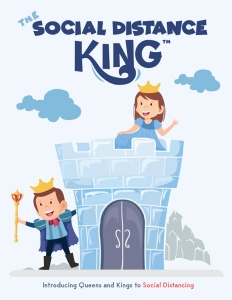
social-distance-king-frontThe Social Distance King is a book that introduces the sensitive top of kids and social distancing. It’s a kid-friendly way to introduce them to this new social norm, and to teach them about the reasons for its use to keep them safe.

For a limited time, a FREE copy of this book will be offered through the authors website at: http://ericauthor.com/social-distance-king/.

The Social Distance King is also available as a free Kindle Unlimited title. Printed hardcover copies are also available at Amazon.com and Barnesandnoble.com.

Rebuilding Yourself After Trauma: What We All Need to Know to Survive the Pandemic

Standard

hospitalicu

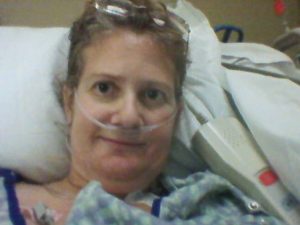
Tiffany Turner in the hospital ICU Dec. 2014

Four years ago, I had a heart attack. My last memory is feeling sick with what I thought was another bronchial infection while closing my classroom door, and thinking I’d try to kick it over the weekend. My next fleeting memory is sitting at the computer that night checking a writing board. The next memory is waking up in a hospital with a oxygen and feeding tube down my throat, unable to speak, and my mother sitting across in the corner of the room with the most saddest look I’ve ever seen on her face.

This was what happened to me in the first weeks of Dec. 2014. I was a full time public school teacher, looking forward to the soon to happen Holiday break, and was having a hard time with another bronchitis flare up. Like most good teachers, I was trying to teach through the sickness, make it through to Christmas. The next thing I know, I’m waking up in an ICU hospital bed, tube down my throat, with little or no energy to speak of. My first thoughts were, “What happened?” I was finally able to recall having the bronchitis and realized it all had probably gone down hill badly. But I couldn’t remember. I had been induced into a coma after the heart attack, and lost over twelve days of memory.

***For more on that personal experience, here is my post about it back in 2015.

hospital2

My monitors in the hospital.

What I was told happened is I did tried to fight the bronchitis that didn’t get better. After three days of it getting worse, my husband took me to the emergency room and I was admitted with acute pneumonia. Later, I had a fight or flight response when I pulled out my IV and a nurse tried to keep me in bed. I struggled, and then my eyes rolled in the back of my head, I fell back, and flatlined. I was clinically dead for sixty seconds.

Harpwalker

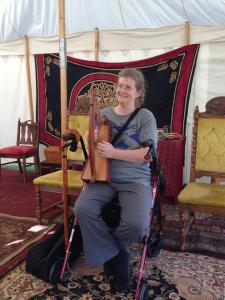
Mrs. Turner at the Sonora Celtic Festival playing the Gaelic Harp in 2015.

Luckily, they were able to save me. I do recommend if you have a heart attack, have it in the hospital where there is the most chance they can save you. But the road from that moment forward was not easy. I spent about two weeks in the hospital gaining strength back, doing physical therapy later at home and as an out patient. It took eight months to rebuild my life back to where I could physically cope on my own. I had to leave my career, give up classroom teaching, and start all over. I learned to walk, shop, participate in Renaissance fairs again. I essentially had to rebuild my life with a new normal with what the heart attack had left of me.

It was a challenge to start over in my mid forties with something I hadn’t planned. But the world still spun on. My friends and family supported me, and I slowly built a new life in which I tutored part time a few hours weekly, built up from once a week to three times a week over a period of a few years. I was teaching in after school programs, working at a tutoring center, participating and selling at Ren fairs, and writing full time children’s books and romances which has always been a life dream. I had rebuilt my life. I was finally feeling like myself again.

In the middle of March 2020, COVID19 shut down my county. I had already started to isolate, seeing that this disease was different from when I taught in schools with the swine flu almost ten years ago. I was being told I was high risk with a heart condition. I went grocery shopping in what I now call the “old normal world” for the last time on March 11. On March 13, the California Governor shut down all the schools in the state. By that Monday, he closed all the businesses. Most of the United States later joined my state a few days or even weeks later.

I started to have a strange deja vu. It seemed like EVERYONE had joined me in a new type normal. Essential workers helped deliver and ship food. Health workers fought the disease in hospitals, and everyone else was to stay isolated to slow the disease. Spring 2020 mirrored my isolation and healing of Spring 2015. Though I had energy and better health this time, I did a lot of the things I did had done then. I wrote a lot. I rested and took care of my health, watching my diet. I had even learned to cook more from delivered box meals back in 2015. I continued with those skills, cooking at home.

There were challenges, like being able to find food and supplies you could get online as opposed as in a store. It reminded me a lot of when people were rationed during WWII. I even read WWII memoir accounts to relate to how the people felt during those historic times.

Though there were some differences between WWII and the Corona Virus Spring Lockdown of 2020, I found myself being rationed on orders and finding other items hard to get. The first thing to run out was toilet paper, along with paper towels, hand sanitizer, and items to make home sanitizer. I adapted to what seemed was going to be a temporary state like working at home and ordering things online and through the mail. I followed what the state and local county health departments ordered us to do. Everyone thought it was a temporary new normal that was going to last three weeks which has instead lasted three months.

It is now the end of June 2020. Things have opened back up, but there looks like more outbreaks and more closures on the horizon. I know that we are going to need to build a new normal. I’m finding that a lot of what I went through, surviving my heart attack and building a new normal, is helping me now. To start thinking about this will put you ahead of what is to come.

tiffmask

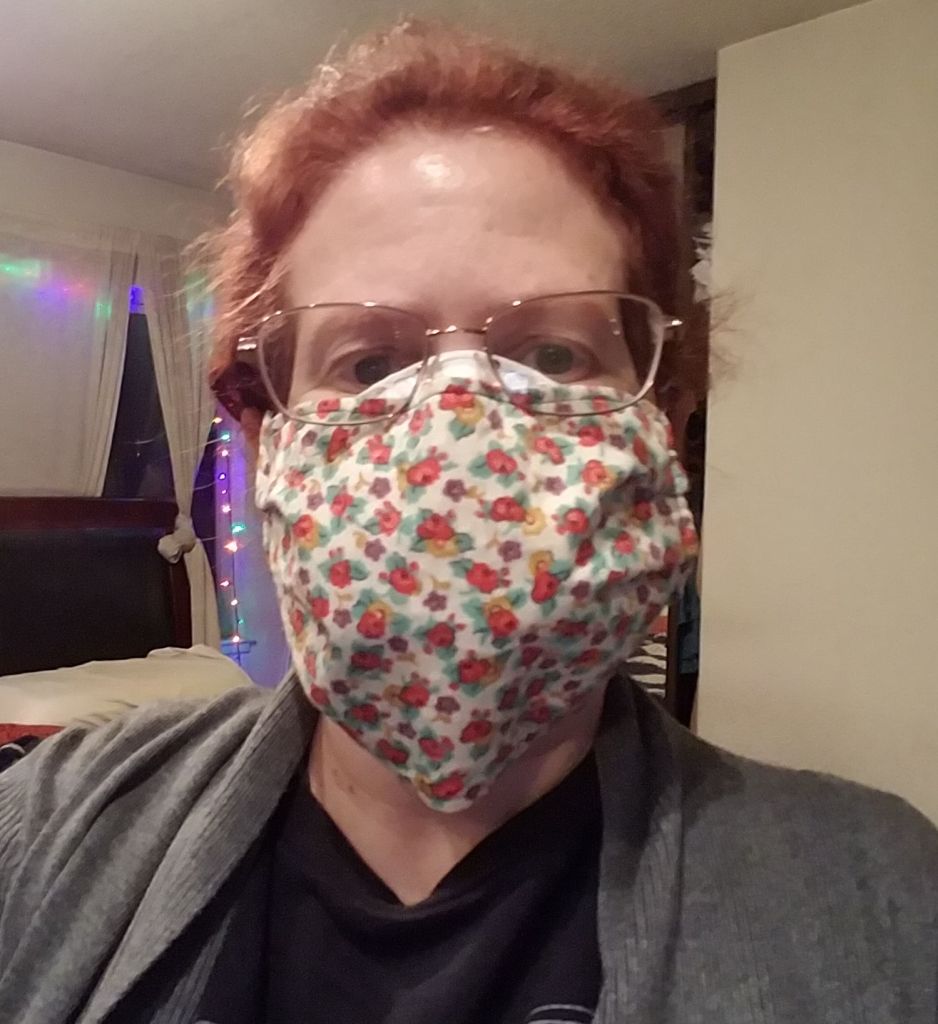
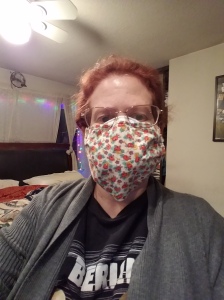
Mrs. Turner wearing one of several owned home made masks.

Build a new normal for yourself. Accepting that the world has changed is a good start. I had to accept my body had changed to survive my heart disease. I had to built my new normal with what I could still do. I was told I might need a pace maker or even a heart transplant. They had to be honest with me in where my health could go. It helped me to face that I wanted to take the best care of myself and save my heart. So, I did what I could with what my body could still do.

For example: It helped to write a novel called “Saving My Heart” which I wrote on Wattpad. Writing was something I could do in my weakened health state. It is one of the adaptions I did while trying to find a new normal. I thought of what I could do still, and planned to switch my activities accordingly. I cut away all the old things I couldn’t do anymore. I accepted it was okay, because I had survived, and a new normal was something I could live with because I was still alive.

Through caring for my heart, I saved myself. We can do that now. Care for yourself, your loved ones, your own personal bubble of people right now. Create a new normal with them. We are not going to have the old world back for awhile. When it comes back, it is likely to differ some from what we used to do before. And it’s okay. That’s part of surviving. The human race has adapted through many tragedies and disasters. Just like you can recover from a personal crisis, we too can recover from this horrible world changing event.

Create a new normal for yourself. Create it with friends and family, whether you visit more online now, adapt it around your job if you’re an essential worker, or retreat and stay away from others. It’s all okay. What ever is safe for you to get through this will be the right choice. You can choose how to survive this pandemic. It is the one power you have to control what is happening to you. Choose how to face this virus. You can build a new normal to suit you, keep your friends and family safe, and hopefully, keep your community safe.

Take it from someone who has already built a new normal for themselves. It can be done. It just has to be accepted that we are all living through a time that is unlike any other, and we will build a new life to survive the virus. It’s the one thing that all humans share, and that is the amazing ability to adapt. Let go of those things that are not necessary at this time and do the things you can do. The rest will follow. Before you know it, you’ll have a new normal. And you’ll likely not want to go back. Especially if you survive. Because surviving is the bottom line.

I wish the best new normal for you. Get through it with the ones you love. And I’ll see you on the other side.


Interview with Tenile Carlos Bey

Standard

Tenille Carlos Bey bio pic

Tenille Carlos Bey wrote the girl’s journal “Mommy & Doodlebop: A Journal for Girls We Love” with her daughter, Aalani.

During the summer, it’s good to keep your child engaged with activities. With all the need to social distance, it’s even more important to look for activities that children can engage in and be safe while doing. What about journaling? This is a historical time, when first person resources will be documenting how children and people lived through the pandemic. Your child can be part of the moment, writing out thoughts, feelings and what life was like during these strange times. I have the perfect journal for you child to begin their writing journal. It is written by a daughter and mother team, Tenille Carlos Bey and Aalani Carlos Bey. It’s called “Mommy & Doodlebop: A Journal for Girls We Love”.

Written as a support for inclusivity for girls with African ancestry, this journal is for girls to write out their thoughts and feelings for good or bad days. It will be a companion to sort their feelings during the pandemic. I also had a chance to interview Tenille Carlos Bey in regards to her childhood reading memories, future writing subjects, and what writing means to her.

1) What is your favorite memory from reading as a child?

Tenille Carlos Bey: My favorite memory was sitting on my stairs engulfed in a good book.

2) What subjects would you like to write about in future projects?

Tenille Carlos Bey: I would love to write about children & their experience from their eyes as often times they are voiceless.

3) What is writing to you in one sentence?

Tenile Carlos Bey: Writing to me is therapeutic.

Happiness Where Sun Shines CoverMommy & Doodlebop: A Journal for Girls We Love” is an interactive journal for all the little Brown girls loved. It’s developed to help a girl express herself daily engaging creativity and expression of ideas in words on a daily basis. Keeping a daily journal will increase writing ability and help your child work through daily problems and feelings. This will make a great gift or at home activity during the pandemic.

“Mommy & Doodlebop: A Journal for Girls We Love” is available at Amazon.com.


Interview with Tiffany Watkins

Standard

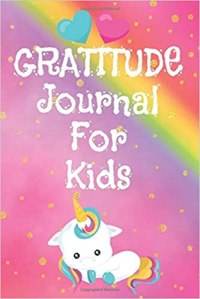
This pandemic has made many of us become aware of those things to be thankful for. It may also be bringing on feelings of resentment of what your child might have lost out on. Help them deal with the loss and look at the positives of their new situation with a fabulous find, a “Gratitude Journal for Kids”.

Tiffany Watkins is the author of this book. She has a BSA in Sociology with a minor in Child and Family studies, and a master in Divinity Studies. She received a doctorate in Christian Counseling. She enjoys serving her community and working with the United Way Young Philanthropist Program. Through her book, she hopes to encourage children to look towards what they are grateful for each day and find the magic in a moment of their day. I had the chance to interview Tiffany about her childhood reading memories, favorite author, and what projects she has in store for the future.

  • What is your favorite memory from reading as a child?

Tiffany Watkins: My favorite memory from reading as a child was how fun it was to have your peers reading about the same thing and able to discuss it among them.

  • Who was your favorite author and how did they influence you?

Tiffany Watkins: My favorite memory from reading as a child was “Are You There God? It’s Me Margaret?” by Judy Blume. This book greatly influenced my walk as a middle schooler because it addressed the things I was experiencing at the time.

  • What subjects would you like to write about in future projects?

Tiffany Watkins: In the future, I would like to write about positivity for kids.

Gratitude Journal for kids front pic“Gratitude Journal for Kids” is a helpful tool to help children focus on the positive aspects of their lives. Written to encourage an Attitude of Greatness, the journal has daily entries so your child can write three things daily about what they are grateful for. Each entry also includes a “Magic Moment of the Day” in which they can reflect on something that was positive and memorable about their day. Drawing is encouraged in the entry to express their gratefulness and artistic abilities. This book will help your child get in touch with their feelings and cope with the loss of a daily routine and events during the COVID19 pandemic.

Gratitude Journal for Kids” is available at: Amazon.com.

For more information on Tiffany Watkins, visit her Amazon Author page.


Interview with Chris Lewis

Standard

I’m starting this week out with a great support picture book for your little ones to understand the COVID19 situation, and help them become informed in a child friendly way. Chris Lewis wrote this book with fellow colleagues to help support parents explain to their younger children what is going on in the world. Haley and Comet Learn about COVID-19 is available as a FREE picture book and is available in Indonesian and Portuguese translations. I had a chance to talk to Chris Lewis about his writing routine, future projects, and what writing means to him.

1) Do you have a writing routine? Share what works for you.
Chris Lewis:
After I have eaten with a cup of tea in the evening.

2) What subjects would you like to write about in future projects?
Chris Lewis:
Business and technology subjects target and younger readers. Change Management and testing is on the cards.

3) What is writing to you in one sentence?
Chris Lewis:
A privilege and a joy I am working every day to get better at.

Covid19PictureBkcoverHaley and Comet Learn about COVID-19 tells the story of two twins, Haley and Comet. They are confused about why they are not allowed to visit with friends, and their big brother isn’t allowed to go to school. Discover the journey the twins go on to find out how COVID 19 has affected their lives. This story is written for 5 years and up.

Haley and Comet Learn about COVID-19 is available at the following eBook store links:

English version: https://books2read.com/u/mVw5Y5
Indonesian version: https://books2read.com/u/bMpdg5
Portuguese version: https://books2read.com/u/mKDMqP

Reflections on Anne Frank, Hiding, and the Corona Virus Lockdown

Standard

annefrankportrayal

ID 125060942 © Kristina Kostova | Dreamstime.com

The last few weeks, I’ve been supporting parents that are suddenly homeschooling because of the school closures due to the Corona Virus Outbreak. It’s helped to give back in the way that is unique to my teaching and writing background. A full novel study for my first book took two weeks to write and post for all of you. I do hope it has helped bring some light during these bleak times. As I’ve said before, I think we all need some fairies and the Fey in our life right now.

But I’ve also been on a personal journey to help deal with the events that have been happening due to the corona virus outbreak. I live in California in the Silicon Valley. I grew up here. In fact, my book series touches on the orchards I used to play in while growing up here. But at first, it was a ground zero for the outbreak, with Santa Clara County the first to lock down in the US. It was soon followed by the whole state of California.

I’m at high risk since I’m over fifty and a woman with a heart condition. So, I took this all IMMEDIATELY seriously when enough was known on how deadly this virus was becoming. I gave a leave of absence letter to my boss, and did a huge shopping trip to help get through what I thought would be a 3 week lockdown. My last day out in the real world was March 11. On March 12, I started my own lockdown to stay safe. And then, I watched my county and later my whole state join me a few days later.

I do work a lot on line. I have Fiverr.com gigs that I help out other authors with blurbs and interview them for this blog. I self publish all my romance and children’s books, and am currently writing a “How To Self Publish” book.

But somehow, this shelter in place turned into something a lot different than my normal writing schedule. Everyone else was there with me. My friends were online all the time now. People were coming up with awesome, supportive things to cheer up each other. Putting up Christmas lights in the windows and displaying teddy bears for kids to do bear hunts were just some of the things I’ve participated in my neighborhood to connect during these strange times. But it also reminded me and started to feel like something else.

secretannex

Outside of the Secret Annex, the building the Frank family hid in during WWII. ID 100750106 © Fedecandoniphoto | Dreamstime.com

I first read Anne Frank when I was eleven. I couldn’t put it down, and I cried endlessly when I got to the end wondering why she had to die. This touched off a lifetime of questions about WWII and the Holocaust. I have since been to the Anne Frank Haus in Amsterdam, stood outside Auschwitz (which was unfortunately closed on the day I visited), and have read many books about the behind the story about the Secret Annex, the helpers, and people that knew Anne.

I turned now back to these books, finding that there were even more memoirs, more information in regards to the hiding saga that has touched so many people. I’ve dived into some recently new memoirs and biographies involving people with the hiding of the Frank family and the other hiders. I’ve never felt more closely in experience with Anne before. She wanted to be a writer. She hid for two years, and I had tried to imagine before what it must have been like for her. I have more of an idea now.

It is strange to say that reading about Anne Frank and the hiding saga that took place almost 80 years ago brings me comfort during a pandemic, but it does. I’ve always had the question of what it was like for Anne. I’ve stood in the Annex in Amsterdam, touched the sink where they washed dishes, and listened to the clock bong the hour. That made the story so real for me tears started to form. And again, I still seek the answer, what was it like for Anne? What did she go through while hiding? Well, I’m living it right now. We all are.

There are some parallels that make Anne’s story true for us today. No. I don’t have Nazis looking for me. But the fear that some invisible enemy is out there is part of my thoughts.  My routine is constantly to clean and try to keep myself safe from it. The anxiety is awful. She must have felt some kind of similar anxiety about being discovered.

I do have helpers bringing me food in the form of delivery services. But the fear is different because the invisible virus could be on what they bring me and I have to wash everything. Of course, this could be akin to the fear of discovery, the attention to keep yourself safe, and to do what was needed to stay safe. I do have to ration and try to get the food I need, always trying to hit the delivery window online, which sometimes can take days. And I have to plan to get the food in advance. It’s like a combination of being a helper and a hider.

This outbreak shows the continued cycle of the struggle for humans to survive and that we can adapt to it all. It has a similar truth that Anne’s story has. And we’re living it together. If we hang in there, we might still have that hope shared with Anne in her writings. She was always positive, and still thought the best about humanity.

I spend my days writing, adult coloring a calendar I got for Christmas to relieve stress, and taking care of my husband and cat in a small, one bedroom condo. I am more fortunate than many, I know. But my mind just can’t help but imagine the similarities between Anne’s, her family’s and the others with them hiding experience must have been like. It is similar to what a lot of people in the world might be experiencing now, together. Trying to stay sane within close quarters of living with others.

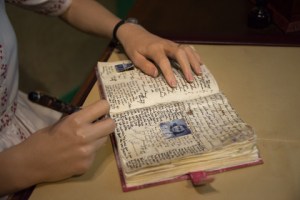
There is one thing that is also clear. Anne had no way to know how her ordeal would end. She hoped it would be after the war that she could write her dairy finally as a book. But that never came to pass since she passed away from typhus at a concentration camp after her family and fellow hiders were betrayed, arrested, and sent to the camps. But while she was hiding, she had the most incredible hope. Hope that she would get through everything and have her dreams. Hope that everything would be alright when the war was over. She is quoted in “The Diary of a Young Girl” as saying:

We all live with the objective of being happy; our lives are all different and yet the same.

And that’s why I’ve related with her all these years, and so much now. Her life was so similar to ours until it was changed by the war, her family was forced into hiding, and she spent two years waiting for a more positive outcome than what she received. I hope for all of us, we all have a more positive outcome. That we all stay safe, we survive this pandemic together, and live through to the other side to still see the beauty in the world.

Please, do not lose hope. And if it helps any, read “The Dairy of a Young Girl” that was Anne’s dream to publish, but was unable to in the end, and her father made her dream come true. Then, here are some great follow up books that give different perspectives of the hiding experience:

  1. Dairy of a Young Girl by Anne Frank

2) Anne Frank The Untold Story: The Hidden Truth about Elli Vossen, the Youngest Helper of the Secret Annex by Jeroen de Bruyn & Joop van Wijk

3) Holocaust Memoirs of a Bergen-Belsen Survivor (Classmate of Anne Frank)

By Jeannette Blitz Konig

For more information on Anne and the secret annex where she hid, visit the:

Anne Frank Foundation/Anne Frank House Website

So, I invite you to read not only Anne’s story, but that of all the people she touched. It shows how one life can be so special, and how even in the worst of times, kindness can prevail. Like now. Maybe that’s why I’m turning to these books right now. We need the wisdom. We need the guidance of those that have gone through tougher times like our present pandemic situation. And what better resource than the books that survive them all.

If you do choose to read them or would like to talk about them after, please leave messages in the comments. I’d love to hear how you are dealing with the Corona Virus Lockdown, and maybe people in the future will use our stories of struggle for their own inspiration.

-Until next time, stay safe, wash your hands, and appreciate the little things,

-Tiffany Turner