Tag Archives: corona virus isolation

Interview with Inni Kaur

Standard
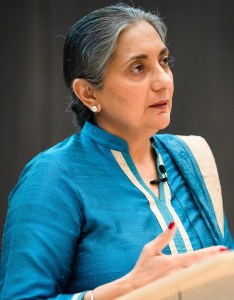
Inni for zoom

Inni Kaur is the author of the children’s picture book, “The Story of Us.”

With the summer starting to come to a close, I’ve been finding some really interesting stories that can start getting our children focused back on school. I have found a fascinating book called “The Story of Us”. It’s written by the extremely talented author, Inni Kaur. She is a spiritual writer, poet, educator, painter and advocate for the Sikh community. Her stories help bridge an understanding into how humans are all connected. I had the chance to talk with Inni about her childhood reading experiences, advice for aspiring writers, and future projects.

What is your favorite memory from reading as a child?

Inni Kaur: Reading took me into a different world.

Who was your favorite author and how did they influence you?

Inni Kaur: I did not have any particular author. I read whatever I could get my hands on. I studied in a convent. Basically was in a boarding school for 9 months out of a year.

Do you have a writing routine? Share what works for you.

Inni Kaur:  I write when I am inspired by something that I have read. Then the writing flows.

What subjects would you like to write about in future projects?

Inni Kaur:  I would like to write on subjects that promote unity of humanity – that we are one people.

What inspired you to write the book “The Story of Us”?

Inni Kaur: This was the blog post that I wrote about why I wrote this story.

“Every book that I have written so far, has its own unique story. A part of me is in every book, though veiled. However, for “The Story of Us,” I am going to reveal what this book means to me.

In 2017 I read Nayan Chanda’s book, “Bound Together: How Traders, Preachers, Adventurers, and Warriors Shaped Globalization.” The first chapter of the book spoke about human migration from Africa. And how, our color and features changed during the centuries of human migration. I was so intrigued that I ordered the National Geographic Saliva Testing kit and became a part of the Human Journey. This first chapter is the inspiration for “The Story for Us.”

Why was this so important to me?

Because…

I was the child that no one wanted to play with.

I was the child that no one wanted to hold hands with.

I was the child that was the last one to be picked to be on anyone’s team.

Because…

I was kali-black.

Mothers would tell their children, ‘if you don’t drink your milk, you will become kali-black like Inni.’ By all accounts, I should have had a miserable childhood. But, I didn’t.

Because…

I had the unconditional love of my paternal grandfather, my parents, and my sister. They did not see my color, though I saw my color. They saw me. The way they treated me was as if, I was the most precious thing in their lives.

In my teenage years, my constant companions were, “Who will marry her? She is so dark?”

Yet, I saw my mother, fill my dowry chest with beautiful evening bags from Germany, silk temple saris from South India; exquisitely embroidered shawls, evening gowns from England and so much more.

Love protected me.

Love cocooned me.

In my late fifties, I saw myself, and said I am “beautiful.”

Because…

Beauty had entered my life.

I know I am blessed.

I recognize it.

This book is written with the hope that children and adults will get to know the story of human migration and hopefully be kinder to each other.

And if my book prevents even one adult from calling a child kali-black, I would have accomplished much.”

FYI: This manuscript was sent to over a dozen mainstream publishers in the USA and India. After exhausting all avenues, I chose to self-publish it, because it was important to me.

What life experiences have influenced you the most to write for children?

Inni Kaur: There are very few books good quality that spoke to the Sikh experience when my children were young. The books did not reflect them. I took it upon myself to change that narrative. My children did not feel part of the mainstream culture because they were invisible in children’s literature.

What advice do you have for aspiring authors?

Inni Kaur: Don’t let rejection and criticism color you. Don’t write because you want to, write because you have to. Become emotionally involved with the characters of your book because that will translate to your readers.

If you could tell your younger writer self anything, what would it be?

Inni Kaur: Be kind and compassionate to yourself. Take the plunge; cross that line. Don’t listen to the voices that say, “You cannot do it.”

What is writing to you in one sentence?

Inni Kaur: It is an outer expression of an inner journey.
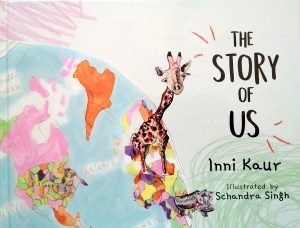
The story of us-Cover1“The Story of Us” is a wonderful story of an author visiting a classroom to share the human movement story from the continent of Africa. Mr. Nayan Chanda is visiting Ms. Hollins’ class to give a talk about human migration and how science, through blood and saliva, helped to trace the story. Though we may have different languages, religion, dress differently, and eat different foods, we are all one people. Share this message with your own child or as a read-aloud in the virtual classroom. Recommended for children six to twelve.

“The Story of Us” is available at: Amazon.com and is also available at the website below.

For more information on the author Inni Kaur, please visit her website at:
https://storyofusbook.com/.


Rebuilding Yourself After Trauma: What We All Need to Know to Survive the Pandemic

Standard
hospitalicu

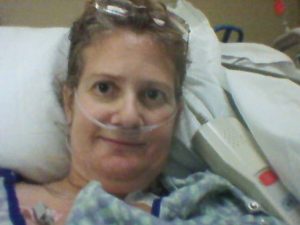
Tiffany Turner in the hospital ICU Dec. 2014

Four years ago, I had a heart attack. My last memory is feeling sick with what I thought was another bronchial infection while closing my classroom door, and thinking I’d try to kick it over the weekend. My next fleeting memory is sitting at the computer that night checking a writing board. The next memory is waking up in a hospital with a oxygen and feeding tube down my throat, unable to speak, and my mother sitting across in the corner of the room with the most saddest look I’ve ever seen on her face.

This was what happened to me in the first weeks of Dec. 2014. I was a full time public school teacher, looking forward to the soon to happen Holiday break, and was having a hard time with another bronchitis flare up. Like most good teachers, I was trying to teach through the sickness, make it through to Christmas. The next thing I know, I’m waking up in an ICU hospital bed, tube down my throat, with little or no energy to speak of. My first thoughts were, “What happened?” I was finally able to recall having the bronchitis and realized it all had probably gone down hill badly. But I couldn’t remember. I had been induced into a coma after the heart attack, and lost over twelve days of memory.

***For more on that personal experience, here is my post about it back in 2015.

hospital2

My monitors in the hospital.

What I was told happened is I did tried to fight the bronchitis that didn’t get better. After three days of it getting worse, my husband took me to the emergency room and I was admitted with acute pneumonia. Later, I had a fight or flight response when I pulled out my IV and a nurse tried to keep me in bed. I struggled, and then my eyes rolled in the back of my head, I fell back, and flatlined. I was clinically dead for sixty seconds.

Harpwalker

Mrs. Turner at the Sonora Celtic Festival playing the Gaelic Harp in 2015.

Luckily, they were able to save me. I do recommend if you have a heart attack, have it in the hospital where there is the most chance they can save you. But the road from that moment forward was not easy. I spent about two weeks in the hospital gaining strength back, doing physical therapy later at home and as an out patient. It took eight months to rebuild my life back to where I could physically cope on my own. I had to leave my career, give up classroom teaching, and start all over. I learned to walk, shop, participate in Renaissance fairs again. I essentially had to rebuild my life with a new normal with what the heart attack had left of me.

It was a challenge to start over in my mid forties with something I hadn’t planned. But the world still spun on. My friends and family supported me, and I slowly built a new life in which I tutored part time a few hours weekly, built up from once a week to three times a week over a period of a few years. I was teaching in after school programs, working at a tutoring center, participating and selling at Ren fairs, and writing full time children’s books and romances which has always been a life dream. I had rebuilt my life. I was finally feeling like myself again.

In the middle of March 2020, COVID19 shut down my county. I had already started to isolate, seeing that this disease was different from when I taught in schools with the swine flu almost ten years ago. I was being told I was high risk with a heart condition. I went grocery shopping in what I now call the “old normal world” for the last time on March 11. On March 13, the California Governor shut down all the schools in the state. By that Monday, he closed all the businesses. Most of the United States later joined my state a few days or even weeks later.

I started to have a strange deja vu. It seemed like EVERYONE had joined me in a new type normal. Essential workers helped deliver and ship food. Health workers fought the disease in hospitals, and everyone else was to stay isolated to slow the disease. Spring 2020 mirrored my isolation and healing of Spring 2015. Though I had energy and better health this time, I did a lot of the things I did had done then. I wrote a lot. I rested and took care of my health, watching my diet. I had even learned to cook more from delivered box meals back in 2015. I continued with those skills, cooking at home.

There were challenges, like being able to find food and supplies you could get online as opposed as in a store. It reminded me a lot of when people were rationed during WWII. I even read WWII memoir accounts to relate to how the people felt during those historic times.

Though there were some differences between WWII and the Corona Virus Spring Lockdown of 2020, I found myself being rationed on orders and finding other items hard to get. The first thing to run out was toilet paper, along with paper towels, hand sanitizer, and items to make home sanitizer. I adapted to what seemed was going to be a temporary state like working at home and ordering things online and through the mail. I followed what the state and local county health departments ordered us to do. Everyone thought it was a temporary new normal that was going to last three weeks which has instead lasted three months.

It is now the end of June 2020. Things have opened back up, but there looks like more outbreaks and more closures on the horizon. I know that we are going to need to build a new normal. I’m finding that a lot of what I went through, surviving my heart attack and building a new normal, is helping me now. To start thinking about this will put you ahead of what is to come.

tiffmask

Mrs. Turner wearing one of several owned home made masks.

Build a new normal for yourself. Accepting that the world has changed is a good start. I had to accept my body had changed to survive my heart disease. I had to built my new normal with what I could still do. I was told I might need a pace maker or even a heart transplant. They had to be honest with me in where my health could go. It helped me to face that I wanted to take the best care of myself and save my heart. So, I did what I could with what my body could still do.

For example: It helped to write a novel called “Saving My Heart” which I wrote on Wattpad. Writing was something I could do in my weakened health state. It is one of the adaptions I did while trying to find a new normal. I thought of what I could do still, and planned to switch my activities accordingly. I cut away all the old things I couldn’t do anymore. I accepted it was okay, because I had survived, and a new normal was something I could live with because I was still alive.

Through caring for my heart, I saved myself. We can do that now. Care for yourself, your loved ones, your own personal bubble of people right now. Create a new normal with them. We are not going to have the old world back for awhile. When it comes back, it is likely to differ some from what we used to do before. And it’s okay. That’s part of surviving. The human race has adapted through many tragedies and disasters. Just like you can recover from a personal crisis, we too can recover from this horrible world changing event.

Create a new normal for yourself. Create it with friends and family, whether you visit more online now, adapt it around your job if you’re an essential worker, or retreat and stay away from others. It’s all okay. What ever is safe for you to get through this will be the right choice. You can choose how to survive this pandemic. It is the one power you have to control what is happening to you. Choose how to face this virus. You can build a new normal to suit you, keep your friends and family safe, and hopefully, keep your community safe.

Take it from someone who has already built a new normal for themselves. It can be done. It just has to be accepted that we are all living through a time that is unlike any other, and we will build a new life to survive the virus. It’s the one thing that all humans share, and that is the amazing ability to adapt. Let go of those things that are not necessary at this time and do the things you can do. The rest will follow. Before you know it, you’ll have a new normal. And you’ll likely not want to go back. Especially if you survive. Because surviving is the bottom line.

I wish the best new normal for you. Get through it with the ones you love. And I’ll see you on the other side.


Picture Book Review: “Mozzi Presents: Love and Other Values”

Standard
Mozzi_Book_1cvr

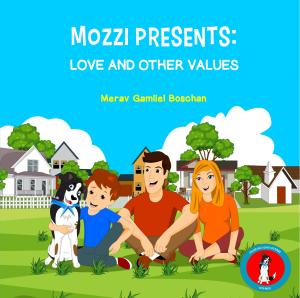
“Mozzi Presents: Love and Other Values” is the first in a series of heart-warming picture books.

I always like to find the hidden gems that can brighten up anyone’s day. I think a book about a dog is a great way to do this, especially with the current pandemic. We are looking back to family values, nature and the best addition to any household, pets. The lessons we can learn from our pets starts when we are children. I think I’ve found a wonderful picture book that shows the values of pets, love and family in  “Mozzi Presents: Love and Other Values” by Merav Gamliel Boschan.

We meet a wonderful dog, Mozzi, and his family. From a puppy to growing up to full doghood, we read about all the different challenges of life and lessons learned by Mozzi the dog with help from his family. They also learn from him in turn. It’s a great read aloud during these hard times of lockdown and isolation. The one thing that always seems to help during these hard times seems to be sharing a book with the family. This will make a wonderful read-aloud at bedtime or shared as an activity.

“Mozzi Presents: Love and Other Values” is available at Amazon.com. It is the first book in a series of four, and is a Kindle Unlimited title.


Interview with Jacqueline Stokes

Standard

For the next few weeks, I’ll be featuring authors and their books for your child’s summer reading list. It’s good to keep the academics going through the summer months to maintain reading levels and add to literature skills. My next summer reading find is a book by the author, Jacqueline Stokes. It’s got a great attention grabbing title, The Stinkies. This middle grade novel will be a treat for any child looking for a sci-fi/fantasy action adventure to read.

Jacqueline Stokes is an author and screenwriter. She’ll soon be starting her own publishing company to help other writers reach their dreams. In her spare time, she enjoys exercising, taking long walks, and broadcasting on her own podcast called “Champion”. I had the chance to talk to Jacqueline Stokes about her childhood reading memories, her writing inspirations, and what she has in store for us in future projects.

  • What is your favorite memory from reading as a child?

Jacqueline Stokes: My favorite book as a child was Green Eggs and Ham by Dr. Seuss.

  • Who was your favorite author and how did they influence you?

Jacqueline Stokes: Dr. Seuss. I loved his imagination. His writing makes you feel like you’re one of his characters.

  • Do you have a writing routine? Share what works for you.

Jacqueline Stokes: When writing, I am usually inspired by an idea that will just pop into my head, and I write from there. I have no set routine. Routines can feel like “work.” Writing allows me to experience the adventure of the content that I am writing which never feels routine.

  • What subjects would you like to write about in future projects?

Jacqueline Stokes: I have another children’s book that I will be publishing in the near future. I am skilled in multiple genres.

  • What is writing to you in one sentence?

Jacqueline Stokes: Writing is an ADVENTURE.

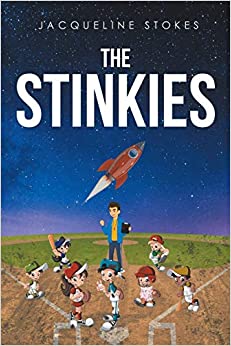
stinkiescvrThe Stinkies is a sci-fi, action adventure that will take you out of this world. It’s filled with tons of action and most important, baseball. Spencer Cummings loves baseball, but his little league team is one of the worst teams in the league. Instead of being called the Meteorites, they’ve earned the name of “The Stinkies”. After making a wish for a better baseball field and to win at the championships one day at the county fair, Spencer and his whole family find themselves on a whole new planet.

Suddenly, he must blend in with these aliens or be revealed as an Earthling. Can Spencer and his family avoid capture and find out the secret to wishes that will allow them to go home? And will that secret help turn the Earth he once knew into something completely different.

The Stinkies is available at Amazon.com and Barnes & Noble.com.

Interview with Jenny Wilson

Standard
JennyWilsonbiopic

Jenny Wilson is the author of the children’s fantasy book, The Lighthouse Keeper: A Story of a Soul.

I’m sure you are looking for a great fantasy book for your child to escape into while practicing reading skills. Not to mention, some of their teachers are likely still asking for children to keep up those twenty minutes of silent reading a day (D.E.A.R. Time). I’ve got a fantastic fantasy that will support any Harry Potter fan. The Lighthouse Keeper: A story of a soul takes you to the Vale of Aisenma where a lonely boy realizes that the world around him is full of magic and that he is not alone.

The author, Jenny Wilson, has drawn from her upbringing of growing up in Scotland to bring you a mystical tale. I had the chance to ask her about her childhood reading memories, how she got her story ideas, and what she has in store for us in future projects.

  1. What is your favorite memory from reading as a child?

Jenny Wilson: I read constantly as a child – I devoured books. One of my earliest memories is making a book called “The Adventures of Teddy” and giving it to my mum. She still has it now, nearly 40 years later!

2) Who was your favorite author and how did they influence you?

Jenny Wilson: There were so many different authors but the one that stands out for me is Lucy M. Boston. The Children of Green Knowe is one book that I keep coming back to even now. I think I have read it about 30 times now and it is still as fresh and as magical as the first time I came across it. I love how a book can stay with you long after you’ve read it and show you things you hadn’t noticed before. Lucy M. Boston’s writing is enchanting. Words are like spells and a well-written book has the power to transport you to anywhere.

3) Do you have a writing routine? Share what works for you.

Jenny Wilson: My writing routine is just to sit down and do it. Little and often is much better than big long stretches once in a while. If you get into the habit of dedicating a time and a space to do something it becomes automatic.


4) What subjects would you like to write about in future projects?

Jenny Wilson: I am working on a prequel to The Lighthouse Keeper at the moment. My aim is to show the world that there is magic all around and within us, and that our thoughts have the power to transform our lives.

5) When did you first become interested in stories about magic?

Jenny Wilson: Well, all stories are magical in some way, if the writer can engage the reader and transport them. So in that sense, for as long as I have been reading! But in terms of magical realism, I love the works of Italo Calvino. He makes the everyday seem extraordinary. I love how changing the way you look at something completely transforms that thing. In this sense, words can be like spells.

6) How did being born and raised in Scotland affect your stories?

Jenny Wilson: I think wherever you are born and raised, your environment will seep into your experience one way or another. Scottish weather is not exactly predictable and lends itself quite nicely to curling up with a good book, which suited me perfectly! There are parts of the country where you can feel the magic in the air as well. One of my favourite parts of Scotland is Stirling and the surrounding countryside. There, when you’re standing up on the top of a hill and looking down below at the rolling fields, you really feel that anything is possible and that you are part of something truly magical.

7) What subjects would you like to explore in your writing?

Jenny Wilson: I want to explore how our thoughts shape the world around us and that we are in charge of our thoughts and, therefore, our worlds. I aim to show how nobody is alone, that even though you may feel wretched and powerless, you are part of something and that if you listen carefully within, you already know what to do.

8) What advice do you have for aspiring writers?

Jenny Wilson: To just sit down, take a deep breath and do it! I am very easily distracted and I know how easy it is to let other things take over and seem more urgent than they are. For a while, I had the tidiest cutlery drawer in Europe. Now, I am happy to say, I do some writing every day and my drawer has gone back to being a muddle.

9) Where do you see your writing taking you in five years?

Jenny Wilson: I’m working on the prequel to The Lighthouse Keeper: A story of a soul now and aim to have four more book titles in five years.

10) What is writing to you in one sentence?

Jenny Wilson: Writing is my soul mission.

The Lighthouse Keeper CVRThe Lighthouse Keeper: A story of a soul is a book that can show you how magic is all around, and how it can shape your life. The people of Aisenma live in constant fear. Wolves prowl around the Bay of Sevlow. The storytellers have been banished. But a lone boy discovers his inner magic and goes on a journey to save his home and all the people in Aisenma. Join in this fantasy adventure that will remind you that nobody is ever alone, especially if they have their true inner magic.

The Lighthouse Keeper: A story of a soul is available at: Amazon.com and Amazon.ca.

For more information on Jenny Wilson, visit her website at: Amazon’ Author’s Page.

Interview with Dr. Michael Kinsey

Standard
Dr. Kinsey Bio Pic

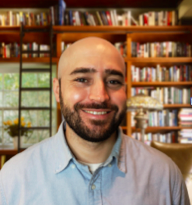
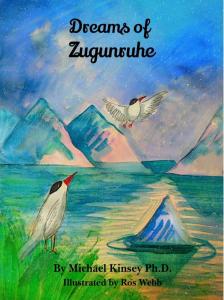
Dr. Michael Kinsey is the author of the picture book Dreams of Zugunruhe.

In these times, connections are awfully important to maintain. I have found a wonderful expert on this subject, Michael Kinsey, PHD. He is a clinical psychologist that lives in Manhattan. Dr. Kinsey’s specialty is parent-child attachment, and he has written a wonderful book that is called Dreams of Zugunruhe that combines his expertise and love for birds. Through the journey of the Little Tern, children experience empowerment in order to face challenges. I had the chance to ask some questions of Dr. Kinsey about his childhood, his book, and how to support children during this pandemic.

1) What is your favorite memory from reading as a child?

Dr. Michael Kinsey: When I was a child we started a Christmas tradition of reading “The Polar Express” by Chris Van Allsburg every Christmas Eve. To this day it’s my favorite children’s book. The illustrations underscore the magic of the story, and I love the message of keeping childlike imagination and fantasy alive into our adult lives.

2) Who was your favorite author and how did they influence you?

Dr. Michael Kinsey: I read a lot of Gary Paulsen as a school-aged boy. Not surprisingly, his most popular book, “Hatchet”, was my favorite work of his. Recently I spent a weekend staying at lodge in the Catskills, near where Brian Robeson, the main character in the story, had to survive on his own. I was struck by how my memories of reading that story enhanced my experience of the landscape.

Your question makes me realize that his writing has really influenced my inner world. Multiple times I’ve taken trips to boreal forest in search of experiences with nature. I realize now that my love of nature and particular fascination with boreal forest likely stems from his influence on me. It proves to me that beloved books can really shape our inner world and our life as a whole.

3) Do you have a writing routine? Share what works for you.

Dr. Michael Kinsey: Writing is still something I do as a passion and hobby. I love the idea of rigorous writing routines, but for now I don’t obsess over craft and regular schedules. My method is really to maintain a commitment to listening to the muses when they sing to me, and doing my best to capture the spirit of their message.

4) What subjects would you like to write about in future projects?

Dr. Michael Kinsey: My expertise is in parent-child attachment and I like to write about the bonds between parents and their children. Proper parenting is such a delicate balance of providing support while getting out of the way of nature’s oversight of a child’s developmental journey. That’s what Dreams of Zugunruhe is about and I see myself continuing to write on that theme. In the future, I’d like to write on the unique contributions that fathers make to their children. Fathers are important in creating happy and healthy adults and I’d like to provide a vehicle for fathers to provide the guidance children need from them.

5) Why did you become interested in “birding”?

Dr. Michael Kinsey: My love of birds started at a school assembly when I was about 8 years old. A man who rehabilitated hawks and other birds of prey brought some of the birds he cared for to the school. The birds made a huge impression on me. They were an awesome display of paradoxes; they were both fierce and serene, powerful and elegant, hulking and delicate. I was also struck by how dignified they looked in captivity. As a child I think I often felt trapped and admired both the freedom these creatures could have through flight, and the strength they showed while fettered.

The realization I think I had at that time was that these creatures, in all their majesty, could be found and observed if I were willing to pay attention and look for them. This is the link between being a birder and psychologist. Amazement can be achieved remarkably often if we are willing to pay attention and look for what’s hidden in plain sight.

6) Why are connections important during the coronavirus pandemic?

Dr. Michael Kinsey: It’s what humans do and what defines our species. It’s a cliche but also very true that we are social animals.

During times of stress and uncertainty, we instinctively look to friends, family, community, and culture for comfort and support. The inhuman aspect of this pandemic is that we’re told we need to “distance” ourselves from others to survive. Luckily, we as humans have amazing brains that allow us to treat “closeness” and “connections” as abstractions. We have powerful communication tools that allow us to follow our instincts and turn to people we love and trust as attachment needs arise while we maintain the necessary physical distance.

7) What can you suggest for parents in regards to connections now that children are at home for distance learning?

Dr. Michael Kinsey: I do have some suggestions which I’ll make later on, but the main thing I’d like to offer parents is that this is a really challenging time to use opportunistically. A lot of parents I work with really want to use quarantine as an opportunity to connect with their children, but it can feel overwhelming to create opportunities out of a situation where boundaries blur and home is now home as well as school, office, and playroom.

Just because there may be more time and opportunity, does not mean it’s easily harvested. Schedules and structure are helpful. If you can combine schedules and structure with some flexibility and spontaneity, all the better.

Connecting with kids is a very personal thing and each parent will have to find his/her own way to reach each child. Creating space and openness to allow for connection is the hard part. Younger children especially are extremely good at making sure a connection happens if parents can only free up time, attention, and the receptivity to take advantage of opportunities their kids bring to them.

8) What have you been doing at home with your family during the coronavirus lockdown?

Dr. Michael Kinsey: I’m actually not a father yet, but I have recommended to fathers that this is an ideal time to start a project with their kids. A father’s traditional (or stereotypical role) in times of crisis is to insulate children from danger and to provide a model for how to confront challenges. Starting a project, in the yard, in the garage, or in the living room, is a fantastic way to show children that things are safe. If a father can show children that it’s safe enough to immerse his attention completely in a project, then children will truly feel safe.

I think these times also reveal how overvalued the content of a standard educational curriculum can be. Schools do teach valuable skills, yet the value of a traditional education is lessened when parents are at home and available to teach their children important things that they have learned. A skill passed on from father to son is far more valuable than the typical thing a child learns in the average day of school. A project, whether basic repair, woodworking, building a model, learning a sport, etc., promotes feelings of safety, teaches something valuable to a child, and provides quality time between parent and child.

9) What main takeaway would you like to give as support to parents during this time?

Dr. Michael Kinsey: Children are watching and learning during this time, as they always are. Not every parent will be able to use this time as an opportunity for bonding because of economic pressures. That’s fine. Think of this period as an opportunity to show financial resilience, perseverance, and resourcefulness. If you’re a parent who is fortunate enough to have a financial cushion, treat this as an opportunity to bond with or teach your kids something important. This could be as simple as reading a treasured novel together, teaching them something about your work, or have them help you with the daily chores. Show them your coping skills–especially the ones that actually work for you.

To be succinct: parents have a ton to teach their kids.

I really want parents to think of themselves as having something valuable to teach their children, and empower them to supplement (or even replace) the day-to-day educational curriculum with something only they can teach their children.

10) What is writing to you in one sentence?

Dr. Michael Kinsey: Writing is a tool to create connections, and thus moments of temporary relief from the pain of existential isolation.Cover JPEG


Dreams of Zugunruhe
is a charming picture book that captures the ups and downs of leaving home and growing up. It is told through the lens of “Little Tern” that goes on the harrowing journey of migration with his mother. Expressive illustrations enhance the beautiful conversation between the terns. Children will hear the empowerment and encouragement through Mother Tern, and be emboldened as they face the great adventure of life. The urge in birds to migrate is a great springboard to educate and comfort children. It’s a great addition to any home or classroom library.

Dreams of Zugunruhe is available through Amazon. This is a Kindle Unlimited title.

For more information, please visit Dr. Kinsey’s website at: https://mindsplain.com.

Isolation & Psychological Fallout During Corona Virus Pandemic: Poem and Journal Activity

Standard

I want to thank everyone that has been following along in my blog for the last week. I started self isolating on March 12 due to the fact I’m over 50, and have a heart condition. I went through a battle to get back to health through most of 2015, and I really don’t want to go back there. I’ve been through an induced coma, pneumonia, septic shock, all due to my heart blood clot. But I’m not sure if my body could survive COVID-19. So, I isolated or how it feels to me, am hiding from getting this disease.

Then, I saw this poem today on Facebook being passed around. So many people are sharing their art. I would like to share it with you.

“History will remember when the world stopped.

And the flights stayed on the ground.

And the cars parked on the street.

And the trains didn’t run.


History will remember when the schools closed.

And the children stayed indoors.

And the medical staff walked towards the fire.

And they didn’t run.


History will remember when the people fought.

For their old and their weak.

Protected by the vulnerable.

By doing nothing at all.


History will remember when the virus left.

And the houses opened.

And the people came out.

And hugged and kissed.

And started again.


Kinder than before.”

By Donna Ashworth

The poem above helped me this morning. Creating art, blogging and writing,  is helping me. But I also feel like I’m waking up in the middle of a dystopian novel each day, and it’s making all the zombie shows and apocalyptic shows more real. I guess this is because I live a lot of the time in my imagination which really helps my writing self. But for a real pandemic, it is creating a fear that I have to face daily.

But now, reality is partially like fiction these days. That makes it kind of weird. Like expecting the vampires and zombies to show up next. I’m sure marshal law is just around the corner like in the Handmaid’s Tale, and too many things in fiction are making an appearance in real life. Maybe the jokes on me, because I imagine all this and write stuff down. Some of it has go to come true, right?

I’d like to give credit to Donna Ashworth and say thank you for the use of her poem. I contacted her on Facebook after I read it, and can see the story of how her poem is spreading and helping others. I’d like to present you with some journaling questions for parents and children in use with the poem to help with journaling on this subject:

  • How are you feeling about being in isolation or the soon to come shelter in place for your area?
  • Write down some of how you’re feeling about the corona virus in your journal. How are you feeling? What fears do you have? What experiences have you had over the past few weeks?
  • How does art help you?
  • What kind of art can you create to express your feelings or experiences about being in isolation or fears of the corona virus?

Feel free to comment below. If you like, you can talk with your children and see if they would like to use the poem above as an inspiration to write in their journals today or create some art. They can paint, write a poem, story, a song, dance, or create what they feel is right.  I taught on 9/11/01 and the days that followed, and I had my students journal their feelings as that disaster in our nation’s history unfolded. This is another time where journaling our feelings can be helpful.

Feel free to use the questions above or even add questions below in the comments. This can be a discussion for my blog community following along with my novel study and homeschooling activities. I’d love to hear how you are feeling.

Take care, and be kind to each other.

-Tiffany Turner

(Mrs. Turner)

For more information on Donna Ashworth, please visit her website/blog:

Ladies Pass It On.