
Tag Archives: children’s book author tips

Children’s Book Authors: Why It’s a Good Idea to Write Lesson Plans for Your Books

Standard

I’ve been thinking of writing about this subject for awhile, because I learned a lot during the lockdowns for the pandemic. As a retired teacher and children’s author, I have a unique perspective on this subject, and I thought it would be a good idea to finally share it with you.

Lesson plans are a great way to turn your book into an educational tool. I found as a teacher, most books have themes that can be used instructionally. It’s a matter of matching up what your teaching with the message/ theme of a book. Believe me, teachers are looking for them. So, make it easy for them. Set-up a way for teachers to find the educational points of your book by creating a lesson plan for it or a helpful study guide for teachers. It’s something that book clubs can use as well.

But how do you get the lesson plans? Study Guide? The quickest way is to write it yourself. And I’ve supplied a template for you. You just plug in your themes, messages, ideas, subjects covered from your book into the template study guide below. Any good teacher can use the study guide to make up their own lesson plan and include your book in a lesson or unit they may be teaching.

So, ready to get started? Just click the button to download below to get to the free template in PDF format. Print it out and fill it in or use the digital copy to start your own study guide. Adapt as you need to your book.

Another thing you can do is hire a teacher/retired teacher to write lesson plans or a study guide for your book. They are a little more complicated than just a simple study guide. All you’ll need to do is give them the grade levels that you think your book will be educational for. If you want to see what most teachers use, they are called a “5 Step Lesson Plan”. You could try to write it yourself if you’ve had teaching experience. You’d be surprised by how much a picture book can be used for or how a middle grade book can be read-aloud to younger children or read by older children as a reading assignment.

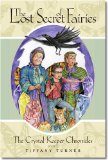
The last thing that can be done is to create a teachable unit to go along with your book. When I was teaching, I actually developed a unit for my first book in my Crystal Keeper Series, “The Lost Secret of Fairies”. I had used the writing of the manuscript and the other books to help teach writing during writing workshop. Then, when I finished my book, I used the book during reading time as an assigned novel study. Any book can have a novel study unit assigned to it. I do have the whole unit now available for free and my ebook edition priced really low to make it easy to get copies. I have had many home-school students/parents take advantage of this opportunity, especially when I first posted it during the Spring Lockdown of 2020. I really felt a pull to support the many students and struggling parents at home. Now, it is a testimony of how a unit for your book can help get it into readers’ hands.

So, I hope this helps in bringing more sales of your book into your life, and gets it into the hands of more children. It always feels satisfying to me to hear stories about children enjoying my books. A study guide, lesson plan, or novel study unit will make your book more appealing to educators and parents. Please let me know in the comments if you’ve found this has helped and/or any experiences you might have had with lesson plans or study guides for your book.

-Tiffany Turner

Children’s Fantasy Author

Editor/Head Writer of

Indie Children’s Authors Connection Blog
Guest Blog Post: “Tips to Encourage Children to Read” by Chris Lewis

Standard

Tips to Encourage Children to Read

Guest Post by author, Chris Lewis

It is certainly handy when a book’s character or series matches the values you want to encourage. An association to a series could also support children in finding a common connection with other children.

We all learn in different ways. Sometimes you can learn at the same time you do something you enjoy. The following are a few tips to encourage children to read.

1. Look for relatable characters.

Connection with characters in a story may make it easier for children to learn from their experiences and perhaps appreciate a topic from a different view. Sometimes a situation can be better understood by a child when they see themselves represented in a group or activity.

2. Try something a little bit silly or unorthodox.

Animals are often used in picture books for their relatable factor. There are lots of examples in books where animals talk and live like humans. Sometimes, characters are a mix of both human and animal characteristics. Some stories have objects which are living, for example, a talking teapot. 

3. Think about the format. 

There are lots of book formats to choose from, but in summary, the choice is a physical version or an electronic copy. New books typically attract a new cost, but you can get access to free books from the library, or you can browse the Internet for a variety of free ones. 

Sometimes there are extra elements in an eBook compared to a print version. Animation is a good example. Traditional books take up more space than eBooks. Still, there is a print version preference because of the look and feel, and no batteries are required.

4. Support the reading journey.

A child could use the same book from early childhood to a point where they can potentially read it by themselves. The knowledge gained from familiarity can serve as a morale boost when children get to the stage they can read independently.

5. Find a book for the right development stage.

The need of every child differs in the course of their development. Whether a child will enjoy a book or find it boring depends on the length, grammar, and level of content the child is prepared for, emotionally.

About The Author

Chris Lewis is the author of the eBook picture book Jax and Sheba get Messy for ages three to five. A print version will be available to order on March 16th, 2021. For more information about their books, please visit his website here.

***Connect with this author, Chris Lewis, through the interview featured on this blog.

Link here to the interview with Chris Lewis.

Day 5: Lost Secret of Fairies Novel Study & other home schooling resources

Standard

imgres

Study Questions for Chapters 7-8

Greetings everyone! Hope you had a safe and healthy weekend. As more of the US hunkers down and isolates, I’m hoping this will help keep the education of your little ones at home going through the next few weeks. And of course, after all this is over, teachers and parents are still welcomed to use this for educational studies.

First off, I’d like to offer the next set of study questions for The Lost Secret of Fairies novel study. Hopefully, your child is writing down notes and details as they read each chapter in their journal. They can go back and look at the notes they took to answer the questions.

summer1Study Questions for Chapters 7-8:

  1. Summarize the story so far. Pretend you are talking to a friend and describing the story to them. Include who the characters are, setting, main problem, and plot events so far.
  2. Why does Wands tell Jessica she’s going to build a pond in the backyard?
  3. How do the fairies help her escape and get the water?
  4. Was it worth getting into trouble for the spring water? Support your answer with details from the story.
  5. Why do you think Wanda stopped to face her fears?

Bonus: Have you ever had a time where you have had to face your fears?

I’m also including a vocabulary building worksheet. As your child has been reading the story, they’ve been writing down words they don’t know into the area at the bottom of the journal entry sheet. They can now go back to those entries, and pick three words that they don’t know to look up in the dictionary. The following worksheet can be downloaded and printed out for them to fill in the words. Then, they look up the word usage and meaning from the dictionary. They can do this activity every 3 chapters.

Lost Secret Fairies Definition Fill-In WS

Tomorrow, I’ll have another blog post activity that will relate to Legends and Fairy Tales. This is a standard for many lower grades, including fourth and third grade. It’s also a great review for the upper graders, and ties into their prior knowledge.

Until then, remember stay safe and healthy! We’ll get through this together!

-Tiffany Turner

(Mrs. Turner)