Tag Archives: character building

Second Interview with Simone Chasey

Standard

Greetings and happy holidays! With December looming with its oodles of activities and holiday cheer, it’s good to take the time to connect and read with your child. One of the authors I’ve featured before has a second book in her short story series. Her series is a great way to connect and build morals during bedtime and read-aloud time.

Simone Chasey loves to build a bridge with her literary works that bring parents and children closer together. With her second book, “Beyond the Horizon: Everlasting Life Lessons for Kids Part II”, she is continuing her mission to use reading to build and enrich family bonds. I had the chance to catch up with Simone with her writing journey over the last year and find out what she has planned for further parent-children relationship enrichment.

1) What is writing to you in one sentence?

Simone Chasey: Writing is the creative art of weaving thoughts, emotions, and ideas into a tapestry of words that helps the reader use their imagination, learns to communicate, and resonates with others.

2) Do you have a writing routine? Share what works for you.

 Simone Chasey: At first, it was merely an idea that sparked in my mind — a desire to impart moral lessons to children. As new ideas continued to emerge, I began jotting them down on a notepad, laying the foundation for future books I have yet to create. This approach ensures a constant stream of projects to work on.

3) What subjects would you like to write about in future projects?

 Simone Chasey: In considering future projects, my focus transcends subjects; rather, I envision crafting experiences that transform learning into a captivating and interactive journey. My ultimate goal is to infuse the joy of discovery into education, making the process not only enlightening but also entertaining.

Moreover, I aspire to contribute to the strengthening of family bonds, creating literature that not only facilitates learning but also serves as a conduit for parents to engage with their children. Through stories that resonate with both young and old, I aim to mend the bonds of family, fostering shared moments of reading that become cherished memories, and nurturing connections that endure beyond the pages of a book.

Book Blurb:
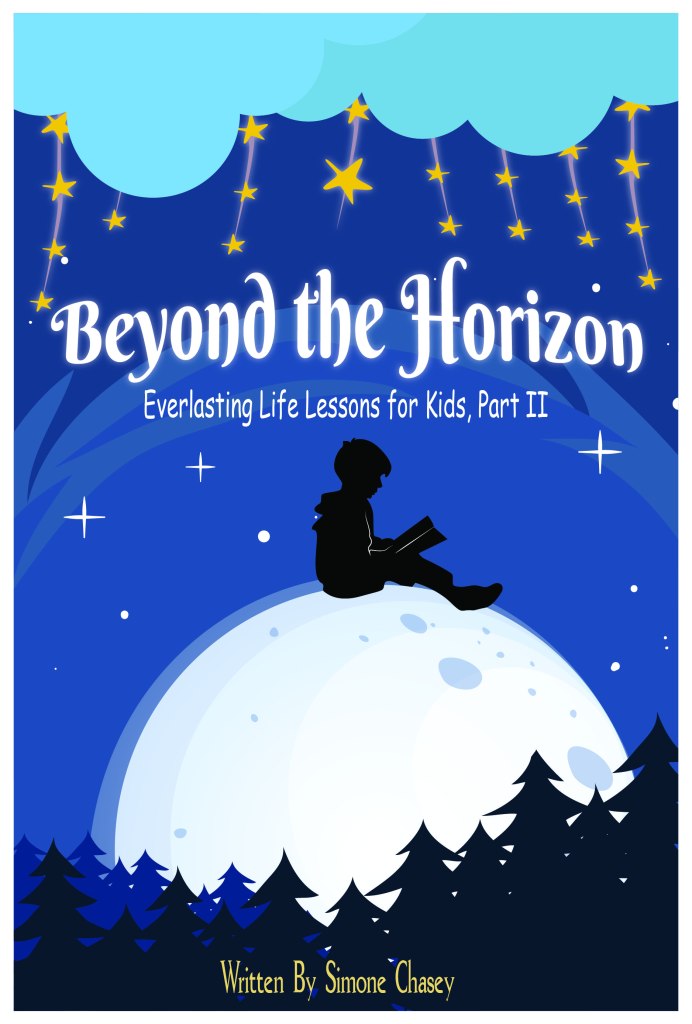
“Beyond the Horizon: Everlasting Life Lessons for Kids Part II” is a compilation of short stories that transports young readers to a world where imagination converges with wisdom. This collection explores essential life lessons through captivating tales, ranging from the thrill of success to the valuable teachings hidden within failures. Each story introduces endearing characters on unique journeys of self-discovery, engaging children’s imaginations while imparting morals that linger throughout their lives. From resilience to compassion, courage to the true meaning of success, this book weaves storytelling magic with life’s richness, providing a blend of entertainment and enlightenment. These tales gently guide children to explore emotions, confront fears, and make wise choices, making it a valuable tool for parents, teachers, and caregivers. This timeless collection not only entertains but also educates, leaving an indelible mark on the hearts and minds of young readers.

To find out more about her first book, please click here. This is a Kindle Unlimited series.

For more information on Simone Chasey and her other books, please visit her Amazon authors page here. Also available is her Instagram account here.

To read her first interview on my blog, please visit here.

Guest Post: 5 Tips to Help You Write Awesome Children’s Characters

Standard
Savannah Cordorva is a writer with the website, Reedsy.com.

Good characters are the key to any novel’s connection with its readers, and this is no different in children’s books; if anything, it’s truer. Think of iconic children’s books like Harry Potter, Matilda, or The Hunger Games —what do they have in common? Their characters are relatable, driven, and memorable.

Indeed, even the most fantastical books rely on human themes to resonate with readers. After all, it’s usually the way that characters interact with elements in the book that makes it interesting, rather than the elements themselves!

This is why, no matter what sort of children’s book you’re writing, it’s crucial to develop strong characters that will stay in your young readers’ hearts for generations. Master these tips and you’ll be well on your way.

1. Establish your character’s age and relevancy

Many popular children’s books are remembered for their cherished protagonists. However, there are a couple of elements that set the best apart from the rest: age and relevancy.

Specifically, the ideal formula for long-lasting characters is that they should be both a few years older than the target readers and experiencing similar real-life issues. Children love reading stories that they can relate and aspire to!

For example, Percy Jackson is twelve years old in Percy Jackson and The Lightning Thief, and attracts readers around ten years old. Of course, while Percy’s young fans won’t be discovering their mythical powers, they are growing up and will soon be entering new environments and making new friends — just like him.

As long as you explore human themes, feel free to give your characters the most fantastical plotlines you can think of. And if you want total control of your characters, consider self-publishing your children’s book! Linking your protagonist’s story to a real-life lesson is the bread and butter of character writing, but if this lesson is somewhat unconventional, the self-pub route could be your best shot at conveying it without compromise.

2. Build their drive and motivations

You’ve established your character’s age and relevancy. Great! The next step is to make sure your protagonist’s main goal — the essence of your story — is clear. Whether you’re writing a short story or a novel, it’s crucial to get this right. A story’s narrative arc will fizzle without motivation to propel things forward. And with children’s relatively short attention spans, they certainly won’t be giving precious attention to a lackluster plot.

This means another huge part of well-written children’s characters is that what they want or need drives the plot. Imagine how boring a story like Treasure Island would be if Jim Hawkins didn’t want to find Captain Flint’s treasure. And Watership Down wouldn’t be nearly as memorable without Hazel’s need to escape from the warren’s destruction. Once your character’s key motivation is established, the rest of their story should unfold with ease!

3. Put thought into their appearance

While a character’s internal thoughts are very important, that doesn’t mean their external characteristics deserve none of your time. Though personality is Priority One in terms of story, physical characteristics are often what make a first impression, in books and reality.

So while your protagonist’s appearance might not directly affect the plot, it can impact how supporting characters respond to them. And of course, if you’re writing a picture book, how the characters look will be a major part of the reader’s experience — and will likely contain visual clues about their personalities, emotions, and so on.

This is why, regardless of your artistic abilities, it’s worth sketching out your characters, from their hair color to their type of shoes. It doesn’t have to be Van Gogh-worthy, but having a concrete reference for your character’s appearance will make it easier to imagine — and therefore write out — more realistic scenes in your story.

This may be particularly helpful when it comes to dialogue. Another useful thing to consider is your character’s voice: What do they sound like? How do they interact differently with one character vs. another? Does their voice match their physicality, or present a comical contrast?

(If this sounds like a lot of details to organize — or if you’re looking to go even more in-depth — try checking out some character profile templates to help, or perhaps just a few character-building questions to get the ball rolling.)

4. Choose meaningful, memorable names

Well-named characters are sure to stick in readers’ heads. It sounds simple, but giving a character a name that reflects their key traits will tie everything together — and tell readers what to expect!

A classic example of this is Harry Potter’s Remus Lupin: “Remus” nods to the Roman myth about the twins Romulus and Remus who were raised by a wolf, while Lupin is derived from the Latin for “wolf”. So — spoiler alert — it’s no surprise that Remus Lupin turned out to be a werewolf, with a name meaning “Wolf Wolf”. Another perfect example of this is the much-loved Miss Honey in Roald Dahl’s Matilda, who is adored for her sweetness.

Though a name might seem a small feature, plenty of creativity goes into naming popular children’s characters! Whether your characters’ names are obscure linguistic references or common synonyms, make sure they’re fun to learn and impossible to forget.

5. Make character conversations believable

Going back to dialogue for our final point, many children’s writers are tempted to write their dialogue as they think children speak. But unless you’re a preschool teacher or a parent, try to avoid presuming anything!

Indeed, it’s worth familiarizing yourself with your target audience to facilitate more believable conversations. Good ways to research might be volunteering at your local school or working at a library. Bonus points if you have friends and family with children that you can ask to proofread your book. Their endorsement is a major signifier that you’re on the way to helping your target audience feel understood and represented.

Of course, every child is different, with their own personalities, opinions, mannerisms, and quirks. Keep in mind that your characters should progress and change, but dispositions — for example, a sharp sense of humor or joyful attitude — aren’t usually as fluid. A good rule of thumb is to figure out the essential traits your character has and stick with them. With this in mind, your characters are sure to instill readers with plenty of intrigue and love.


Savannah Cordova is a writer with Reedsy, a marketplace that connects self-publishing authors with the world’s best editors, designers, and marketers. In her spare time, Savannah enjoys reading fiction (especially YA fantasy, and picture books to her niece and nephew!) and writing short stories.

Tiffany Turner was the editor on this post.

Picture Book Review: The Little Book of Character Strengths

Standard

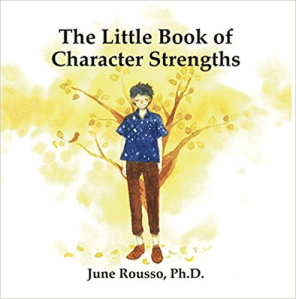
LittleBkStrengthcvrIf you are looking for a read-aloud at home or in the classroom, here is a great picture book for you on social morals. The Little Book of Character Strength by June Rousso, Ph.D. is a page-by-page summary of basic, good moral principles to instill in students and your child. Subjects include: love of learning, courage, perseverance, honesty, humanity, kindness, social intelligence, justice, fairness, leadership, temperance, humility and prudence just to name a few.

Each moral trait is defined and expressed in rhyming lines and beautiful anime-like watercolor illustrations. Each trait can be read daily to inspire a child or taken in groups to help with building vocabulary and character in school. They could also be used as writing prompts to get children to think deeper. I found it to be an interesting book that could be read a page at a time or in sections. It would make a great instructional tool for the classroom or at home.

The Little Book of Strengths is available at: Amazon.com and BarnesandNoble.com. 

***For more information on June Russo Ph.D., visit her website HERE!

Note: I was given a review copy for a fair and honest review. 😉